

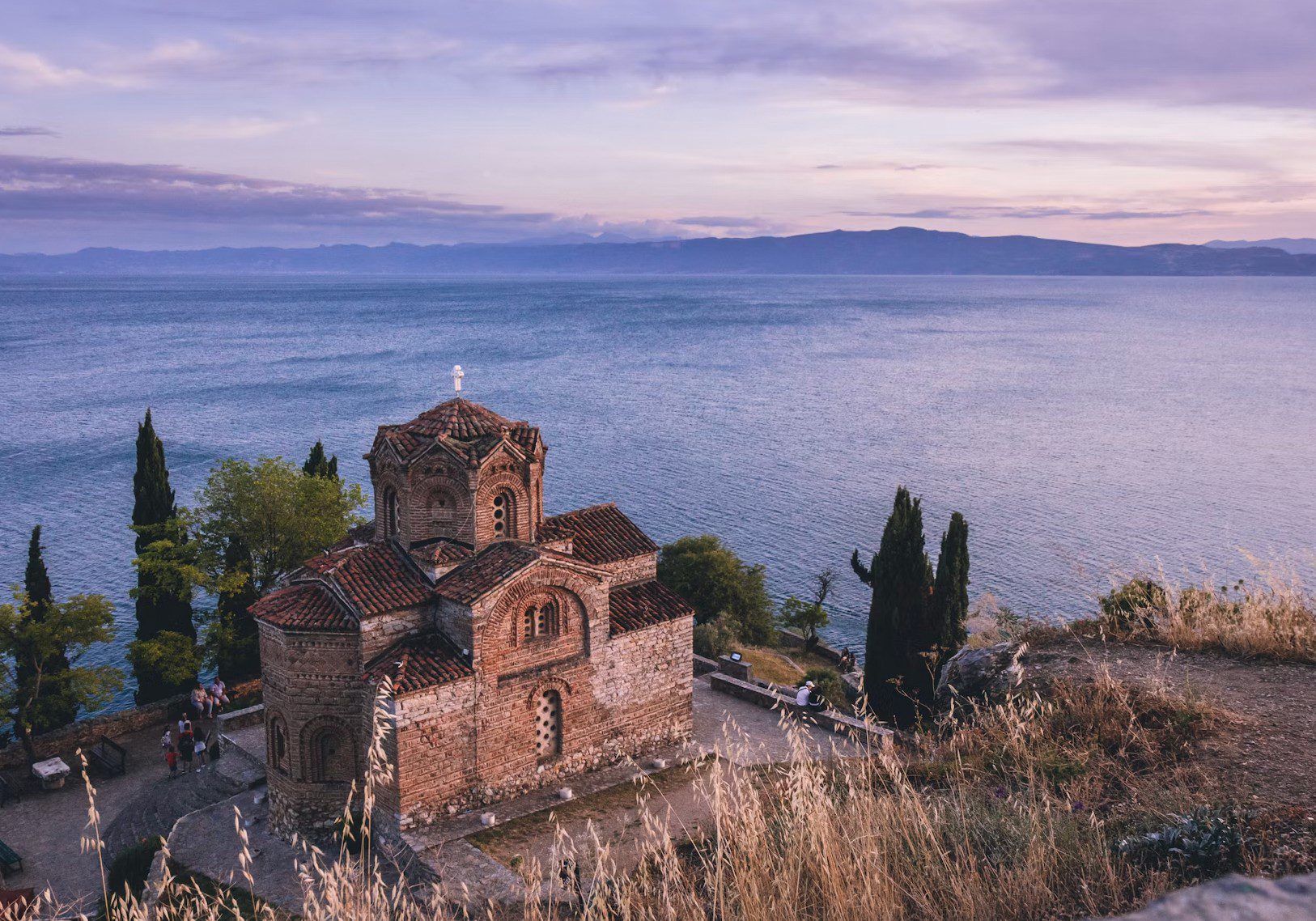
For most first-time travelers, the best time to visit North Macedonia is June or September, when the weather works well for almost every major part of the country without forcing you into the hottest and busiest weeks of summer. June is particularly good for combining Skopje, Lake Ohrid, national parks and road trips, while September keeps much of the summer warmth but brings more comfortable temperatures for hiking and sightseeing.
The ideal month changes considerably depending on what you want to do. July and August are the strongest choices if swimming in Lake Ohrid and experiencing the country’s main summer festivals are your priorities, May and September are excellent for hiking and cultural travel, while January and February make the most sense for travelers specifically interested in skiing at Mavrovo or Popova Šapka.
North Macedonia is small enough to cross relatively quickly, but its geography creates surprisingly different conditions within the same trip. Skopje and the Vardar Valley can become extremely hot in summer, Lake Ohrid remains somewhat moderated by its elevation and large body of water, while the mountains around Mavrovo, Pelister and Šar Planina can be dramatically cooler. The best travel dates therefore depend much more on your itinerary than on one national average temperature.
Best Time to Visit North Macedonia at a Glance
- Best overall months: June and September.
- Best for Lake Ohrid and swimming: Late June through early September.
- Best for swimming with fewer crowds: September.
- Best for sightseeing: April to June and September to October.
- Best for hiking: May to June and September to early October for moderate routes, with July to September more reliable for higher elevations.
- Best for festivals: July, August, September and October.
- Best for skiing: January and February, depending on snow conditions.
- Best for lower visitor numbers: April, May and October.
- Best for budget-conscious travel with good weather: May and October.
North Macedonia by Month
North Macedonia in January
January is one of the quietest months for conventional sightseeing but one of the most interesting periods for winter travel. Skopje and Ohrid are cold, mountain regions can receive substantial snow and Mavrovo and Popova Šapka move into their main winter-sports period when conditions allow.
This is a good month to choose if skiing is an important part of your itinerary, although snow should never be treated as guaranteed simply because it is January. North Macedonia’s ski resorts are much smaller and more weather-dependent than large Alpine destinations, and lift operations can change with snow conditions.
January also has one of the country’s most distinctive cultural events. The Vevčani Carnival is connected with St. Basil’s Day and the Old New Year celebrations, combining masks, satire, music and traditions that have been practiced locally for centuries. In 2026, the carnival took place on January 12–13, with the main procession on January 13.
For ordinary city sightseeing, January works best for travelers who prioritize low visitor numbers and cultural atmosphere over long daylight hours and mild weather. One additional consideration is air quality: winter pollution can become severe in Skopje and other urban areas, particularly during periods of cold, stagnant weather.
North Macedonia in February
February remains within the main winter-sports window and is generally one of the better months for planning a ski-focused trip. Mavrovo and Popova Šapka are the country’s principal winter destinations, although actual snow depth and operating conditions should always be checked shortly before travel.
Elsewhere, tourism remains very quiet. Ohrid is almost unrecognizable compared with August, which can appeal to travelers who want to explore churches, historic streets and the lakefront without summer crowds, but many tourism-oriented businesses reduce their activity outside the main season.
Skopje continues to work as a city-break destination, although cold weather, fog and winter air pollution can affect the experience. Travelers sensitive to poor air quality should monitor current conditions rather than assuming every winter day will be equally affected.
North Macedonia in March
March is a transitional month, with spring beginning in the lowlands while snow remains possible or likely at higher elevations. It can be a good time for Skopje, Bitola and lower-altitude cultural travel, but it is too early to assume that mountain hiking routes are ready for normal summer trekking.
Late-season skiing may continue when conditions remain favorable, particularly at higher elevations, although anyone booking specifically for snow will usually find January or February safer.
The landscape begins changing quickly as the month progresses, and lower routes around Matka Canyon or near towns can become increasingly attractive on mild days. For travelers interested in a broader nature itinerary, however, April or May is much easier to plan.
North Macedonia in April
April is one of the most underrated months for cultural travel in North Macedonia. Temperatures become more comfortable, the countryside begins turning green and Ohrid can be explored before the summer tourism season transforms the town.
This is an excellent period for walking through Ohrid’s Old Town, visiting St. Naum, exploring Skopje’s Old Bazaar and adding destinations such as Bitola, Kruševo or Prilep without dealing with midsummer heat.
Lower-altitude hiking becomes increasingly realistic, but mountain conditions remain highly dependent on elevation. Snow can persist on higher routes in Mavrovo, Pelister and the Šar Mountains, so April is better for valleys, canyons and lower trails than for ambitious high-altitude trekking.
Lake Ohrid remains too cold for most travelers who want a conventional swimming holiday. Sunny afternoons beside the lake can feel almost summery, but air temperature and water temperature follow different seasonal calendars.
North Macedonia in May
May is one of the best months to visit North Macedonia if hiking, road trips and sightseeing matter more than swimming. The countryside is green, wildflowers are widespread and temperatures are generally comfortable enough to spend long days outdoors without planning every activity around the heat.
Matka Canyon, Pelister National Park and lower areas of Mavrovo become increasingly attractive, while Ohrid is lively enough to feel like a travel destination without yet experiencing the intensity of July and August.
May should not, however, be treated as guaranteed high-mountain hiking season. Snow can remain on elevated routes, and trail conditions vary according to the previous winter. If you are planning exposed peaks or long alpine routes, check current conditions locally.
Lake Ohrid is warming but remains cool for swimming. Historical data places average May water temperature around the mid-teens Celsius, which means May is much better for lakeside walking, boat trips and cultural sightseeing than for travelers who expect to spend hours in the water.
North Macedonia in June
June is arguably the best all-round month for North Macedonia because the country’s different tourism seasons begin to overlap. Skopje and inland destinations are warm without consistently reaching the strongest midsummer heat, mountain access improves and Lake Ohrid becomes realistic for swimming as the month progresses.
Historical Lake Ohrid data places average June water temperature around 18–19°C. Some travelers will find that perfectly comfortable, particularly later in the month, while others will prefer the warmer water of July, August or early September.
June is especially useful for mixed itineraries. You can spend several days in Skopje and Matka Canyon, continue through Mavrovo or Bitola and finish with Ohrid without choosing a month that strongly favors only one part of the journey.
The countryside also remains greener than it does later in the dry summer, making June particularly attractive for photography, hiking and scenic road trips.
North Macedonia in July
July begins the main summer season, particularly around Lake Ohrid. The lake reaches much more comfortable swimming temperatures, beaches and boat services are active and Ohrid receives substantially more domestic and international visitors.
The trade-off is heat. Skopje and the Vardar Valley can become extremely hot during summer heatwaves, and sightseeing around the capital, archaeological sites or wine regions can be uncomfortable during the middle of the day. Starting early, taking a long afternoon break and returning outside in the evening is often a more sensible strategy than trying to maintain an all-day sightseeing schedule.
July is also a strong month for mountain travel because higher elevations provide cooler conditions and many hiking routes are well into their practical summer season.
One of North Macedonia’s most famous traditional events takes place around St. Peter’s Day in July. The Galičnik Wedding brings a real couple, traditional costumes, music and Mijak wedding customs to the mountain village of Galičnik. In 2026, festivities ran from July 10 to 12.
Ohrid’s main cultural season also begins in July. The annual Ohrid Summer Festival opens on July 12 and runs through August 20, bringing classical music, theatre and other performances to venues such as the Ancient Theatre and St. Sophia Church.
North Macedonia in August
August is the strongest month for a dedicated Lake Ohrid holiday. Historical averages put the lake’s water temperature around 22–23°C, close to its annual maximum, while daytime weather is normally warm enough to organize much of the trip around swimming, beaches and boats.
It is also one of the busiest periods in Ohrid. Accommodation demand rises, the lakefront becomes considerably livelier and restaurants and beaches receive both international tourists and domestic summer visitors.
Ohrid Summer continues throughout most of the month, with the 2026 festival running until August 20. Travelers interested in concerts and performances may deliberately prefer this period even if they would normally avoid peak-season crowds.
Skopje can be extremely hot during August, so it makes sense to treat the capital differently from the lake. Spend mornings and evenings outdoors and reserve museums, restaurants or slower activities for the hottest part of the afternoon.
Dry summer conditions also increase wildfire risk. Wildfires can affect North Macedonia from spring through autumn, and authorities may restrict access to forests or wilderness areas during periods of particularly high risk. Travelers planning summer hikes should pay attention to local restrictions and current conditions.
North Macedonia in September
September is arguably the best month to visit North Macedonia overall. The most intense heat begins to ease, hiking conditions remain strong, the summer tourism peak starts declining and Lake Ohrid retains much of the warmth accumulated during July and August.
Historical averages place September water temperature in Lake Ohrid around 20°C, making swimming comfortable for many visitors, particularly during the first half of the month. This is one reason September works so well: the lake responds more slowly to seasonal cooling than the air.
The month is also particularly attractive for wine travel. The Tikveš region around Kavadarci and Negotino enters grape-harvest season, and Tikveški Grozdober celebrates the harvest with wine, food, music and public events. The 2026 festival is listed for early September, with events from September 5 to 7.
Hiking in Mavrovo, Pelister and other mountain areas remains practical under normal seasonal conditions, while cooler afternoons are often more comfortable for longer walks than peak-summer temperatures.
North Macedonia in October
October is one of the best months for travelers who want cities, culture, wine and autumn landscapes rather than a lake holiday. Temperatures are considerably easier for exploring Skopje, Ohrid, Bitola and archaeological sites on foot, while foliage begins changing across canyons and mountain regions.
Swimming in Lake Ohrid becomes a much less reliable part of the trip. The lake retains some residual warmth, particularly early in October, but travelers planning a genuine swimming holiday should choose September instead.
October is also unusually strong for events in Skopje in 2026. The Wizz Air Skopje Marathon takes place on October 4, while the Skopje Jazz Festival is scheduled in the middle of the month. This makes October particularly appealing if you prefer urban cultural travel to peak-summer lake tourism.
Mountain hiking remains possible, especially at lower and moderate elevations, but shorter days and rapidly changing weather require more conservative planning later in the month.
North Macedonia in November
November marks the transition into the colder and wetter part of the year. It is a quiet month for tourism and works better for city travel, restaurants and museums than for an outdoor-heavy itinerary.
It is better not to describe November universally as North Macedonia’s rainiest month because precipitation varies considerably between Skopje, Ohrid and mountain regions. The more useful distinction is that late autumn and early winter are generally wetter and less predictable than the dry summer period.
Ohrid becomes very quiet after the summer season, which can be appealing if you want its historic atmosphere without crowds, but travelers looking for lake swimming, active beaches or a broad selection of seasonal tourism services should visit earlier.
November also begins the period when fog can affect Skopje and its airport, particularly between November and February.
North Macedonia in December
December is a winter city-break month rather than a reliable ski or outdoor month. Skopje becomes colder and seasonal decorations appear, while Ohrid remains quiet and the mountains begin accumulating snow.
Ski resorts may start operating when conditions allow, but booking early December specifically for skiing carries more risk than choosing January or February. Mavrovo’s effective season is commonly strongest from around January into March, depending on snow.
Winter travelers should also factor in air quality. Skopje and several other urban areas can experience severe particulate pollution during cold periods, particularly when temperature inversions trap emissions close to the ground.
Peak Summer Season in North Macedonia: July and August
July and August form the main tourism season around Lake Ohrid and are the best months if swimming, beaches, boats and summer festivals are the central reasons for your trip. The lake reaches its warmest annual temperatures, restaurants and seasonal businesses are fully active and the cultural calendar is at its strongest.
Ohrid Summer is particularly important because it runs every year from July 12 to August 20. The festival uses some of Ohrid’s most atmospheric historic venues, including the Ancient Theatre and St. Sophia Church, and can be a genuine reason to choose peak season rather than simply accepting it as an inconvenience.
The disadvantage is that Ohrid becomes significantly busier, accommodation demand rises and the atmosphere is much less tranquil than during May, June or September. Skopje also experiences its least comfortable sightseeing weather during strong summer heat.
Travelers who want a conventional summer holiday should not necessarily avoid July and August, but anyone more interested in hiking, road trips and cultural sightseeing will usually find June or September easier.
Shoulder Season in North Macedonia: May, June, September and October
May and June
May and June are excellent for travelers who want to see several different parts of North Macedonia within one trip. May favors hiking, greenery and cultural sightseeing, while June adds increasingly convincing swimming conditions at Lake Ohrid.
The distinction matters because a warm May afternoon does not automatically make Lake Ohrid warm. The lake heats gradually, and average water temperatures are substantially more comfortable by late June.
For mountain travel, June is also more reliable than May at higher elevations, although current trail conditions should still be checked if your itinerary includes exposed peaks.
September and October
September behaves like a gentler extension of summer, while October is much more clearly an autumn travel month. September retains the lake’s warmth, the mountains remain accessible and wine-harvest activity begins in Tikveš.
October is stronger for Skopje, Bitola, cultural attractions, autumn colors and events such as the Skopje Marathon and Jazz Festival. It is considerably less suitable for anyone whose main priority is swimming.
If choosing between the two, pick September for your first North Macedonia trip if Lake Ohrid is important, and October if you care more about cities, wine and avoiding the summer season entirely.
Best Time to Visit Lake Ohrid
The best time to visit Lake Ohrid depends on whether you want to swim or simply experience the town and landscape. For sightseeing, Ohrid works particularly well from April through June and again in September and October. For swimming, the practical window is narrower.
Historical lake-temperature data provides a useful picture of the season:
- May: roughly 14°C on average.
- June: roughly 18–19°C.
- July: roughly 21°C.
- August: roughly 22–23°C.
- September: roughly 20°C.
- October: roughly 16°C.
This makes July and August the safest choices for travelers who dislike cold water, while June and September provide better compromises between swimming and lower seasonal pressure.
September is especially effective because water cools more slowly than the surrounding air, allowing the lake to retain summer warmth even as sightseeing temperatures become more comfortable.
Best Time to Visit North Macedonia for Swimming
Late June through early September is the strongest swimming period. July and August provide the warmest water, while September is the best option if you want to swim without deliberately choosing the main holiday peak.
May should not be chosen primarily for swimming even if the weather forecast shows warm sunny days, because Lake Ohrid remains relatively cold. October has the opposite problem: the lake retains some summer warmth, but falling air temperatures and increasing weather variability make beach-oriented travel less reliable.
Best Time to Visit North Macedonia for Hiking
May, June and September are excellent general hiking months, but the best dates depend on elevation. Lower trails around Matka Canyon, foothills and valley landscapes become practical earlier than exposed mountain routes in Mavrovo, Pelister or the Šar Mountains.
High-altitude hiking is generally more reliable from June or July through September because lingering snow becomes less of a problem. July and August provide the strongest snow-free window but can be hot at lower elevations, making early starts particularly useful.
September is arguably the strongest overall hiking month because high routes remain accessible under normal conditions while temperatures begin falling from midsummer levels.
October can still be beautiful at lower elevations, but rapidly shortening days and changing mountain weather require more conservative route planning.
Best Time to Visit Skopje
April, May, June, September and October are the easiest months for exploring Skopje. The capital involves substantial walking between the Old Bazaar, Macedonia Square, museums, neighborhoods and viewpoints, and that experience becomes less comfortable during severe July or August heat.
October is particularly interesting in 2026 because the Skopje Marathon takes place on October 4 and the Skopje Jazz Festival is scheduled later in the month.
Winter can be inexpensive and atmospheric, but pollution deserves serious consideration. Official travel guidance notes that smoke haze and other air pollution can become hazardous in North Macedonia and is generally worst during winter. Fog can also disrupt flights around Skopje between November and February.
Best Time to Visit Matka Canyon
Spring and autumn are particularly good for Matka Canyon because walking and kayaking are more comfortable without peak-summer temperatures. April, May, June, September and October all work well depending on the weather.
Summer remains possible, but the combination of heat and stronger visitor numbers can make midday less enjoyable. Arriving early is useful if you visit during July or August.
Autumn brings changing vegetation around the canyon, while spring tends to provide greener scenery and stronger water flow after winter precipitation and snowmelt.
Best Time to Visit Mavrovo National Park
Mavrovo effectively has two distinct tourism seasons. Winter centers on the Zare Lazarevski ski area, while summer and early autumn turn the national park into a hiking and mountain-travel destination.
For skiing, January through March is the most useful general planning period, although actual lift operation depends on snow. For hiking, June through September provides a more reliable window, with July and August offering the lowest likelihood of lingering winter conditions on high routes.
Galičnik also lies within the wider Mavrovo area, which gives July an additional cultural attraction through the annual Galičnik Wedding around St. Peter’s Day.
Best Time to Visit Pelister National Park
Pelister is most straightforward for hiking from late spring through early autumn, but the highest routes follow a different calendar from trails at lower elevations. May can be excellent around lower forested areas, while June through September provides more reliable conditions for higher routes.
September is particularly appealing because summer heat has eased but the mountain is still within its normal hiking season. October brings attractive autumn scenery at lower elevations, although weather becomes increasingly changeable.
Best Time to Visit North Macedonia for Festivals
North Macedonia’s festival calendar is one of the strongest reasons to choose dates beyond weather alone, and several major events fall within a relatively concentrated period from July through October.
- Vevčani Carnival: January 12–13 in 2026.
- Galičnik Wedding: July 10–12 in 2026, centered around St. Peter’s Day.
- Ohrid Summer Festival: July 12–August 20 every year.
- Tikveški Grozdober: early September, with 2026 events listed for September 5–7.
- Wizz Air Skopje Marathon: October 4, 2026.
- Skopje Jazz Festival: October 13–16 in 2026.
Festival schedules should always be rechecked before booking because individual programs and exact dates can change from year to year, even when the event itself traditionally falls within the same part of the season.
Best Time to Visit North Macedonia for Wine
September is the strongest month if wine is an important part of the itinerary because the Tikveš region enters grape-harvest season. Kavadarci and Negotino form the center of North Macedonia’s best-known wine area, and the harvest creates a particularly active period for wineries and local events.
October is also excellent for wine tourism because temperatures are comfortable for visiting vineyards and tasting rooms while the wider countryside begins taking on autumn colors.
Travelers interested primarily in winery visits rather than the harvest itself can visit throughout much of the year, but September and October provide the strongest combination of seasonal atmosphere and comfortable weather.
Best Time to Visit North Macedonia for Skiing
January and February are the safest months to choose for a ski-oriented trip because they sit within the heart of the winter season. Mavrovo is the country’s largest ski destination, while Popova Šapka above Tetovo is another important option, particularly for experienced and freeride-oriented skiers.
Snow conditions vary significantly from year to year, so statements that either resort always has reliable snow from a particular date should be treated cautiously. Mavrovo’s practical ski season commonly runs roughly from January into March, although individual years can start earlier or finish later.
December is less reliable if skiing is your only reason for traveling, while March can be excellent in a good snow year but carries a greater risk of spring conditions on lower slopes.
Best Time to Visit North Macedonia on a Budget
The cheapest months are not automatically the best-value months. Winter can bring low accommodation demand in Ohrid and other tourism-focused places, but that saving comes with cold weather, reduced seasonal activity and less predictable mountain travel.
May and October are generally stronger choices for travelers who want good value without giving up the experiences that make North Macedonia worth visiting. Accommodation demand is lower than in peak summer, sightseeing weather is comfortable and most cultural destinations remain easy to access.
June and September can also provide strong value if Lake Ohrid is important, although increasingly popular shoulder-season travel means that good accommodation should not automatically be assumed to remain available at the last minute.
Best Time to Visit North Macedonia Without Crowds
April, May and October provide the strongest combination of manageable visitor numbers and useful weather. Ohrid is considerably quieter than during July and August, while Skopje, Bitola and other inland cities rarely feel overwhelmed by international tourism.
June and September are better compromises if you want Lake Ohrid swimming as well. They are no longer genuinely empty months, but the seasonal pressure is typically easier to manage than during the peak school-holiday weeks.
Winter produces the lowest tourism numbers in Ohrid, although the experience is completely different from summer and should not be chosen simply because accommodation appears cheap.
When Is the Worst Time to Visit North Macedonia?
There is no universally bad month because North Macedonia has different seasons for lakes, cities and mountains. The worst period is simply the one that does not match your itinerary.
August can be ideal for swimming and Ohrid Summer but frustrating for someone who dislikes heat and crowds. January is useful for skiing but poor for a hiking itinerary. May can be beautiful around the lake but disappointing if you expect warm swimming water.
The most common planning mistake is therefore treating North Macedonia as though one season applies equally to Skopje, Lake Ohrid and the high mountains.
When Should You Book Your North Macedonia Trip?
For Ohrid in July and August, booking accommodation ahead gives you considerably more choice, particularly around the Ohrid Summer Festival and popular summer weekends. The same applies to Galičnik and accommodation around Mavrovo during the wedding festival, when a normally quiet mountain area receives a sudden concentration of visitors.
May, June, September and October usually allow more flexibility, but large events can temporarily increase demand in Skopje, Ohrid or Kavadarci regardless of the normal seasonal pattern.
For skiing, confirm snow and lift conditions shortly before departure even when accommodation has been booked earlier. For high-mountain hiking, check trail conditions rather than assuming that every route becomes accessible on a fixed calendar date.
Things to Know Before Choosing Your Dates
- If swimming is essential, prioritize late June through early September.
- If you want the warmest Lake Ohrid water, choose July or August.
- If you want Lake Ohrid with fewer crowds, choose September.
- If hiking is your priority, May, June and September are excellent, but high routes may have a shorter practical season.
- If you are visiting Skopje in July or August, plan outdoor sightseeing for mornings and evenings.
- If you travel in winter, check snow conditions rather than assuming ski lifts will operate because of the calendar date.
- If you visit Skopje between November and February, monitor air pollution and fog conditions.
- If your summer itinerary includes forests or remote hiking areas, check current wildfire restrictions.
- If a festival is central to your trip, verify the exact year’s dates before booking accommodation.
Frequently Asked Questions
What is the best month to visit North Macedonia?
September is arguably the best overall month because Lake Ohrid remains warm enough for swimming, high-mountain hiking is still practical under normal seasonal conditions and temperatures are more comfortable for Skopje and cultural sightseeing than during July or August. June is a close alternative, particularly if you prefer longer days and greener landscapes.
Is June a good time to visit North Macedonia?
Yes. June is one of the most versatile months for combining Skopje, Lake Ohrid, hiking and road trips. Lake Ohrid is warming rapidly, although travelers who prefer very warm water may be happier in July, August or early September.
Is September a good time to visit North Macedonia?
Yes. September is one of the strongest months of the year because the lake retains summer warmth, the mountains remain accessible and the hottest inland weather begins to subside. It also coincides with grape-harvest season in Tikveš.
Is North Macedonia good to visit in October?
Yes, especially for Skopje, Bitola, Ohrid sightseeing, wine tourism and autumn landscapes. October is much less suitable for a dedicated swimming holiday, but it is one of the most comfortable months for cultural travel.
What is the best time to visit Lake Ohrid?
June through September is the strongest period if you want to combine sightseeing with swimming. July and August provide the warmest water, while September offers an especially good balance between lake temperatures and lower seasonal pressure.
Can you swim in Lake Ohrid in May?
You can, but most travelers will find the water cold. Historical averages put May water temperature around 14°C, so May is much better for sightseeing and outdoor activities than for a conventional swimming holiday.
Can you swim in Lake Ohrid in September?
Yes. Historical averages put September water temperature around 20°C, and early September can feel particularly summery because the lake retains heat accumulated during July and August.
What is the best time for hiking in North Macedonia?
May, June and September are excellent general hiking months. High-altitude routes are usually more reliable from June or July through September because snow can remain at elevation after spring has arrived in the valleys.
What is the best time to ski in North Macedonia?
January and February provide the safest general planning window for skiing at Mavrovo and Popova Šapka, although actual conditions depend on snowfall and temperatures. March can also work well in a good snow year.
When is Ohrid Summer Festival?
Ohrid Summer is held annually from July 12 through August 20. The 2026 edition followed the same schedule, with performances taking place at historic venues around Ohrid.
When is the Galičnik Wedding?
The Galičnik Wedding takes place around St. Peter’s Day in July. In 2026, festivities ran from July 10 to 12, with the main wedding ceremony on July 12.
When is the Skopje Marathon in 2026?
The 2026 Wizz Air Skopje Marathon takes place on October 4. This corrects older or inaccurate guides that place the event during spring.
Is North Macedonia worth visiting in winter?
Yes, particularly if skiing, winter traditions or quiet city travel interest you. Mavrovo and Popova Šapka provide winter sports, while the Vevčani Carnival gives January a distinctive cultural event. Winter travelers should also be aware of fog and potentially severe air pollution in Skopje.
What is the rainy season in North Macedonia?
North Macedonia does not have a tropical-style rainy season. Late autumn, winter and spring are generally wetter and more variable than the dry summer period, but the wettest month differs by region and year. It is more accurate to think in terms of a dry summer and a wetter cool season than to identify one universal rainiest month.
What is the hottest month in North Macedonia?
July and August are the hottest part of the year, with Skopje and the Vardar Valley particularly prone to strong summer heat. Travelers visiting during this period should plan intensive sightseeing outside the middle of the day.
So, When Is the Best Time to Visit North Macedonia?
If you want one month that works for the widest range of travelers, choose September. Lake Ohrid retains enough summer warmth for swimming, mountain routes remain within their practical season and Skopje becomes easier to explore after the strongest midsummer heat.
June is almost equally versatile and may be better if you prefer longer daylight, greener scenery and the beginning rather than the end of summer. July and August are the natural choice for travelers whose priority is Lake Ohrid, swimming and the country’s main summer cultural calendar, while May and October are better for sightseeing, road trips and visitors who actively want to avoid the peak season.
Winter belongs to a completely different version of North Macedonia, centered on skiing, quiet cities and traditions such as the Vevčani Carnival rather than lake tourism. January and February are therefore not simply cheap off-season alternatives to summer; they suit a different type of trip altogether.
The best way to choose your dates is to think of North Macedonia as three overlapping destinations: a hot inland country centered on Skopje and the Vardar Valley, a high-altitude lake destination around Ohrid and a mountain region with its own hiking and ski calendars. Match your travel dates to the part of that combination you care about most, and the season becomes much easier to choose.