

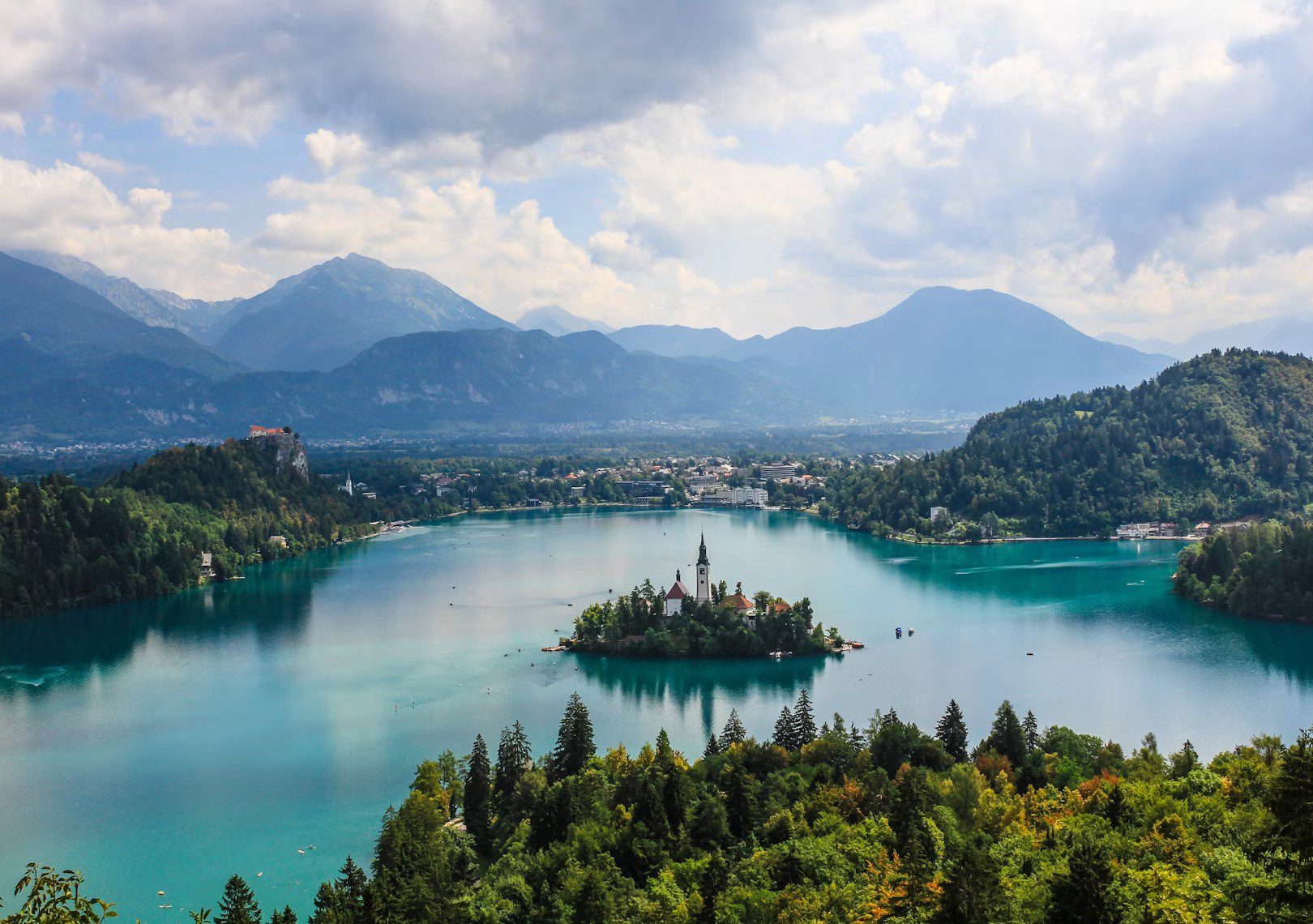
Yes, Slovenia is one of the safer destinations in Europe for solo travelers, including women traveling independently. The country ranks fourth worldwide in the 2026 Global Peace Index, the U.S. Department of State currently places it at Level 1 with advice to exercise normal precautions, and Canadian authorities likewise recommend normal security precautions for travelers visiting Slovenia.
For most visitors, the risks encountered in Ljubljana, Lake Bled, Piran or other established tourist destinations are relatively ordinary: pickpocketing can occur in crowded places, bars or nightclubs occasionally overcharge customers, and normal care is required with belongings on public transport and around stations. Violent crime is rare, and there is no official advice suggesting that solo tourists need to avoid any major Slovenian city or tourist region.
The part of Slovenia where safety requires much more serious planning is not the city but the mountains. The Julian Alps, Triglav National Park and other high-altitude areas attract enormous numbers of hikers, yet rapidly changing weather, steep terrain, via ferrata sections, inadequate equipment and route choices beyond a traveler’s ability cause hundreds of rescue operations every year. If your Slovenia itinerary includes serious hiking, mountain preparation matters considerably more than worrying about street crime.
Slovenia Safety at a Glance
- Overall safety: Very high. Slovenia ranks fourth worldwide in the 2026 Global Peace Index.
- Official travel advice: The United States currently rates Slovenia Level 1, Exercise Normal Precautions, while Canada recommends normal security precautions.
- Violent crime: Rare, including crimes directed at foreign visitors.
- Petty theft: Possible around tourist attractions, hotels, restaurants, bars, public transport, airports and railway stations.
- Solo female travel: Generally straightforward, with no special restrictions for women traveling independently.
- Nightlife: Usually manageable with normal precautions, although official travel advice warns about overcharging and drink spiking in some bars and nightlife environments.
- Mountain safety: The most significant destination-specific risk for many travelers, particularly in the Julian Alps and other high mountain areas.
- Driving: Generally safe, but motorway users need the correct electronic vignette and mountain roads require additional caution.
- Natural hazards: Sudden storms, flash floods, landslides, wildfires and occasional earthquakes can affect travel.
- Emergency numbers: 112 for medical emergencies, fire and mountain rescue; 113 for police.
Is Slovenia Safe? The Short Answer
Slovenia has an unusually favorable safety profile for travelers because serious violent crime is rare, infrastructure is well developed and most of the country’s major tourism destinations are compact, orderly and relatively easy to navigate independently. A first-time visitor walking through central Ljubljana or taking public transport between the country’s major towns generally does not need to adopt special security measures beyond the precautions that make sense elsewhere in Europe.
The 2026 Global Peace Index places Slovenia fourth worldwide, behind only Iceland, New Zealand and Switzerland. Rankings such as the Global Peace Index measure much more than the probability that a tourist will be robbed on holiday, so they should not be interpreted as a direct tourist-crime score, but Slovenia’s position nevertheless reflects the country’s broader environment of political stability, low levels of violence and strong societal safety.
Official travel advice tells a similar story. The U.S. Department of State’s current Level 1 advisory states that Slovenia is generally a safe destination and tells visitors to take standard precautions against petty crime. Canadian travel advice also classifies the country at its lowest general risk level and notes that violent crime is rare.
The more useful question is therefore not whether Slovenia is broadly safe, but which risks actually deserve attention. For an urban traveler, the answer is mostly petty theft and occasional nightlife scams. For someone planning to climb Triglav or spend several days hiking through the Julian Alps, the answer changes completely: weather, terrain, equipment and mountaineering experience become the dominant safety considerations.
Is Slovenia Safe for Solo Travelers?
Slovenia is particularly well suited to independent travel because many of its most popular destinations are easy to navigate without a guide. Ljubljana has a compact center and extensive public transportation, Bled and Bohinj have established tourism infrastructure, trains and buses connect many major destinations, and English is widely used throughout the tourism sector.
A solo traveler can therefore build an itinerary around Ljubljana, Bled, Bohinj, Piran, Postojna, Škofja Loka and other mainstream destinations without needing private transportation or organized tours simply for personal security.
The most relevant everyday precaution is keeping control of valuables in crowded environments. Canadian authorities specifically mention tourist sites, hotels, restaurants, bars, public transportation, airports and railway stations as places where pickpocketing or purse snatching can occur. Slovenia’s low overall crime level does not eliminate the basic opportunity that a crowded train platform or busy summer attraction creates for an opportunistic thief.
Solo travel requires more deliberate planning once you move into remote terrain. A route that feels uncomplicated because it appears clearly on a hiking app can involve steep exposure, changing weather or technical sections that are very different from ordinary recreational walking. Slovenia’s official mountain-safety guidance repeatedly emphasizes choosing routes according to experience, fitness and equipment rather than according to photographs or popularity.
Is Slovenia Safe for Solo Female Travelers?
Yes, Slovenia is generally a very manageable destination for solo female travel. There are no special restrictions that require women to structure an itinerary differently from other independent visitors, and the country’s major cities and tourist destinations can normally be explored using standard European travel precautions.
It is better, however, not to base a safety assessment on informal ratings such as “4.6 out of 5” or selected testimonials from travel forums. Those experiences can be useful when researching what a destination feels like, but they do not provide reliable evidence about the actual probability of harassment, assault or other safety problems.
For women traveling alone, the practical approach is straightforward: choose conveniently located accommodation, keep control of drinks and belongings when going out, avoid unnecessarily isolated areas when returning late at night and use a reliable taxi or app-based service if walking back to your accommodation no longer feels sensible.
Uber is available in Ljubljana in 2026 and works with licensed local taxi drivers through the Uber platform, providing an additional option for travelers who prefer to request and pay for a ride through an app rather than finding a taxi on the street.
Clothing is unlikely to require much thought during ordinary sightseeing because Slovenia is a modern European country without a general conservative dress code. Churches and other religious sites may expect visitors to dress appropriately, but that is a matter of respecting the individual site rather than a safety requirement specifically affecting women.
Is Ljubljana Safe for Solo Travelers?
Ljubljana is one of the easiest parts of Slovenia to navigate alone. The historic center is compact and highly walkable, many central streets are pedestrianized, restaurants and cafés create considerable activity throughout the day and evening, and public transportation connects areas beyond the Old Town.
The city’s low-crime atmosphere can make visitors relax their normal habits, but the usual crowded-city precautions remain useful. Keep phones and wallets in secure pockets or closed bags on busy transport and around major attractions, and do not leave valuables unattended at café tables or in easily accessible luggage.
Canadian travel advice specifically includes restaurants, bars, public transportation and transport terminals among locations where petty theft can occur. This does not mean these places are particularly dangerous in Ljubljana; it simply reflects the environments where opportunistic theft is most likely to affect a tourist.
Demonstrations also occur occasionally in Ljubljana, typically around prominent central squares and government institutions. They are usually unrelated to tourism, but large gatherings can disrupt traffic and public transportation, so avoid moving into a demonstration simply to observe it and use another route if necessary.
Is Ljubljana Safe at Night?
Central Ljubljana is generally straightforward to navigate after dark, particularly around the Old Town, riverside restaurants and other areas with regular pedestrian activity. A traveler does not normally need to organize every evening around avoiding the city center after sunset.
The distinction worth making is between a busy central street and an isolated area with little pedestrian activity. Walking through the illuminated riverside zone after dinner presents a very different environment from taking an unnecessary shortcut through an empty park or unfamiliar residential area late at night.
If you have been drinking, are carrying luggage or are staying far outside the center, using a licensed taxi or Uber can be more practical than walking a long route simply because Slovenia has a reputation for being safe.
Petty Crime and Pickpocketing in Slovenia
Petty theft is the criminal risk most relevant to an ordinary visitor. Official Canadian guidance warns that pickpocketing and purse snatching occur in crowded locations including tourist attractions, hotels, restaurants and bars, public transportation, airports and railway stations.
The appropriate precautions are uncomplicated. Keep your passport and unnecessary valuables somewhere secure, carry only the cash you expect to need, close bags properly in crowded environments and avoid leaving a phone or wallet somewhere that can be taken while your attention is elsewhere.
There is little reason to exaggerate the risk by suggesting that every crowded place in Ljubljana or Bled is filled with pickpockets. Slovenia’s broader crime level remains low, and violent crime is officially described as rare. The point is simply that a low-crime country does not make unattended belongings immune to theft.
Scams and Overcharging in Slovenia
Serious tourist scams are not one of Slovenia’s defining travel problems, but official Canadian advice highlights several issues worth knowing about. Certain bars and nightlife establishments may attempt to overcharge customers, and disputes over inflated bills have in some cases involved threats or violence.
The easiest precaution is to check prices before ordering, avoid maintaining an open tab when you are uncertain about a venue and review the bill before paying. If the pricing is unclear or an establishment feels deliberately evasive when you ask what something costs, choosing another venue is easier than trying to solve the problem later.
Credit card and ATM fraud also occurs. Use ATMs in visible, reputable locations, protect your PIN and pay attention if somebody else needs to handle your card.
Drink Spiking and Nightlife Safety
Drink spiking deserves more careful wording than simply claiming that assaults have occurred at a particular unnamed Ljubljana nightclub. Current Canadian travel advice specifically warns travelers not to leave food or drinks unattended and not to accept drinks, snacks or other consumables from new acquaintances because they could contain substances associated with robbery or sexual assault.
This is standard nightlife risk management rather than evidence that Ljubljana has an unusually severe drink-spiking problem. Keep your drink with you, buy directly from the bar and leave with people you trust if you begin feeling unexpectedly disoriented or unwell.
If something does happen, call 112 for urgent medical assistance or 113 for police.
Is Lake Bled Safe for Solo Travelers?
Lake Bled is generally an uncomplicated destination for solo travel. The lakefront, town and major attractions receive substantial numbers of visitors, and the tourism infrastructure is well established.
The main everyday security concern is keeping track of belongings during busy summer periods, particularly around transport stops, major viewpoints and other places where visitors regularly put down bags while taking photographs or checking directions.
Outdoor safety becomes more relevant if you leave the lakeside environment for hiking. A short walk around Lake Bled and a mountain route into higher terrain should not be treated as the same category of activity simply because both begin near a popular tourist destination.
Is Lake Bohinj Safe?
Lake Bohinj is also generally safe, but it has a more natural and less urbanized setting than Bled. That can make it especially attractive to independent travelers, although the quieter environment should not automatically be interpreted as safer or more dangerous.
The important difference is access to the surrounding mountains. Bohinj sits directly beside major hiking areas within Triglav National Park, so a visitor can move very quickly from an easy lakeside walk into serious mountain terrain.
Check weather and route conditions before leaving, carry appropriate clothing and water, and do not assume that mobile-phone coverage or a mapping app can substitute for proper route planning.
Is Piran and the Slovenian Coast Safe?
Piran, Koper, Izola and Portorož are generally straightforward coastal destinations for solo travelers, with the same low everyday crime concerns that apply elsewhere in Slovenia.
Swimming and coastal weather create additional seasonal risks. Canadian travel guidance warns that coastal conditions can become dangerous during severe weather, particularly when waves and undertows increase. Follow beach warnings, avoid entering rough water and never dive into unfamiliar water where rocks or shallow sections may be hidden below the surface.
The Slovenian coast becomes considerably busier during summer, so petty-theft awareness becomes somewhat more relevant around crowded beaches and tourist areas, although there is no reason to portray the coast as a significant crime hotspot.
The Biggest Safety Risk in Slovenia: Mountain Hiking
For many travelers, the mountains represent the most consequential safety risk in Slovenia. The country’s excellent infrastructure, attractive photography and popularity among hikers can create the impression that routes in the Julian Alps are simply well-maintained walks through beautiful scenery, but many high-altitude trails involve demanding terrain, steep drops, loose rock, sudden storms and sections where specialized equipment may be required.
The scale of mountain rescue activity is significant. Slovenian authorities reported that mountain rescue teams carried out 660 rescue operations during 2025, while 50 people died in mountainous and other difficult-to-access terrain, a record figure that prompted renewed safety campaigns for the 2026 hiking season.
The most common problems are not mysterious alpine dangers but preventable planning failures: unsuitable footwear, insufficient equipment, lack of experience, routes that exceed physical ability, poor weather decisions and navigation mistakes.
Slovenian Police specifically advise hikers to use marked trails, check the weather, select routes according to their abilities and inform someone about their planned destination and expected return. Official U.S. travel advice goes further and explicitly tells travelers never to hike alone in the Julian Alps.
Should You Hike Alone in Slovenia?
For ordinary low-risk walks, solo travel and solo hiking are not automatically the same thing as attempting an alpine ascent, but official Slovenian Police guidance advises against hiking or mountaineering alone because even a relatively minor injury can become serious when nobody is available to help.
The U.S. Department of State’s current Slovenia advisory also specifically tells travelers not to hike alone in the Julian Alps.
If you are an experienced independent hiker deciding how to interpret that advice, the most important point is that Slovenia’s high mountains should not be approached casually simply because trails are marked. Tell somebody exactly where you are going, use official trail information, know the difficulty classification, carry appropriate equipment and reconsider the route when weather deteriorates.
If you are unfamiliar with alpine terrain, Slovenia’s official tourism organization recommends going with a mountain guide, particularly for demanding high-mountain routes.
How to Hike Safely in the Julian Alps
- Choose a route that matches your actual mountain experience rather than selecting one primarily because of photographs or popularity.
- Check the weather forecast and current trail conditions immediately before departure.
- Use marked mountain trails and do not take shortcuts across unfamiliar terrain.
- Start early enough to reduce exposure to afternoon thunderstorms and avoid finishing after dark.
- Wear proper hiking footwear and carry layers suitable for sudden temperature changes.
- Carry enough water, food, a first-aid kit, navigation tools and emergency equipment appropriate to the route.
- Tell somebody where you are going and when you expect to return.
- Confirm that mountain huts are open if your route depends on them for accommodation or supplies.
- Do not assume every difficult trail is a conventional hike; some routes contain protected climbing or via ferrata sections.
- Turn around when weather, fatigue or terrain makes continuing unsafe rather than treating reaching the summit as the only successful outcome.
Is Hiking Triglav Safe?
Mount Triglav is Slovenia’s highest peak at 2,864 meters and should be treated as a genuine alpine objective rather than simply another sightseeing stop inside a national park. Routes vary considerably in difficulty, and the upper sections of common approaches can involve exposed terrain and protected climbing sections where a helmet, harness and via ferrata equipment may be appropriate or necessary depending on the route.
Travelers without experience in this type of terrain should strongly consider using a qualified mountain guide. The fact that large numbers of people climb Triglav every year does not make the mountain technically suitable for every visitor.
Weather is another important variable. A clear morning can develop into thunderstorms or rapidly reduced visibility, which is why starting early and checking mountain-specific forecasts matters far more than relying on the weather shown for Ljubljana or Bled.
Mountain Rescue and Travel Insurance
If an accident occurs in the Slovenian mountains, call 112. This number connects emergency services including mountain rescue and works throughout Slovenia.
Travel insurance should match the activities you actually plan to do. A policy that is appropriate for sightseeing in Ljubljana may have different exclusions or limitations for high-altitude hiking, via ferrata, climbing or other adventure activities.
Do not assume that simply having ordinary medical coverage means every possible consequence of a mountain accident is automatically covered. Check the policy’s altitude limits, hiking and climbing definitions, medical treatment provisions and evacuation terms before attempting demanding routes.
Weather Risks in Slovenia
Slovenia can experience sudden and severe weather despite its relatively small size. Official travel advice warns that storms may bring strong wind, heavy rain, lightning, hail and snowfall, with resulting landslides and road closures possible in affected regions.
Flash floods are another risk, particularly after intense rainfall. Slovenia experienced severe flooding in recent years, which is a useful reminder that rivers, gorges and mountain valleys can change conditions very quickly during extreme weather.
Hot and dry periods can also create wildfire risk, while western Slovenia lies in a seismically active area where occasional earthquakes and tremors occur.
For an ordinary city trip, none of these hazards should create constant concern. For hiking, road trips and outdoor itineraries, checking official weather and road conditions each day is a much more useful precaution.
Bears and Wildlife in Slovenia
Brown bears live in Slovenia, particularly in forested areas, and wolves are also present. Encounters are uncommon for ordinary tourists, but official UK travel advice specifically tells hikers to take care in areas where bears have been sighted.
This does not mean Lake Bled or Ljubljana should be approached as wildlife-risk destinations. The issue matters primarily for people hiking through forested or rural areas where large wildlife lives naturally.
If local warnings indicate recent bear activity, follow the advice of park authorities and do not deliberately approach or follow an animal for photographs.
Is Public Transport Safe in Slovenia?
Public transportation is generally safe and practical for solo travelers. Trains and buses connect Ljubljana with many of the country’s major destinations, making it possible to travel independently without renting a car.
The relevant security issue is petty theft rather than personal violence. Canadian guidance lists public transportation, airports and railway stations among environments where pickpocketing can occur, so keep luggage within sight and valuables secured when boarding crowded services.
This is particularly important during summer or large events, when stations and popular routes carry more visitors and passengers are more likely to be distracted by luggage, tickets and navigation.
Is It Safe to Drive in Slovenia?
Driving in Slovenia is generally straightforward, with a developed road network and modern motorway system, but mountain roads require a different level of concentration from the country’s main highways. Narrow roads, sharp turns, steep gradients and winter weather can make otherwise short routes significantly more demanding.
If you use Slovenian motorways and most expressways in an ordinary passenger car, you need an electronic vignette linked to the vehicle’s registration number. In 2026, the official price for a standard class 2A passenger car is €16 for seven days, €32 for one month and €117.50 for an annual vignette.
The vignette must be valid before entering roads where it is required, so buy through the official DARS system or an authorized seller rather than relying on unofficial websites that may charge additional service fees.
There is also a useful 2026 change for coastal drivers: the H5 and H6 coastal expressway sections around Koper no longer require a vignette from January 1, 2026.
Driving-licence requirements depend on the licence you hold, so generic advice saying that every tourist needs an International Driving Permit is inaccurate. Check the rules applying to your licence and the requirements of your rental company before departure.
Winter Driving in Slovenia
Winter road travel requires additional preparation. Slovenia requires winter equipment from November 15 through March 15 and whenever winter weather conditions such as snow, ice or black ice occur outside those dates.
Mountain passes can become difficult or temporarily close during heavy snow, so drivers heading toward alpine areas should check current traffic and road information before setting out.
If driving is not essential to your winter itinerary, trains and buses can remove much of this risk, particularly for city-to-city travel.
Taxi and Uber Safety in Ljubljana
Licensed taxis are widely available, and Uber is currently operating in Ljubljana. Uber’s Slovenian service partners with licensed local taxi drivers rather than functioning as an entirely separate unlicensed ride network.
Using an app can be convenient for solo travelers because the requested journey, driver and payment are documented digitally. Conventional taxis are also a normal transportation option, but if you are uncertain about a late-night ride, asking your hotel or restaurant to arrange one is a simple alternative.
Is Slovenia Safe for LGBTQ+ Travelers?
Slovenia provides a comparatively strong legal environment for LGBTQ+ travelers. Same-sex marriage is legal, and the country’s Family Code defines marriage as a union of two persons rather than limiting it by gender.
Legal equality does not mean every individual’s social experience will be identical, and attitudes can vary between urban and rural environments, as they do elsewhere in Europe. Ljubljana has the country’s most visible LGBTQ+ community and generally provides the easiest environment for travelers looking for LGBTQ+-oriented nightlife or events.
There is no official travel advice indicating that LGBTQ+ visitors need to avoid Slovenia, and homosexuality is legal. Normal situational awareness remains appropriate when evaluating public displays of affection or unfamiliar nightlife environments.
Emergency Numbers in Slovenia
- 112 — emergency medical assistance, fire, mountain rescue and other emergency services.
- 113 — police emergency assistance.
The European 112 emergency number can be called free of charge, including from a mobile phone. If you are hiking, give rescuers as precise a location as possible and explain the route or landmark you are near rather than relying only on the name of a mountain.
Practical Solo Travel Safety Tips for Slovenia
- Keep your passport and unnecessary valuables secure rather than carrying everything together in an easily accessible bag.
- Pay additional attention to belongings around busy tourist attractions, transport stations, restaurants and bars.
- Check bar and nightclub prices before ordering and review the bill before paying.
- Never leave drinks unattended and do not accept open drinks from strangers.
- Use a licensed taxi or Uber when a late-night walk through an unfamiliar area is unnecessarily long or isolated.
- Call 112 for medical emergencies, fire or mountain rescue and 113 for police.
- Do not treat high-altitude hiking as an extension of ordinary city sightseeing.
- Use marked mountain routes, check weather and trail conditions and tell somebody your itinerary before leaving.
- Avoid solo high-mountain hiking in line with official Slovenian and U.S. safety guidance.
- Check whether your travel insurance actually covers hiking, via ferrata or other mountain activities you intend to do.
- Buy the correct electronic vignette before using Slovenian motorways when driving.
- Check current weather warnings before entering mountains, gorges or remote areas because severe storms and flash floods can develop quickly.
- Carry offline navigation for outdoor travel, but use hiking-specific official route information rather than depending exclusively on general map apps.
- Do not use closed hiking trails or take apparently convenient shortcuts through unmarked terrain.
What Solo Travelers Should Actually Worry About
The safety issues most likely to affect an ordinary Slovenia trip are much less dramatic than many travel guides imply. In Ljubljana or Bled, losing a wallet in a crowded place, dealing with an inflated nightlife bill or simply misjudging a late-night route is more plausible than becoming a victim of serious violent crime.
In the mountains, that hierarchy changes completely. A poorly chosen trail, rapidly developing thunderstorm, slip on steep terrain or lack of appropriate equipment can have much more serious consequences than anything a typical visitor is likely to encounter in a Slovenian city.
This distinction is useful because it prevents both complacency and unnecessary fear. Slovenia’s excellent general safety record means there is little reason to treat city travel as hazardous, while the country’s mountain environment deserves substantially more respect than its accessible tourism infrastructure may initially suggest.
Frequently Asked Questions
Is Slovenia safe for solo travelers?
Yes. Slovenia is generally very safe for independent travelers, with rare violent crime and the lowest level of official travel caution from both the United States and Canada. Petty theft can occur in crowded tourist areas, while mountain safety is the more important issue for travelers planning serious hiking.
Is Slovenia safe for solo female travelers?
Yes. Women can travel independently around Ljubljana, Bled, Bohinj, Piran and other mainstream destinations without unusual restrictions. Normal precautions around nightlife, drinks, valuables and isolated late-night areas remain sensible.
Is Ljubljana safe at night?
Central Ljubljana is generally straightforward at night, particularly around the Old Town and busy riverside areas. Solo travelers should still avoid unnecessarily isolated routes and use a licensed taxi or Uber when returning a long distance late at night.
Is Lake Bled safe for solo travelers?
Yes. Lake Bled is a highly developed tourism destination with low everyday security risk. Keep control of belongings during busy periods and distinguish easy lakeside activities from more demanding hiking routes into the surrounding mountains.
Is Lake Bohinj safe for solo travelers?
Yes, although Bohinj provides quicker access to remote mountain terrain than an ordinary city destination. Lakeside travel is straightforward, but hikes into Triglav National Park require proper route planning and equipment.
Is Slovenia safer than other European countries?
Slovenia performs exceptionally well on international peace and safety indicators and ranks fourth worldwide in the 2026 Global Peace Index. Comparisons between individual cities or countries should still be treated cautiously because travel risk depends on activity, location and personal circumstances.
What are the biggest safety risks in Slovenia?
For ordinary tourists, the most relevant urban risks are petty theft, occasional nightlife overcharging and drink spiking. For outdoor travelers, accidents in the mountains, severe weather, flash floods and poor route preparation can be substantially more serious.
Is it safe to hike alone in Slovenia?
Official Slovenian Police guidance advises against hiking or mountaineering alone, particularly because even a relatively minor accident can become serious in remote terrain. The current U.S. travel advisory also explicitly tells travelers never to hike alone in the Julian Alps.
Is hiking in Triglav National Park dangerous?
Many lower routes are accessible to ordinary hikers, but the park also contains demanding high-mountain trails, exposed terrain and via ferrata sections. Choose routes according to your experience, check weather and trail conditions and consider hiring a guide for unfamiliar or technical routes.
Do I need travel insurance for hiking in Slovenia?
Travel insurance is strongly worth considering, but the important issue is whether the policy covers the activities you actually intend to do. Check hiking, altitude, climbing, via ferrata, medical treatment and evacuation provisions rather than assuming every general policy provides identical coverage.
Is public transport safe in Slovenia?
Yes. Buses and trains are generally safe and practical. Keep luggage and valuables secure in crowded vehicles and at stations because petty theft can occur in transportation environments.
Is it safe to drive in Slovenia?
Yes, although mountain roads and winter conditions require additional caution. Drivers using most motorways and expressways need the correct electronic vignette, which costs €16 for seven days for a standard passenger car in 2026.
Is Uber available in Ljubljana?
Yes. Uber operates in Ljubljana in 2026 and connects users with licensed local taxi drivers through the Uber app.
What emergency number should I call in Slovenia?
Call 112 for ambulance, fire, mountain rescue and other emergency assistance. Call 113 when you specifically need police assistance.
Is Slovenia safe for LGBTQ+ travelers?
Slovenia has legal same-sex marriage and provides a comparatively strong legal environment for LGBTQ+ couples. Ljubljana has the country’s most visible LGBTQ+ community, while social attitudes can naturally vary between individuals and regions.
Bottom Line: Is Slovenia Safe for Solo Travel?
Slovenia is one of Europe’s strongest destinations for solo travelers from a general personal-security perspective. Its fourth-place position in the 2026 Global Peace Index, Level 1 U.S. travel advisory and normal-security-precautions recommendation from Canada all reinforce the same conclusion: ordinary visitors do not need to approach Slovenia as a high-risk destination.
In Ljubljana, Bled, Piran and other mainstream destinations, normal awareness around valuables, nightlife and late-night transportation is usually enough. Pickpocketing exists, bars can occasionally overcharge visitors and drinks should never be left unattended, but violent crime is rare and there is little justification for treating Slovenian cities as places where solo travelers need constant security precautions.
The mountains deserve a different level of attention. Slovenia recorded hundreds of mountain rescue operations in 2025 and a record number of fatalities in mountainous and difficult-to-access terrain, while both Slovenian authorities and current U.S. travel advice explicitly discourage hiking alone. A marked trail, popular summit or beautiful weather photograph should never replace evaluating the technical difficulty of a route, carrying the correct equipment and checking current conditions.
For a traveler who understands that distinction, Slovenia is an unusually easy country to explore independently. Use ordinary city precautions in populated areas, become much more conservative when entering high mountain terrain and plan outdoor activities with the same seriousness you would give any genuine alpine environment. That approach addresses the risks that actually matter without exaggerating those that generally do not.