

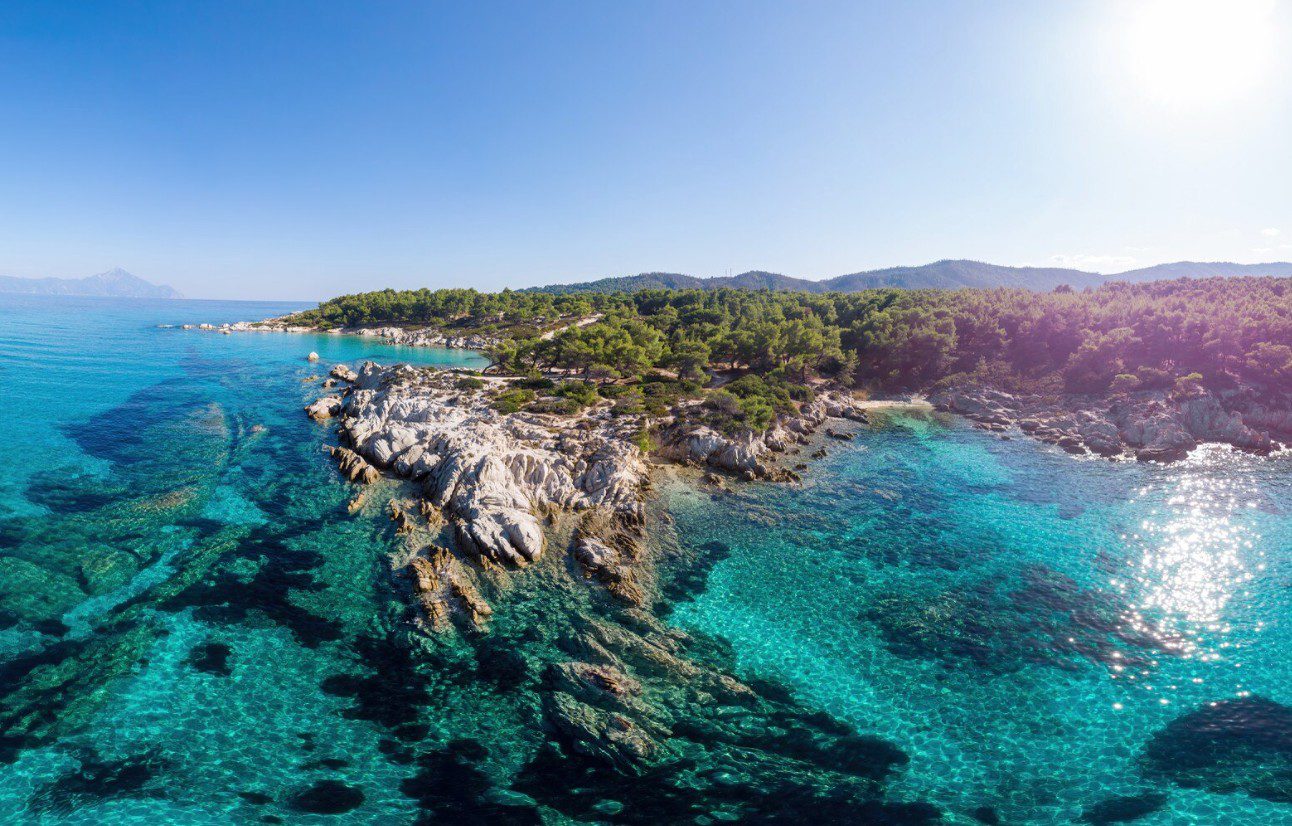
The Albanian Riviera unfurls along the Ionian coast with waters so turquoise they rival the Maldives, while the Accursed Mountains of the north rise in jagged peaks that challenge the Dolomites for drama. Ottoman-era stone cities cascade down hillsides, ancient Greek and Roman ruins lie half-swallowed by forest, and the entire country fits into a space smaller than Switzerland.
You can drive from the Adriatic coast to the Albanian Alps in about four hours, but the winding mountain roads and the sheer density of sights mean you will want to take your time. Beach lovers, history buffs, hikers, and anyone seeking Europe’s most underrated destination will find exactly what they are looking for here.
The Most Beautiful Places in Albania
Tirana
Pastel-painted buildings in shades of pink, yellow, and blue line the boulevards, and from the cable car ascending Dajti Mountain, the entire capital sprawls below like a colorful mosaic against a backdrop of rugged peaks.
Tirana is Albania’s vibrant, rapidly transforming capital. Once a drab communist outpost, the city has exploded with color since the early 2000s when then-mayor Edi Rama ordered the painting of facades in bright hues. Skanderbeg Square, the city’s heart, is a vast pedestrian space flanked by the National History Museum with its iconic socialist-realist mosaic, the Et’hem Bej Mosque dating to 1789, and the Clock Tower. The Blloku district, once off-limits to all but communist elite, is now the city’s trendy hub of cafes, bars, and boutiques. The Pyramid of Tirana, a former museum dedicated to Enver Hoxha, has been repurposed as a youth center and cultural space, while Bunk’Art 1 and 2 offer sobering insights into the country’s communist past.
Climb the Clock Tower for views over Skanderbeg Square, then wander through Blloku for the city’s best cafe culture. Take the Dajti Ekspres cable car for panoramic views over the capital and beyond. Visit the National History Museum for a deep dive into Albania’s ancient and modern history. The city is compact and walkable, with a thriving culinary scene.
Honest note: Tirana is a city of contrasts — colorful and chaotic, with traffic that can be relentless. The summer heat is oppressive, and the city’s gritty edges are still visible. Come in spring or autumn for the best experience.
(Best for: urban explorers and culture seekers)
Berat — The City of a Thousand Windows
White Ottoman houses with countless windows cascade down a hillside toward the Osum River, and above them, a 13th-century castle crowns the hill like a stone guardian.
Berat, a UNESCO World Heritage site, is one of Albania’s most iconic cities. Its nickname, “the City of a Thousand Windows,” comes from the rows of large windows on the whitewashed Ottoman houses that climb the steep hillside. The Berat Castle, built on a rocky hill in the 13th century, is one of the largest and best-preserved fortresses in Albania, and remarkably, it is still inhabited. Inside the castle walls are Byzantine churches with medieval frescoes, the Onufri Museum housing precious icons of Albanian Byzantine art, and narrow cobblestone streets lined with traditional houses.
Explore the castle — it’s a living neighborhood, not just ruins — and visit the Onufri Museum inside the Cathedral of the Dormition of St. Mary. Wander the Mangalem and Gorica quarters on opposite sides of the river, connected by the iconic Gorica Bridge. The views from the castle over the Osum River valley are spectacular, especially at sunset. Berat is also known for its winemaking tradition — visit a local winery in the surrounding hills.
Honest note: Berat is popular for a reason, and it gets crowded with tour buses in summer. The climb to the castle is steep, but the views are worth every step. The city is small — you can see the highlights in a day, but it deserves an overnight stay.
(Best for: history lovers and photographers)
Gjirokastër — The Stone City
Grey stone tower houses with stone-slab roofs climb the slopes of Mount Gjerë, and from the castle at the top, the entire Drino Valley stretches out like a green carpet below.
Gjirokastër, another UNESCO World Heritage site, is known as the “Stone City” for its distinctive Ottoman-era tower houses built entirely of stone. The city’s architecture reflects both defensive needs and Ottoman aesthetics, with tall stone structures, small windows, and characteristic stone-tiled roofs. The Gjirokastër Castle, one of the largest and best-preserved castles in Albania, offers panoramic views over the entire Drino Valley. The Old Bazaar, with its narrow cobblestone streets and artisan workshops, is the traditional heart of the city. The city was the birthplace of communist dictator Enver Hoxha, and his former house is now a museum.
Climb to the castle — the armaments museum inside and the views from the ramparts are unmissable. Wander the cobblestone streets of the Old Bazaar, and visit the Skëndulat House or the Ethnographic Museum for a glimpse into traditional Ottoman-era life. If you’re visiting in late summer, the National Folklore Festival brings the city to life with music and dance from across Albania.
Honest note: Gjirokastër is hilly — be prepared for steep climbs. The city is authentic and less polished than Berat, which is part of its appeal. The stone houses are stunning, but some areas are in need of restoration. The drive from the coast takes about an hour and a half.
(Best for: history buffs and architecture enthusiasts)
Ksamil
Turquoise water so clear you can see the sandy bottom from the shore laps against white-sand beaches, and just offshore, small islands beckon you to paddle out and explore.
Ksamil, on the Albanian Riviera near the Greek border, is often called the “Maldives of Europe” for its impossibly clear turquoise waters and white-sand beaches. The coastline around this small town is a squiggle of interlocking coves, miniature islands, and forested headlands. The Ksamil Islands, just a short kayak or swim from the shore, offer secluded swimming spots and snorkeling opportunities. Ksamil is also a convenient base for visiting nearby Butrint National Park and the Blue Eye.
Beach-hop between Lori Beach, Paradise Beach, and Bora Bora Beach — all have crystal-clear water. Rent a kayak and paddle out to the Ksamil Islands for the best experience. At sunset, grab dinner at a waterfront restaurant with views of Corfu in the distance. The water is calm and clear, making it perfect for swimming and snorkeling.
Honest note: Ksamil has become Albania’s most popular beach destination, and in July and August, it is packed. The beaches are narrow, and sunbeds are crammed together. Come in June or September for the same water without the crowds. The town itself is small and built for tourism.
(Best for: beach lovers and families)
Sarandë
A sweeping bay framed by green hills opens onto the Ionian Sea, and a lively seaside promenade buzzes with restaurants, bars, and beach clubs that keep the city alive well into the night.
Sarandë is the largest city on the Albanian Riviera and a major gateway to the southern coast. Built into a bay overlooking the Ionian Sea, it has a different energy than Ksamil — bigger, busier, and more developed. The city’s long seaside promenade is always alive, lined with waterfront restaurants serving fresh seafood, beach clubs, and bars. Sarandë is also the perfect base for exploring Butrint National Park, the Blue Eye, and the beaches of Ksamil, all within easy reach.
Walk the seaside promenade at sunset — the views over the bay are spectacular. Take a day trip to Butrint National Park, just 20 minutes away, and explore its UNESCO-listed ancient ruins. Visit the Blue Eye, a stunning natural spring with turquoise waters that bubble up from the depths. Head to Ksamil for a beach day, or take a boat tour to explore the hidden coves and sea caves along the coast.
Honest note: Sarandë is a city, not a village — it’s busy, noisy, and very developed. The beaches in town are pebbly and crowded. Use it as a base, not a destination. The summer heat is intense; spring and autumn are much more pleasant.
(Best for: travelers seeking a lively base and good infrastructure)
Shkodër
A castle from the 11th century commands the hilltop above the city, and from its walls, you can see the vast expanse of Lake Shkodër shimmering on the border with Montenegro.
Shkodër, in northwestern Albania, is the country’s cultural capital and the gateway to the Albanian Alps. The city is one of Albania’s oldest, with roots stretching back to antiquity. The Rozafa Castle, perched on a hilltop, is the city’s most iconic landmark, offering panoramic views of the city, Lake Shkodër, and the surrounding mountains. The castle is named after a woman who, according to legend, was walled into its foundations to ensure its stability. The city feels more European than other Albanian cities, with pedestrian streets, cafes spilling onto pavements, and plenty of cyclists. Shkodër is also the starting point for exploring Lake Skadar and the Albanian Alps.
Climb to Rozafa Castle for the best views over the city and Lake Shkodër. Wander the pedestrian streets of the city center, and visit the Lead Mosque and the Franciscan Church. Shkodër is the perfect base for exploring Lake Shkodër by boat, and for organizing hikes into the Albanian Alps. The city also has a vibrant cafe culture — find a spot and watch the world go by.
Honest note: Shkodër is more of a base than a destination. The castle is spectacular, but the city itself is not as visually striking as Berat or Gjirokastër. The summer heat can be intense. It’s the starting point for the Theth-Valbona trek, so it fills up with hikers in summer.
(Best for: hikers and culture seekers)
Theth National Park
Alpine meadows give way to jagged limestone peaks, a glacial river cuts through the valley, and the sound of the Grunas Waterfall echoes off the canyon walls.
Theth National Park, deep in the Albanian Alps (also known as the Accursed Mountains), is a paradise for nature lovers and hikers. The remote village of Theth, nestled in a valley at about 800 meters elevation, is the heart of the park. The area is known for its dramatic landscapes: the Grunas Waterfall, the Grunas Canyon, the Blue Eye of Theth (a vibrant turquoise cold-water pool), and the distinctive “kullas” — traditional stone tower-houses that once served as defensive structures. The Theth to Valbona hike is the most famous trail in the region, a six-to-nine-hour trek through spectacular alpine scenery.
Hike to the Grunas Waterfall — the trail follows the river through the canyon and takes about an hour each way. Visit the Blue Eye of Theth for a bracingly cold swim in the turquoise pool. For a full-day adventure, tackle the Theth to Valbona hike — it’s strenuous but unforgettable. The Peaks of the Balkans trail also passes through the region for multi-day trekking. Stay in a traditional kulla for an authentic mountain experience.
Honest note: Getting to Theth is an adventure in itself — the road from Shkodër is narrow, winding, and often in poor condition. The village is small, with limited accommodation and no ATMs. The hiking season is June to September; outside these months, snow blocks many trails. Come prepared with cash, layers, and a sense of adventure.
(Best for: hikers and nature lovers)
Valbona Valley National Park
Lush green valleys, dramatic waterfalls, and the imposing peaks of the Albanian Alps create a landscape that rivals Switzerland, but without the crowds or the prices.
Valbona Valley National Park is the other jewel of the Albanian Alps, located in the northeastern part of the country. The park is centered around the Valbona River, which cuts through the valley creating canyons, waterfalls, and pools. The Rragami Waterfall is one of the park’s highlights, a dramatic cascade that drops into a crystal-clear pool. The Dragobi Cave, a large karst cave, is another popular attraction. The park is the starting or ending point for the famous Theth to Valbona hike, and it offers numerous other trails for all levels.
Hike the trails around Valbona — the valley floor is relatively flat, making for easy walks, while the surrounding peaks offer challenging ascents. Visit the Rragami Waterfall for a swim in the cold, clear pool. Explore the Dragobi Cave, which requires a guide and proper equipment. The Valbona to Theth hike is the classic — you can do it in either direction, but most start in Valbona and end in Theth.
Honest note: Valbona is more accessible than Theth, but the road is still winding and slow. The valley is stunning, but the village itself is small and basic. Accommodation is limited — book ahead in summer. The best time for hiking is July to September.
(Best for: hikers and nature lovers)
Butrint National Park
Ancient Greek and Roman ruins lie half-swallowed by Mediterranean forest, and the Vivari Channel connects Lake Butrint to the Ionian Sea, creating a landscape where history and nature are inseparable.
Butrint National Park, a UNESCO World Heritage site near Sarandë, is one of Albania’s most important archaeological sites. The ancient city of Butrint was first settled in the 4th century BC and was continuously inhabited until the Ottoman period. The site includes a Greek theater, Roman baths, a large early Christian baptistery (one of the largest of its type), a basilica, and Ottoman forts. According to legend, Butrint was founded by Trojan exiles fleeing the fall of Troy. The site is also a Ramsar wetland of international importance, sheltering 16 endangered plant species and 14 endangered animal species.
Explore the extensive ruins — the Greek theater, the Roman forum, and the early Christian baptistery are the highlights. Walk the walls and towers for views over Lake Butrint and the Vivari Channel. The site is large, so allow at least two to three hours. The on-site museum provides context for the ruins. The park is also excellent for birdwatching, with a variety of wetland and forest species.
Honest note: Butrint is spectacular but requires imagination — the ruins are extensive but unlabeled in places. The summer heat is intense; go early morning or late afternoon. The site is popular with tour groups from Sarandë and Ksamil, so visit early to avoid the crowds.
(Best for: history lovers and nature enthusiasts)
The Blue Eye
A deep, vertical spring of impossibly blue water bubbles up from the earth with such force that the surface appears to boil, and the surrounding forest creates a natural amphitheater of green.
The Blue Eye (Syri i Kaltër) is a natural spring and one of Albania’s most famous natural wonders. Located about 25 kilometers from Sarandë, the spring is a deep vertical pool of vibrant turquoise water that bubbles up from an underwater cave more than 50 meters deep. The water is cold — around 10°C year-round — but on a hot summer day, it’s irresistibly refreshing. The spring feeds a small river that flows through the surrounding forest, creating a lush, green environment. The Blue Eye is accessible via a short walk from the parking area.
Walk the short trail from the parking lot to the spring — the pool is visible from a wooden viewing platform. On hot days, swim in the cold, clear water — it’s bracing but unforgettable. The surrounding forest is perfect for a picnic. The Blue Eye is often combined with a visit to Butrint or Ksamil, as it’s on the same route.
Honest note: The Blue Eye is a roadside attraction — it’s beautiful but small, and you can see it in 30 minutes. The water is freezing, even in summer. The site gets very crowded in July and August; go early or late in the day. The road to the Blue Eye has improved but is still winding.
(Best for: nature lovers and photographers)
Llogara National Park
The road climbs through pine forests to a pass at 1,000 meters, and suddenly, the entire Albanian Riviera unfolds below — a sweeping curve of turquoise sea and green coastline that takes your breath away.
Llogara National Park, located on the Llogara Pass between the Adriatic and Ionian coasts, is one of Albania’s most dramatic landscapes. The park covers the ridge of the Ceraunian Mountains, offering panoramic views over the Albanian Riviera and the Ionian Sea. The pass itself is the main attraction — a winding road that climbs from sea level to over 1,000 meters. The park is known for its dense pine forests, hiking trails, and spectacular viewpoints. The area is also popular for paragliding, offering bird’s-eye views of the coast.
Drive the Llogara Pass — the views from the top are some of the best in Albania. Hike the trails through the pine forests for even more spectacular views. Paragliding is available for the adventurous — it’s an unforgettable way to see the coast. Stop at the viewpoint restaurants for a meal with a view. The park is also a great place for a picnic.
Honest note: The Llogara Pass road is winding and steep — drive carefully. The park is small and can be seen in a few hours. The views are spectacular, but the roadside is developed with restaurants and souvenir stalls. The best time to visit is in the late afternoon when the light is golden.
(Best for: road-trippers and photographers)
Lake Ohrid — Pogradec
Europe’s oldest and deepest lake stretches into the distance, its surface so clear you can see the bottom at 15 meters, and the mountains of North Macedonia rise on the far shore.
Lake Ohrid, shared between Albania and North Macedonia, is one of Europe’s oldest and deepest lakes, estimated to be over three million years old. The Albanian town of Pogradec sits on the western shore, offering a quieter alternative to the more developed Macedonian side. The lake is known for its exceptional clarity, unique biodiversity, and the famous koran fish (a local trout found nowhere else). The area is a UNESCO World Heritage site, recognized for both its natural and cultural value.
Walk the lakeside promenade in Pogradec for the best views of the lake. Take a boat trip on the crystal-clear waters. Visit the village of Lin, with its ancient mosaics and stunning lake views. Explore Drilon Park, a lush green space at the lake’s edge. The koran fish is a local delicacy — try it grilled at a lakeside restaurant.
Honest note: Pogradec is a quiet lakeside town, not a lively resort. The lake is beautiful, but the town’s infrastructure is basic. The best time to visit is summer for swimming, but spring and autumn are pleasant too. The lake is a day-trip destination from Tirana or Korça.
(Best for: nature lovers and those seeking tranquility)
Krujë
A medieval castle perches on a rocky outcrop above the town, and the Old Bazaar below it has been selling wares for over 500 years in the same cobblestone streets.
Krujë, just an hour from Tirana, is the spiritual heart of Albanian history. The town was the stronghold of national hero Skanderbeg, who resisted Ottoman rule for 25 years in the 15th century. The Krujë Castle, built in the 5th and 6th centuries, was his headquarters, and inside it now houses the Skanderbeg Museum, dedicated to his life and legacy. The Old Bazaar, a pedestrian street of cobblestones, is lined with shops selling traditional crafts, carpets, and antiques. The Ethnographic Museum, housed in an 18th-century Ottoman house, offers a glimpse into traditional Albanian life.
Visit the Skanderbeg Museum inside the castle — it’s a well-curated tribute to Albania’s national hero. Wander the Old Bazaar — the crafts and carpets are excellent souvenirs. Explore the Ethnographic Museum for a sense of traditional life. The views from the castle over the surrounding mountains and plains are spectacular.
Honest note: Krujë is a popular day trip from Tirana and can be crowded. The Old Bazaar is touristy but fun. The castle and museums are excellent, but the town itself is small. The drive from Tirana is short and easy.
(Best for: history lovers and day-trippers)
Durrës
One of the largest Roman amphitheaters in the Balkans sits in the heart of a modern city, and beyond it, a long stretch of Adriatic beach draws sun-seekers from across the region.
Durrës is Albania’s second-largest city and one of the oldest, with over 3,000 years of history. The city’s main attraction is its Roman Amphitheater, one of the largest in the Balkans, dating to the 2nd century AD and capable of seating 15,000 spectators. The amphitheater’s underground galleries and early Christian chapel are well-preserved. Durrës also has one of the longest beachfronts in Albania, with a lively promenade lined with hotels, restaurants, and bars. The city was known as Dyrrhachium in antiquity and was a major port on the Adriatic.
Explore the Roman Amphitheater — the underground passages and the chapel are fascinating. Walk the seaside promenade and relax on the long, sandy beaches. Visit the Durrës Archaeological Museum for more context on the city’s ancient history. The Venetian Tower and the Fatih Mosque are also worth a stop. The beach is the main draw for summer visitors.
Honest note: Durrës is a working city and a beach resort — it’s functional and busy, not picturesque. The amphitheater is excellent, but the rest of the city is modern and unremarkable. The beaches are crowded in summer. It’s best as a day trip from Tirana or as a transit point.
(Best for: history buffs and beach-goers)
Himara
A whitewashed hilltop old town overlooks a sweeping bay of turquoise water, and the beaches below are less crowded than Ksamil but just as beautiful.
Himara is a charming coastal town on the Albanian Riviera, quieter and more authentic than Sarandë or Ksamil. The town is divided into two parts: the new town along the waterfront, with its restaurants and bars, and the old town on the hill above, with its whitewashed stone houses, narrow cobbled streets, and panoramic sea views. Himarë is a growing coastal resort and works well as a base for exploring the Riviera. The nearby beaches of Livadhi, Llamani, and Gjipe are less developed and more secluded.
Wander the old town’s cobblestone streets for views over the bay. Beach-hop to Livadhi, Llamani, and Gjipe — each has a different character, from wide sandy bays to narrow gorge beaches. Hike the scenic coastal trail from Dhërmi to Vuno. The town has a relaxed, laid-back vibe — perfect for unwinding after exploring Albania’s busy cities.
Honest note: Himara is growing fast, and construction is everywhere. The old town is beautiful, but the new town is functional. The beaches are less crowded than Ksamil, but they are still busy in July and August. The road to Himara is winding but in good condition.
(Best for: beach lovers seeking a quieter alternative)
Gjipe Beach
A narrow strip of white sand is wedged between towering limestone cliffs, accessible only by a 20-minute hike down a steep path or by boat — and that inaccessibility is exactly what keeps it so pristine.
Gjipe Beach is perhaps the most stunning and secluded beach on the Albanian Riviera. Tucked between dramatic limestone cliffs and the Ionian Sea, this narrow stretch of white sand and pebble is only accessible via a steep hiking trail from the village of Gjipe or by boat. The hike takes about 20 to 30 minutes from the parking lot and is relatively easy, but it keeps the beach sheltered from the largest crowds. The result is a patch of paradise that feels like a secret. The beach is backed by a canyon, and a small river flows into the sea at one end.
Hike the 20-minute trail from the parking area — the views from the trail are almost as impressive as the beach itself. Swim in the crystal-clear, turquoise water. Explore the canyon behind the beach — it’s a narrow gorge with climbing opportunities. Bring everything you need, including food and water, as there are no facilities on the beach.
Honest note: Gjipe is spectacular but remote. The hike is steep in places, and the path is rocky. There are no facilities — no restaurants, no sunbeds, no toilets. The beach is pebbly, not sandy. This is for nature lovers, not those seeking comfort. The best time to visit is early morning or late afternoon to avoid the midday sun.
(Best for: nature lovers and adventure seekers)
Tips for Visiting Albania
Getting around: A rental car is strongly recommended — public transport between mountain destinations like Theth, Valbona, and the more remote beaches is very limited. The coast is better connected by buses and furgons (minibuses), but a car gives you the freedom to stop at viewpoints and explore at your own pace. The roads, especially in the mountains, can be winding and in poor condition.
How many days: Ten to fourteen days will cover the highlights comfortably — three for Tirana and its surrounds, three for the Albanian Riviera (Sarandë, Ksamil, Himarë), three for the Albanian Alps (Theth, Valbona), and the rest for Berat, Gjirokastër, and the inland attractions. Seven days is a minimum for a condensed itinerary.
Best time to visit: May–June and September–October are ideal — the weather is warm but not hot, the crowds are thinner, and the landscapes are green or golden. Summer (July-August) is good for the coast and the mountains, but the coast is crowded and expensive, and the inland cities are hot. Winter is for skiing in the Albanian Alps.
Where to base: Tirana for the central region and day trips, Sarandë or Himarë for the south coast, Shkodër for the Albanian Alps. Don’t try to do the coast and the mountains from one base — the distances are deceptive, and the roads are slow.
Insider tip: The Llogara Pass road between Vlorë and the Albanian Riviera is one of the most scenic drives in Europe — take it slowly and stop at every viewpoint. The Albanian Alps (Accursed Mountains) are best explored on foot — the Theth to Valbona hike is the classic, but there are many other trails.
Frequently Asked Questions
What is the most beautiful place in Albania? Berat and Gjirokastër are neck-and-neck for most visitors — the Ottoman architecture and castle settings are unmatched. But for nature lovers, the Albanian Alps — particularly Theth and Valbona — offer landscapes that rival the Swiss Alps at a fraction of the cost.
What are the must-see places in Albania for first-time visitors? First-timers should prioritize Berat, Gjirokastër, the Albanian Riviera (Ksamil or Himarë), and the Albanian Alps (Theth or Valbona). These four give you the full range of Albania’s Ottoman history, coastal beauty, and mountain drama.
How many days do you need to see the best of Albania? A minimum of ten days — three for Tirana and surrounds, three for the Albanian Riviera, and four for the Albanian Alps and inland UNESCO cities. With two weeks, you can explore at a more relaxed pace and add lesser-known destinations.
What is the prettiest town in Albania? Berat is often called the prettiest — its white Ottoman houses cascading down the hillside toward the Osum River are postcard-perfect. Gjirokastër’s grey stone houses are more dramatic and authentic.
Is Albania safe for solo travelers? Yes, Albania is very safe for solo travelers. Crime against tourists is low, and locals are famously hospitable. The main risks are road conditions and hiking safety — plan accordingly, and avoid driving mountain roads at night.
Albania rewards travelers who embrace its chaos — the unreliable roads, the language barrier, the unpredictable weather, and the unpolished edges. The coast is spectacular, the mountains are world-class, and the Ottoman towns are unlike anything else in Europe. If you’re the type who’d rather hike to a hidden beach than lounge at a resort, you’ll get the most out of this small but mighty country.
 admin
admin