

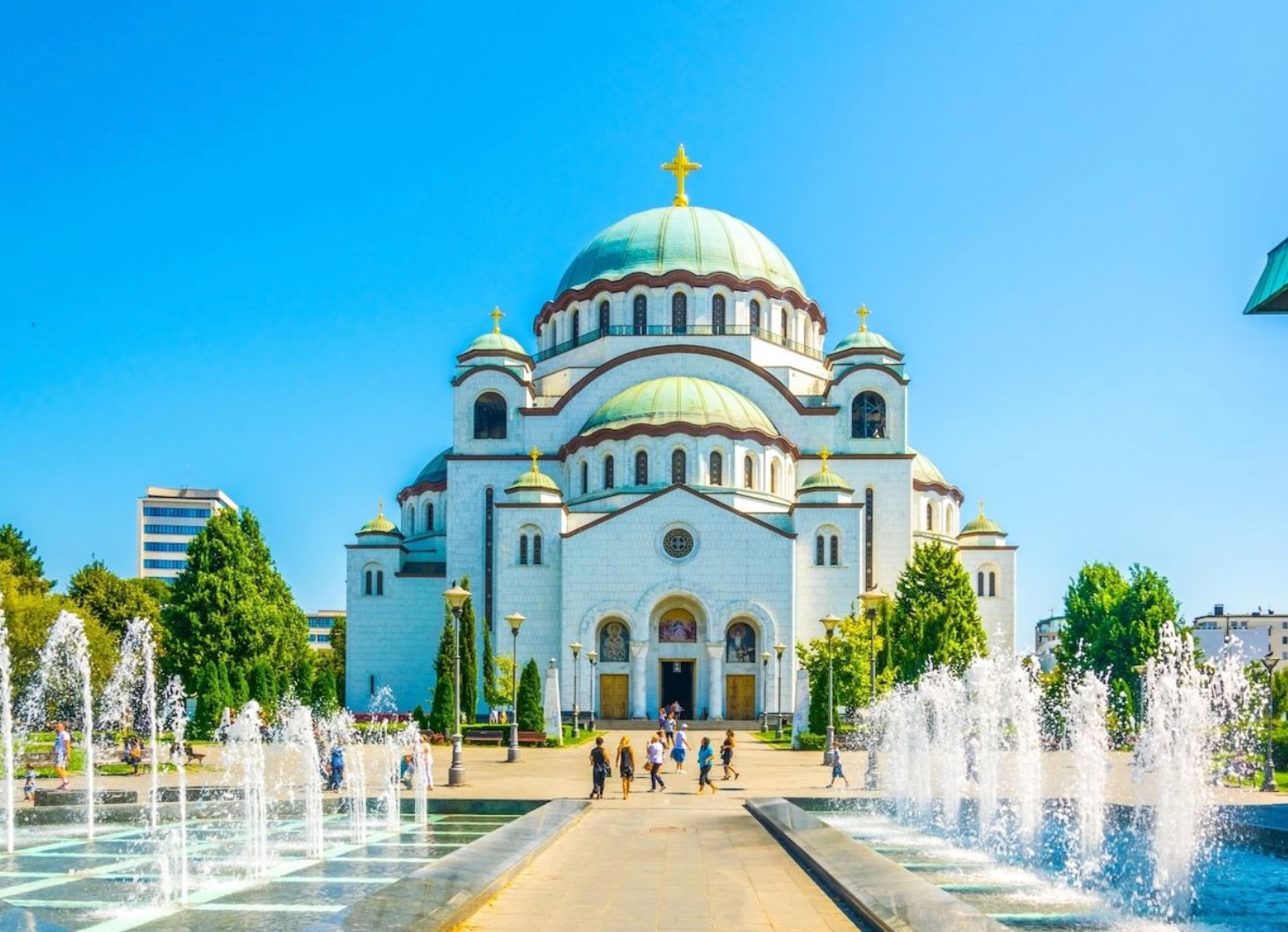
Yes, Serbia is still relatively cheap to visit in 2026, particularly when compared with many Western and Central European destinations, although the country is better described as affordable than exceptionally cheap. Belgrade has become noticeably more expensive for accommodation, restaurants and nightlife over the past several years, while Novi Sad is slightly cheaper and destinations such as Niš, smaller towns and rural Serbia can still offer very strong value.
For most travelers, a realistic Serbia travel budget in 2026 is around €35–50 per person per day for a budget trip, €60–100 per day for a comfortable mid-range trip and approximately €110–180 or more for travelers who prefer better hotels, frequent restaurant meals, taxis, rental cars and organized activities. These figures exclude international flights, which vary too much by departure country to be useful in a national daily budget.
Serbia also has one unusual advantage for budget travelers that makes Belgrade cheaper to explore than restaurant and hotel prices alone might suggest: public city transport in Belgrade is free in 2026. This means you can stay outside the most expensive central blocks, use buses, trams and trolleybuses throughout the day and spend almost nothing on urban transportation unless you choose taxis.
How Much Does It Cost to Visit Serbia in 2026?
The amount you need depends mostly on accommodation style, how often you eat in restaurants and whether your itinerary requires a rental car. Serbia is particularly easy to travel cheaply if your trip focuses on Belgrade, Novi Sad and other destinations connected by train or bus, because transportation between the main cities remains relatively inexpensive.
- Budget traveler: approximately €35–50 per person per day.
- Mid-range traveler: approximately €60–100 per person per day.
- Comfortable traveler: approximately €110–180+ per person per day.
- Belgrade nightlife or premium city break: €120–200+ per person per day can be realistic once central hotels, cocktails, taxis and higher-end restaurants are included.
These are planning ranges rather than fixed averages. A backpacker staying in a dorm, eating at bakeries and using free public transport in Belgrade can spend considerably less than a solo traveler who wants a central private hotel room, even though both visitors may follow almost exactly the same sightseeing itinerary.
How Much Does One Week in Serbia Cost?
For a seven-day trip excluding international flights, the following budgets provide a useful starting point:
- Budget trip: approximately €245–350 per person for one week.
- Mid-range trip: approximately €420–700 per person for one week.
- Comfortable trip: approximately €770–1,260+ per person for one week.
A typical first trip combining Belgrade and Novi Sad can be particularly affordable because both cities are connected by rail and neither requires a rental car. Adding Niš, Zlatibor, Tara National Park or rural destinations can increase transportation costs, although Serbia remains inexpensive enough that even a multi-city trip does not automatically become costly.
Solo travelers generally spend more per person because they cannot divide private accommodation and rental-car costs, while couples can often keep a considerably higher standard of travel within the same per-person budget.
Is Serbia Still Cheap in 2026?
Serbia is still cheap by broader European standards in several categories, but older descriptions of Belgrade as a place where a full restaurant dinner costs only a few euros are increasingly outdated. Current August 2026 price data puts an inexpensive restaurant meal in Belgrade at around 1,345 RSD, while a three-course mid-range dinner for two averages approximately 6,000 RSD before drinks.
Novi Sad is somewhat cheaper, with an inexpensive restaurant meal currently averaging around 1,200 RSD and a mid-range dinner for two around 5,270 RSD. Coffee and beer remain relatively affordable in both cities, although prices in fashionable central Belgrade cafés and nightlife venues can sit well above these citywide averages.
The strongest value appears when you combine these relatively moderate everyday prices with cheap intercity travel, free public transport in Belgrade and a large number of attractions that cost nothing to visit. Kalemegdan, Belgrade Fortress, Knez Mihailova, Zemun’s riverfront, Novi Sad’s historic center and many parks and viewpoints can occupy substantial parts of a trip without requiring an entrance ticket.
Accommodation Costs in Serbia
Accommodation is usually the largest expense on a Serbia trip, particularly in Belgrade. The city has everything from very inexpensive hostels to international luxury hotels, which means quoting one “average hotel price” can be misleading because the accommodation market covers such a wide range.
Current hostel listings in Belgrade show dorm beds beginning below €10 at some properties and many well-rated options falling roughly around €10–20 per night. Private hostel rooms and basic guesthouses can also be inexpensive, although prices depend heavily on dates and location.
For a simple private room or apartment, roughly €30–55 per night is a useful budget target outside major events, while mid-range hotels often fall around €50–100 or more. Central hotels in Stari Grad, around Republic Square or in newer premium areas such as Belgrade Waterfront can move well above €100 per night, particularly when demand is high.
Novi Sad generally provides better value for private accommodation than Belgrade, although events can completely change the normal pricing pattern. A large festival, concert or sporting event can make a weekend several times more expensive than an ordinary week, so Serbia is one country where checking the local event calendar before booking can save a meaningful amount of money.
Where Accommodation Is Cheapest
Niš, smaller Serbian cities and many rural destinations generally offer the strongest accommodation value, particularly for travelers happy to stay in apartments and family-run guesthouses rather than international hotels.
Novi Sad usually sits somewhere between Belgrade and smaller Serbian cities. It has enough tourism infrastructure to provide a wide range of accommodation, but ordinary weekends are often cheaper than equivalent stays in central Belgrade.
Where Accommodation Is Most Expensive
Belgrade is normally the most expensive stop on a standard Serbia itinerary, especially if you want to stay within walking distance of Republic Square, Knez Mihailova or the main nightlife districts.
However, free public transportation changes the equation. Staying slightly outside the historic center can save substantial money without adding a daily transport cost, which makes neighborhoods farther from Stari Grad more attractive to budget travelers than they would be in a city where every metro or bus journey costs several euros.
How Much Does Food Cost in Serbia?
Food in Serbia remains good value, although Belgrade restaurant prices have risen enough that eating three full restaurant meals every day is no longer an insignificant expense. Current August 2026 data puts an inexpensive restaurant meal in Belgrade at around 1,345 RSD, with a typical range of approximately 900–2,500 RSD depending on the restaurant.
A domestic draft beer averages around 360 RSD in Belgrade, while a cappuccino is approximately 325 RSD. In Novi Sad, the equivalent figures are around 300 RSD for domestic beer and approximately 280 RSD for cappuccino, which illustrates the modest but noticeable price difference between the capital and Serbia’s second city.
A budget traveler can keep food spending around €15–25 per day by combining bakeries, fast casual food and one inexpensive restaurant meal, while €25–40 per day allows much greater flexibility. Travelers who prefer fashionable restaurants, cocktails and nightlife in central Belgrade should budget considerably more.
Cheap Food in Serbia
Serbian bakeries are one of the easiest ways to keep daily costs low. Burek, pastries, sandwiches and yogurt can provide an inexpensive breakfast or quick lunch, while grill restaurants serving ćevapi, pljeskavica and other local dishes often offer much better value than international restaurants in tourist districts.
Markets and supermarkets also make Serbia easy for self-catering travelers. An apartment with a kitchen can noticeably reduce spending during a longer stay, although restaurant prices remain low enough that most short-term visitors do not need to cook every meal simply to maintain a moderate budget.
Restaurant Prices in Belgrade
Belgrade has an unusually broad restaurant market, which means your spending can vary dramatically within the same neighborhood. Traditional restaurants and casual local places can remain affordable, while newer restaurants in Dorćol, Vračar and Belgrade Waterfront may charge prices that feel much closer to other European capitals.
Current data puts a three-course mid-range restaurant meal for two at around 6,000 RSD before drinks. That remains reasonable by Western European standards but is no longer the kind of price that makes restaurant spending almost irrelevant to a travel budget.
Restaurant Prices in Novi Sad
Novi Sad is slightly cheaper overall, with an inexpensive restaurant meal currently averaging approximately 1,200 RSD and a mid-range dinner for two around 5,270 RSD. The city is compact enough that visitors can easily walk away from the most prominent central terraces and find casual restaurants without relying on transport.
Public Transport Costs in Belgrade
Belgrade has one of the strongest cost-saving advantages of any European capital in 2026: regular city public transportation is free. Buses, trams and trolleybuses can be used without buying a standard fare, which means transportation within the city does not need to occupy a meaningful part of your daily budget.
This is especially useful because Belgrade is geographically large. Although the central tourist areas can be explored on foot, destinations such as Zemun, New Belgrade, Ada Ciganlija and neighborhoods farther from the center are considerably easier to reach by public transport.
The saving becomes even more noticeable on longer stays. In another European capital, two or three public transport journeys every day can add €30–50 or more to a one-week trip, whereas ordinary Belgrade city transport adds nothing.
Private airport transfers, taxis and specialized commercial services are separate from the regular public network and may still charge, so “free public transport” should not be interpreted as meaning that every possible journey in and around Belgrade costs nothing.
How Much Does Intercity Transport Cost in Serbia?
Intercity transportation is also relatively inexpensive. Serbia has both buses and an expanding rail network, and the fast railway connecting Belgrade with northern Serbia makes Novi Sad one of the easiest day trips or two-night additions to a Belgrade itinerary.
Serbia’s railway operator increased domestic fares by roughly 10% from July 15, 2026, but travel remains inexpensive. The official tariff lists Belgrade to Petrovaradin, beside Novi Sad, from approximately 549 RSD on standard services, while faster train categories cost more and may require a seat reservation.
Belgrade to Niš is listed at approximately 1,322 RSD in second class under the new 2026 rail tariff, while Belgrade to Subotica is around 970 RSD on standard services, with higher fares for faster trains. Buying through the Serbian Railways website or app currently gives passengers a 5% discount.
This means that moving between Serbia’s major cities can cost only several euros to a little over €10, which is one reason a multi-city Serbia trip remains relatively inexpensive even when accommodation and restaurants in Belgrade have become more expensive.
Is the Belgrade to Novi Sad Train Cheap?
Yes. The Belgrade–Novi Sad corridor offers unusually strong value because the journey is both fast and inexpensive. High-speed Soko services connect Belgrade with the Novi Sad area in roughly half an hour, while slower services can cost even less.
Current official pricing after the July 2026 fare increase starts around several hundred dinars depending on the type of train, with faster InterCity services priced above the basic regional fare and reservation charges applying in certain cases.
For most tourists, taking the train is considerably cheaper and easier than renting a car solely for a Novi Sad day trip, especially once fuel and parking are included.
How Much Does It Cost to Rent a Car in Serbia?
Car rental in Serbia is relatively inexpensive outside peak travel periods, but prices have a clear seasonal pattern. Current 2026 comparison data puts the national average at around €24 per day, with March averaging approximately €15 per day and July around €31 per day.
Small cars can sometimes be advertised below these averages, especially when booked in advance, although the final cost depends on insurance, transmission type, mileage conditions, airport fees and additional drivers.
A rental car is rarely necessary for a trip limited to Belgrade and Novi Sad, where public and rail transport are inexpensive. It becomes much more useful for Tara National Park, Zlatibor, rural Šumadija, eastern Serbia and itineraries involving smaller villages or monasteries that are difficult to connect efficiently by bus.
For two travelers splitting a €20–30 daily rental, a car can still provide very strong value. For a solo backpacker, buses and trains will almost always be cheaper.
Fuel Costs in Serbia
Fuel is not particularly cheap compared with other Serbian travel expenses. Current rental-market data puts average petrol prices at roughly €1.47 per liter, which means fuel can become a meaningful part of the budget during a long road trip even when the rental car itself is inexpensive.
This is another reason not to rent a vehicle automatically for city travel. Keeping a car parked while exploring Belgrade and Novi Sad adds rental and potentially parking costs without providing much practical benefit, while renting one only for a rural section of the itinerary can produce a better balance between convenience and price.
Taxi Costs in Serbia
Taxis are relatively inexpensive by Western European standards but much more expensive than Serbia’s public transportation, particularly in Belgrade where the alternative costs nothing.
For short late-night journeys or trips with luggage, a taxi can still be worthwhile, especially when several people divide the fare. Budget travelers, however, can keep taxi spending close to zero during an ordinary Belgrade city break.
Use reputable companies or established transport apps and check that the appropriate fare or meter is being used, particularly around airports, major stations and nightlife areas where visitors are more likely to accept a ride without knowing the normal local price.
How Much Do Attractions Cost in Serbia?
Serbia is inexpensive for sightseeing because many of its most recognizable attractions are free public spaces. Belgrade Fortress and Kalemegdan can be explored without a general entrance ticket, while Knez Mihailova Street, Zemun, Belgrade’s riverfront areas and much of central Novi Sad can also be enjoyed without paying admission.
Museums, archaeological sites and organized attractions normally require tickets, but sightseeing rarely needs to become one of the largest parts of a Serbia budget unless you book guided excursions every day.
This makes Belgrade particularly good value for travelers who enjoy cities primarily by walking through neighborhoods, visiting markets, parks, churches and historic areas rather than building every day around ticketed attractions.
How Much Does Mobile Data Cost in Serbia?
Mobile data is extremely inexpensive if you buy directly from a Serbian operator. Yettel’s current tourist eSIM includes 50GB valid for 30 days for 1,399 RSD, including 3.5GB that can be used in the Western Balkans region.
Telekom Srbija’s mts offers even larger allowances: its Super Tourist eSIM costs 2,150 RSD and includes 500GB valid for 30 days, while a shorter Tourist SIM costs 700 RSD and includes 150GB valid for five days.
For most travelers, connectivity therefore adds only a few euros to a one-week trip. International travel eSIMs remain useful when convenience or multi-country coverage matters, but they are not necessarily the cheapest option if Serbia is your main destination.
Do You Need Cash in Serbia?
Serbia uses the Serbian dinar, abbreviated RSD. Cards are widely accepted in Belgrade, Novi Sad and larger towns, particularly in hotels, supermarkets and modern restaurants, but carrying some cash remains useful for bakeries, markets, smaller cafés, rural businesses and certain transport situations.
There is generally little reason to exchange your entire budget at once. ATMs are widespread, and many travelers combine card payments with occasional cash withdrawals, although ATM and foreign-card fees depend on your own bank and the machine you choose.
If a terminal or ATM offers to convert a dinar transaction into your home currency, check the exchange rate carefully before accepting, since dynamic currency conversion can be less favorable than allowing your card issuer to handle the conversion.
Budget Serbia: What €35–50 per Day Looks Like
A budget of approximately €35–50 per person per day remains achievable in Serbia in 2026, particularly if you are comfortable using hostels or inexpensive private accommodation and do not build the trip around premium Belgrade nightlife.
- Stay in hostel dorms or inexpensive guesthouses.
- Use Belgrade’s free public transportation.
- Travel between major cities by train or bus.
- Eat breakfast or lunch at bakeries and casual grill restaurants.
- Choose one inexpensive restaurant meal rather than several premium meals each day.
- Prioritize free attractions such as Belgrade Fortress, parks and historic neighborhoods.
- Rent a car only if your itinerary genuinely requires one.
- Use a local Serbian prepaid SIM or eSIM rather than expensive home-network roaming.
This budget is easiest for backpackers and travelers sharing accommodation. A solo visitor who wants a private central hotel room every night may find €50 too restrictive even if every other part of the trip remains inexpensive.
Mid-Range Serbia: What €60–100 per Day Looks Like
Serbia feels particularly good value in the €60–100 per person per day range. Outside especially expensive Belgrade hotel dates, this budget is usually enough for comfortable private accommodation, restaurant meals, intercity travel and paid sightseeing without requiring constant compromises.
- Private guesthouse, apartment or mid-range hotel.
- Restaurant meals every day.
- Regular coffee, drinks and occasional nightlife.
- Free city transport in Belgrade and trains or buses between cities.
- Paid museums and attractions.
- Occasional taxi rides.
- A rental car for part of the itinerary if shared between two travelers.
Couples can make this budget stretch particularly well because accommodation and car expenses are shared, while solo travelers should expect the room to consume a larger percentage of the daily allowance.
Comfortable Serbia: What €110–180+ per Day Looks Like
At €110–180 or more per person per day, Serbia allows travelers to choose better hotels, eat in fashionable restaurants, use taxis when convenient and rent a car without making the trip feel financially constrained.
The upper end becomes particularly relevant in Belgrade, where international hotels, newer restaurants and nightlife can easily bring costs close to those of more expensive European cities. Serbia’s affordability is therefore most obvious at the budget and mid-range levels rather than in the luxury market.
Is Belgrade Cheap?
Belgrade is affordable rather than extremely cheap. Food and accommodation have risen substantially compared with the city’s older backpacker reputation, with an inexpensive restaurant meal now averaging around 1,345 RSD and a cappuccino roughly 325 RSD.
Accommodation is the main expense, particularly if you insist on staying in the most central part of Stari Grad. Current hostel listings still show dorm beds around €10–20 and sometimes lower, while private and hotel accommodation spans an enormous range.
The city’s free public transportation changes the overall calculation considerably. You can choose less central accommodation without adding a daily transit pass to the budget, and sightseeing itself can remain inexpensive because many of Belgrade’s most important public spaces cost nothing to visit.
Is Novi Sad Cheap?
Novi Sad is generally slightly cheaper than Belgrade for everyday spending. An inexpensive restaurant meal currently averages around 1,200 RSD, domestic beer around 300 RSD and cappuccino approximately 280 RSD.
The city is also compact enough that most central sightseeing can be done on foot, and Petrovaradin Fortress, the Danube waterfront and much of the historic center do not require a large attractions budget.
Accommodation is usually affordable outside major events, but prices can change dramatically during festival periods, so a visit that appears inexpensive on an ordinary weekend may cost far more if your dates coincide with a large event.
Is Niš Cheap?
Niš is generally cheaper than both Belgrade and Novi Sad and is one of the easiest Serbian cities in which to maintain a relatively low daily budget. Accommodation costs are typically lower, tourism demand is less intense and the city has plenty of casual restaurants and bakeries aimed primarily at local residents rather than international visitors.
For travelers interested in stretching their money further, adding Niš or smaller Serbian towns to an itinerary can reduce the average daily cost compared with spending an entire week in central Belgrade.
Is Serbia Cheap for Solo Travelers?
Yes, particularly if you are comfortable using hostels, trains and buses. Serbia is unusually favorable for solo city travel because public transport in Belgrade is free and train tickets between major cities cost only several euros.
The main disadvantage is accommodation. A couple can divide a €60 room into €30 per person, while a solo traveler pays the entire €60, which can immediately move an otherwise budget trip into the mid-range category.
Using dormitories or inexpensive private rooms outside the most central streets is therefore the most effective way for solo travelers to keep Serbia cheap.
Is Serbia Cheap for Couples?
Serbia offers excellent value for couples because the largest costs — private accommodation, taxis and rental cars — can be divided between two people. A couple can often stay in a comfortable private apartment, eat out daily and move between cities while keeping the per-person total around the middle of the €60–100 range.
Road trips also become more financially attractive for two travelers, since a €25 daily rental costs only €12.50 per person before fuel and insurance.
Is Serbia Cheaper Than Montenegro?
For most city-based trips, Serbia is generally cheaper than Montenegro, particularly because Serbia does not have the same intense Adriatic peak season that drives accommodation prices upward in Kotor and Budva during July and August.
Belgrade restaurants can cost as much as or more than ordinary restaurants in Montenegro, so the difference is not universal. The biggest savings come from accommodation outside central Belgrade, free public transportation and inexpensive rail travel between Serbian cities.
Is Serbia Cheaper Than Albania?
Serbia and Albania are both affordable destinations, but Albania generally remains slightly cheaper for basic restaurant food and some forms of accommodation, especially outside Tirana and the Albanian Riviera.
Serbia can compete particularly well for urban transportation because Belgrade’s public network is free, while train travel between cities such as Belgrade and Novi Sad is inexpensive and convenient. Which country is cheaper therefore depends on whether your trip is primarily urban, coastal or road-trip based.
Is Serbia Cheaper Than Croatia?
Serbia is generally cheaper than Croatia for accommodation, restaurants and everyday city spending, particularly when comparing Belgrade or Novi Sad with Croatia’s heavily visited coastal destinations.
The difference is especially noticeable during summer, when Croatia’s Adriatic accommodation market reaches its seasonal peak while Serbian city prices remain much less dependent on beach tourism.
Luxury hotels and fashionable restaurants in central Belgrade can still reach international price levels, so Serbia’s advantage is strongest for ordinary budget and mid-range travel rather than premium experiences.
How to Save Money in Serbia
- Use free public transport in Belgrade. There is little reason to rely on taxis for ordinary sightseeing.
- Stay outside the most expensive central blocks. Free buses and trams make less central accommodation much more practical.
- Use trains between Belgrade, Novi Sad and other connected cities. Domestic rail fares remain very low compared with Western Europe.
- Buy train tickets online. Serbian Railways currently offers a 5% discount for online purchases.
- Eat at bakeries and casual local restaurants. Traditional fast food and grilled dishes cost far less than fashionable central dining.
- Rent a car only for rural sections. A vehicle provides little financial value while it sits parked during several days in Belgrade.
- Use local prepaid mobile data. Serbian tourist eSIMs offer tens or hundreds of gigabytes for only a small amount of money.
- Check events before booking Novi Sad or Belgrade. Major festivals, concerts and sporting events can temporarily push accommodation prices much higher.
- Include Niš or smaller destinations. Spending part of the trip outside Serbia’s two largest tourism cities can significantly lower the daily average.
Hidden Costs to Budget for in Serbia
Serbia does not have many unavoidable tourist charges, but several smaller expenses can raise the final cost if they are ignored during planning.
- Hotel or accommodation tourist tax where it is charged separately.
- Rental-car insurance and fuel.
- Parking if you keep a car in central Belgrade or other cities.
- Taxi transfers when free public transport or trains could have been used.
- Nightlife spending in Belgrade.
- ATM and foreign-card fees.
- Paid seat reservations on certain faster train services.
- A 500 RSD surcharge when buying a train ticket onboard where a station ticket office or ticket machine was available.
- Organized tours and excursions outside the cities.
The 500 RSD onboard train-ticket fee is particularly easy to avoid: buy through the official website, app, ticket office or machine before boarding whenever one is available.
When Is Serbia Cheapest to Visit?
Serbia does not have the same extreme summer pricing pattern as Montenegro or Croatia because much of its tourism is city-based rather than coastal, but individual travel costs still vary by season and events.
Car rental is a clear example. Current 2026 pricing averages around €15 per day in March and approximately €31 in July, making spring and autumn more economical for road trips.
Accommodation behaves less predictably because Belgrade and Novi Sad prices are heavily influenced by conferences, festivals, concerts and sporting events rather than simply weather. Checking your exact dates is therefore more useful than assuming that every winter month will automatically be cheaper than summer.
How Much Does Serbia Cost in Summer?
Summer is not necessarily dramatically more expensive than the rest of the year, particularly for travelers staying mainly in Belgrade. Unlike a beach destination, the city does not depend on July and August for its entire tourism season, and hotel prices can sometimes be more influenced by events than by the calendar itself.
Rental cars become more expensive in July and August, while Novi Sad can become substantially more costly during major festival dates. Outside those periods, a summer Serbia trip can still fit comfortably within the standard €60–100 mid-range daily budget.
Frequently Asked Questions
Is Serbia cheap to visit in 2026?
Yes. Serbia remains affordable compared with much of Europe, particularly for public transportation, trains, casual food and accommodation outside premium central Belgrade hotels. It is no longer uniformly ultra-cheap, but budget travel remains very realistic.
How much money do I need per day in Serbia?
Approximately €35–50 per person per day can cover a budget trip, while €60–100 is a comfortable mid-range allowance. Travelers choosing better hotels, frequent taxis, nightlife and rental cars should budget around €110–180 or more.
How much does one week in Serbia cost?
Excluding international flights, a budget week can cost approximately €245–350 per person, while a mid-range trip is more realistically around €420–700. A comfortable trip can reach approximately €770–1,260 or more.
How much is a meal in Serbia?
An inexpensive restaurant meal currently averages around 1,345 RSD in Belgrade and approximately 1,200 RSD in Novi Sad. Bakeries, fast casual restaurants and grill shops can cost substantially less.
Is food cheap in Serbia?
Food remains relatively affordable, particularly if you eat at bakeries, casual Serbian restaurants and places aimed primarily at locals. Trendy central Belgrade restaurants are noticeably more expensive and can approach broader European city prices.
Is public transport free in Belgrade?
Yes. Regular city public transport in Belgrade remains free in 2026, making buses, trams and trolleybuses one of the city’s biggest advantages for budget travelers.
Is the train from Belgrade to Novi Sad cheap?
Yes. Official 2026 rail fares start at only several hundred Serbian dinars depending on the train category, making Novi Sad an inexpensive day trip or additional stop from Belgrade.
How expensive is car rental in Serbia?
Current 2026 comparison data puts average car rental around €24 per day, with cheaper months such as March averaging roughly €15 and July around €31 before insurance, fuel and other extras.
Is Belgrade cheap?
Belgrade is affordable but no longer exceptionally cheap. Restaurant meals and central accommodation have become more expensive, although free public transport and numerous free attractions keep the total cost of a city break relatively low.
Is Novi Sad cheaper than Belgrade?
Generally yes. Current restaurant and overall cost data places Novi Sad slightly below Belgrade, although accommodation can become expensive during major events and festivals.
Is Serbia cheaper than Montenegro?
For most ordinary trips, Serbia is generally cheaper, particularly because it does not have Montenegro’s expensive Adriatic peak season. Restaurant prices can be similar, but free Belgrade transportation and inexpensive rail travel give Serbia an advantage.
Is Serbia cheaper than Albania?
Albania is generally slightly cheaper for everyday food and some accommodation, while Serbia can be particularly inexpensive for urban travel thanks to free public transportation in Belgrade and low train fares.
What currency does Serbia use?
Serbia uses the Serbian dinar, abbreviated RSD. Cards are widely accepted in cities, but carrying some dinars is useful for smaller businesses, bakeries, markets and rural destinations.
So, Is Serbia a Cheap Destination in 2026?
Serbia remains one of the easier European destinations in which to build an affordable city-focused trip, although its appeal in 2026 comes from the overall combination of costs rather than from every individual price being extremely low. Belgrade restaurants and hotels have become more expensive, but free public transportation, inexpensive trains, affordable local mobile data and a large number of free attractions compensate for much of that increase.
A budget traveler can still travel for approximately €35–50 per person per day, particularly when using hostels, bakeries and public transportation, while €60–100 per day provides enough room for private accommodation, restaurants and intercity travel without requiring constant compromises.
Belgrade is the place where Serbia’s changing price level is most noticeable, whereas Novi Sad is slightly cheaper and Niš, smaller towns and rural areas can still feel genuinely inexpensive. Couples also receive particularly strong value because accommodation and rental-car costs can be divided between two people.
Serbia is therefore not necessarily the absolute cheapest country in the Balkans — Albania can still beat it in several everyday categories — but it remains an excellent-value destination in 2026, especially for travelers who combine Belgrade with other Serbian cities, use the rail network and take advantage of the country’s unusually low urban transportation costs.