

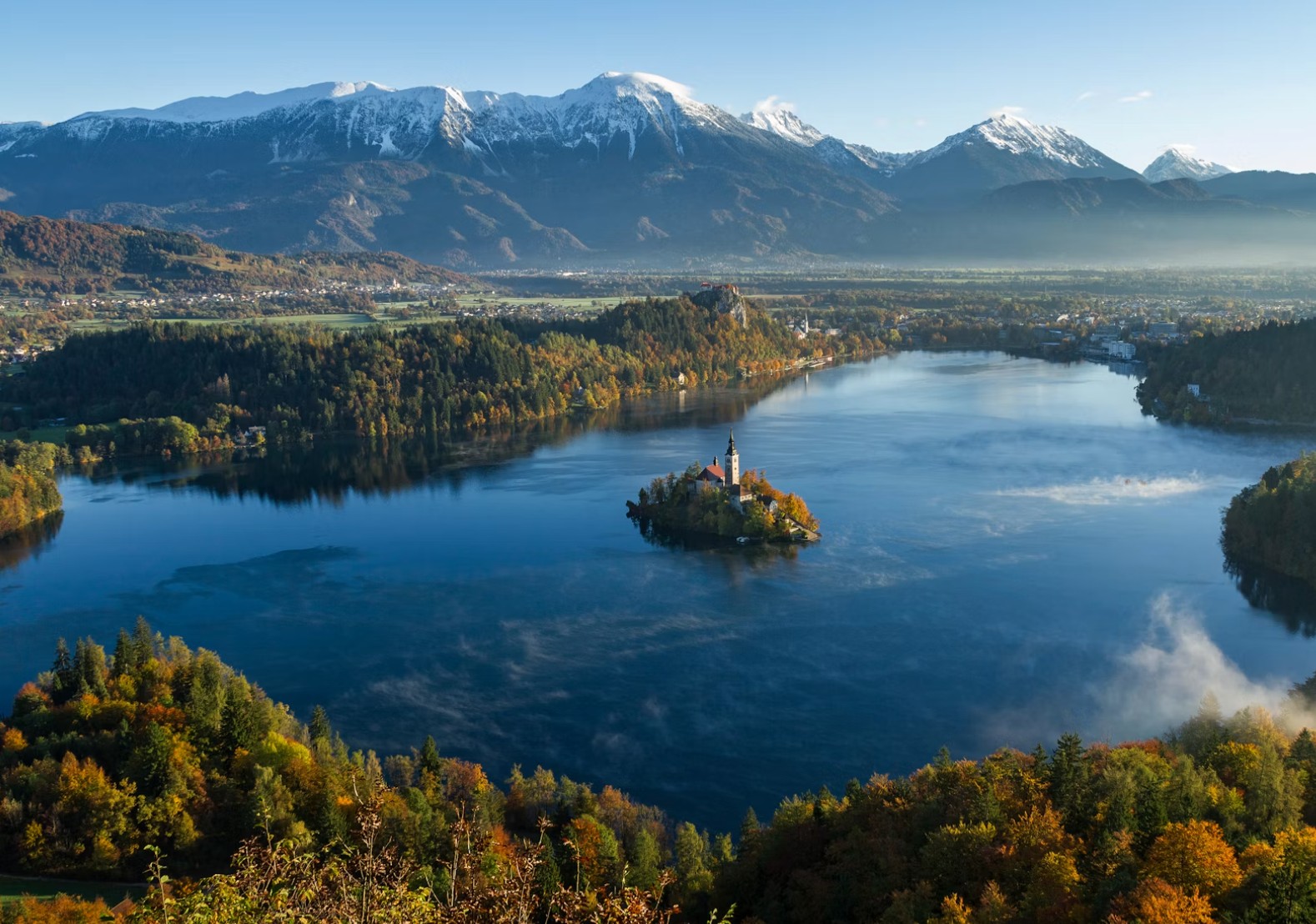
Slovenia is affordable by Alpine and Central European standards, but it is not a genuinely cheap destination in the way Serbia, Bosnia and Herzegovina or North Macedonia can be. A traveler using hostels, buses and inexpensive restaurants can keep spending around €55–75 per person per day, while a trip with private accommodation, regular restaurant meals and several paid attractions is more realistically budgeted at €100–150 per person per day.
The biggest variable is not food or local transport. It is where you sleep and how you move around the country. Ljubljana can be relatively easy to do on a moderate budget, while an August stay at Lake Bled or Piran combined with a rental car can push costs up very quickly.
| Travel style | Daily budget per person | One week | Typical trip |
|---|---|---|---|
| Budget | €55–75 | €385–525 | Hostel, buses and trains, simple meals, selective attractions |
| Comfortable | €100–150 | €700–1,050 | Shared private room, restaurants, public transport or short car rental, major sights |
| Higher-spend trip | €170–260+ | €1,190–1,820+ | Better hotels, rental car, regular paid attractions and more expensive destinations |
These figures exclude international flights. Couples generally have an easier time staying within the middle range because hotel rooms and rental cars can be divided between two people, whereas a solo traveler choosing private rooms absorbs those fixed costs alone.
Lake Bled and the coast are where a cheap trip gets difficult
Slovenia’s accommodation market varies far more by destination and season than its everyday food or transport prices. Ljubljana has enough hostels, apartments and hotels to provide options across several price levels. Lake Bled has a smaller supply of inexpensive accommodation relative to demand, and Piran has the additional problem of being a compact historic town on a very short coastline.
A hostel bed can still be found for roughly €15–30 on many dates, while simple private accommodation outside the most in-demand locations can begin around €35–60 per room. Conventional hotels are a different matter: comfortable rooms frequently move into the €80–130 range, while Lake Bled and the Slovenian coast can easily exceed €150 per room during busy summer dates.
This creates an important budgeting decision around Bled. If hotel prices are unusually high, visiting the lake as a day trip from Ljubljana can save more money than cutting small expenses elsewhere. Ljubljana and Bled are well connected, so there is no requirement to pay lakefront accommodation prices simply to see the lake.
Staying overnight still has value if you want early mornings, evening walks or several days in the Julian Alps. In that case, also compare accommodation in Lesce, Radovljica and the wider Bled area rather than limiting the search to properties immediately beside the water.
You can see much of Slovenia without renting a car
A first trip built around Ljubljana, Lake Bled, Bohinj and major towns can be organized around buses and trains. Ljubljana itself is compact enough that most central sightseeing is done on foot, and the standard one-zone LPP city fare is €1.50. With an Urbana card, that fare includes transfers within 90 minutes; contactless Visa and Mastercard payments are also supported, although the transfer conditions differ.
Longer-distance public transport can also be surprisingly inexpensive. Slovenian Railways currently discounts domestic journeys by up to 30% on Saturdays, Sundays and public holidays. For journeys over 75 km, the weekend ticket becomes a €11.20 flat-rate ticket valid for one day of travel within Slovenia on eligible services, although supplements can apply to higher-category trains.
That makes travel dates worth considering when building the itinerary. Moving between regions on a Saturday or Sunday can cost less than making exactly the same rail journey on a weekday, which is a more useful Slovenia-specific saving than simply advising travelers to “use public transport.”
If you are still deciding how much of the country can reasonably fit into one trip, the First2Travel guide to how many days you need in Slovenia compares itineraries from three days to two weeks.
Rent a car for the Soča Valley, not for Ljubljana
A rental car becomes much more useful once the itinerary includes the Soča Valley, Vršič Pass, rural wine regions, several Karst stops or mountain trailheads that are awkward to combine by public transport. Paying for a vehicle while it sits in Ljubljana, however, rarely improves the trip. You are adding the rental rate and parking costs to a city where a car is not particularly useful.
The more economical approach is often to use Ljubljana and perhaps Bled without a vehicle, then collect a car for the part of the trip where it solves a genuine transport problem. Rental prices also rise significantly in July and August, so keeping a car for three useful days rather than seven can make a substantial difference to the total budget. The Slovenia car rental guide covers insurance, motorway vignettes and the situations where driving is worth the additional cost.
Fuel should also be treated as a moving cost rather than an old fixed estimate. From September 22 to 28, 2026, Slovenia’s regulated maximum price outside motorways and expressways is €1.748 per liter for NMB 95 petrol and €2.012 per liter for diesel. Motorway pricing can differ.
Paid attractions can cost more than transport
This is one of the less obvious parts of a Slovenia budget. Much of what travelers come to see is free: Ljubljana’s old center, the shoreline of Lake Bled, hiking areas and many viewpoints do not require an admission ticket. Several of the country’s best-known individual attractions, however, are relatively expensive.
| Attraction | 2026 adult price |
|---|---|
| Ljubljana Castle | €15 |
| Ljubljana Castle + return funicular | €19 |
| Bled Castle | €19 |
| Bled Island admission | €12 |
| Postojna Cave | €34.90 |
| Predjama Castle | €24 |
| Postojna Cave + Predjama Castle package | €49.90 |
Ljubljana Castle’s standard adult ticket is currently €15, or €19 including the return funicular. Bled Castle charges €19 for adults, while admission to the church, bell tower and museum on Bled Island is €12.
Postojna is the clearest example of why sightseeing needs its own budget. A standard Postojna Cave ticket costs €34.90 and Predjama Castle costs €24, but the current combined ticket is €49.90. If you intend to visit both, buying the package rather than two separate tickets saves €9.
There is therefore no need to buy every paid experience at Lake Bled or every castle and cave in the same trip. Walking around Bled and hiking to a viewpoint costs almost nothing; adding the castle, island and boat experience turns the same day into a much more expensive one. Selecting the attractions that actually matter to you is one of the simplest ways to control the budget without reducing the number of places you visit.
Food is moderately priced rather than particularly cheap
Current nationwide price data puts an inexpensive restaurant meal at around €12, a three-course mid-range dinner for two at approximately €50, a domestic draft beer around €3 and a cappuccino just over €2. Ljubljana is slightly higher, with an inexpensive meal averaging about €15 and dinner for two around €60. These figures are crowdsourced market averages rather than fixed menu prices.
A budget traveler can keep food spending around €20–30 per day by combining bakeries, supermarkets and one simple restaurant meal. Burek and other bakery food work well for breakfast or lunch, while local dishes such as jota, štruklji and Kranjska klobasa make it possible to eat Slovenian food without relying on expensive tourist restaurants.
Lake Bled and Ljubljana’s riverside naturally have restaurants where the location is part of what you are paying for. Having a supermarket or bakery meal on hiking days and spending more selectively on restaurants is more effective than trying to find the cheapest possible sit-down meal three times a day.
Summer increases the expensive parts of the trip
July and August do not suddenly make a Ljubljana bus or an ordinary Slovenian lunch dramatically more expensive. The seasonal increase appears mainly in accommodation, rental cars and tourism services in places with limited capacity.
This matters most around Bled, Bohinj, Piran and popular Alpine bases. Travelers who want hiking, lakes and the coast without paying the strongest peak-season premium can often build a better-value trip in June or September. The practical advantage is not only lower accommodation demand: car rental can also be substantially cheaper outside the August peak.
Winter can produce inexpensive city stays, but it is not simply a cheaper substitute for a summer trip. High Alpine routes, Vršič Pass and hiking conditions change considerably with snow, so choosing January solely because a hotel costs less does not make sense if the main purpose of the trip is exploring the Julian Alps.
Do not forget the accommodation tax
Slovenian municipalities can levy tourist and promotion taxes in addition to the room rate. Ljubljana currently charges €3.13 per adult per night in combined tourist and promotion tax. For two adults staying seven nights, that adds €43.82 to the trip, so the final accommodation cost may be slightly higher than the headline room price suggests.
Slovenia uses the euro, and cards are widely accepted in cities, hotels, restaurants, supermarkets, petrol stations and major attractions. Some cash is still useful for mountain huts, small businesses and occasional parking situations, but most travelers do not need to carry a large amount.
What does a genuinely budget Slovenia trip look like?
A €55–75 daily budget is achievable, but it works best when the itinerary is designed around that budget rather than when an expensive road trip is booked first and savings are attempted afterward. Stay in hostels or reasonably priced guesthouses, use Ljubljana as a base for part of the trip, travel to Bled by public transport and choose a limited number of paid attractions.
A seven-day trip at this level might combine Ljubljana, Bled and Bohinj with one additional region, using buses or trains for most transfers. The same week can move well above €100 per person per day if it includes an August hotel at Lake Bled, a seven-day rental car, Postojna, several castles and restaurant meals throughout the trip.
For couples who want private rooms and do not want to track every euro, approximately €100–150 per person per day is a more comfortable planning range. The important point is that this does not need to be spent evenly. A free hiking day can balance a €50 cave-and-castle day, while several car-free days in Ljubljana can offset the cost of renting a vehicle for the Soča Valley.
So, is Slovenia cheap to visit?
Slovenia is better described as good value than cheap. Public transport, walking and outdoor sightseeing make it possible to control daily spending, but summer accommodation around Bled and the coast and €20–35 headline attractions prevent it from functioning like a classic low-cost Balkan destination.
If keeping the trip affordable is important, the most effective plan is to avoid paying for a car when public transport already works, treat Bled accommodation as a separate decision rather than an automatic overnight stop, and choose paid attractions deliberately. With those decisions made well, €55–75 per person per day is still possible; for a more comfortable trip with private accommodation and several major sights, €100–150 is a more realistic target.