

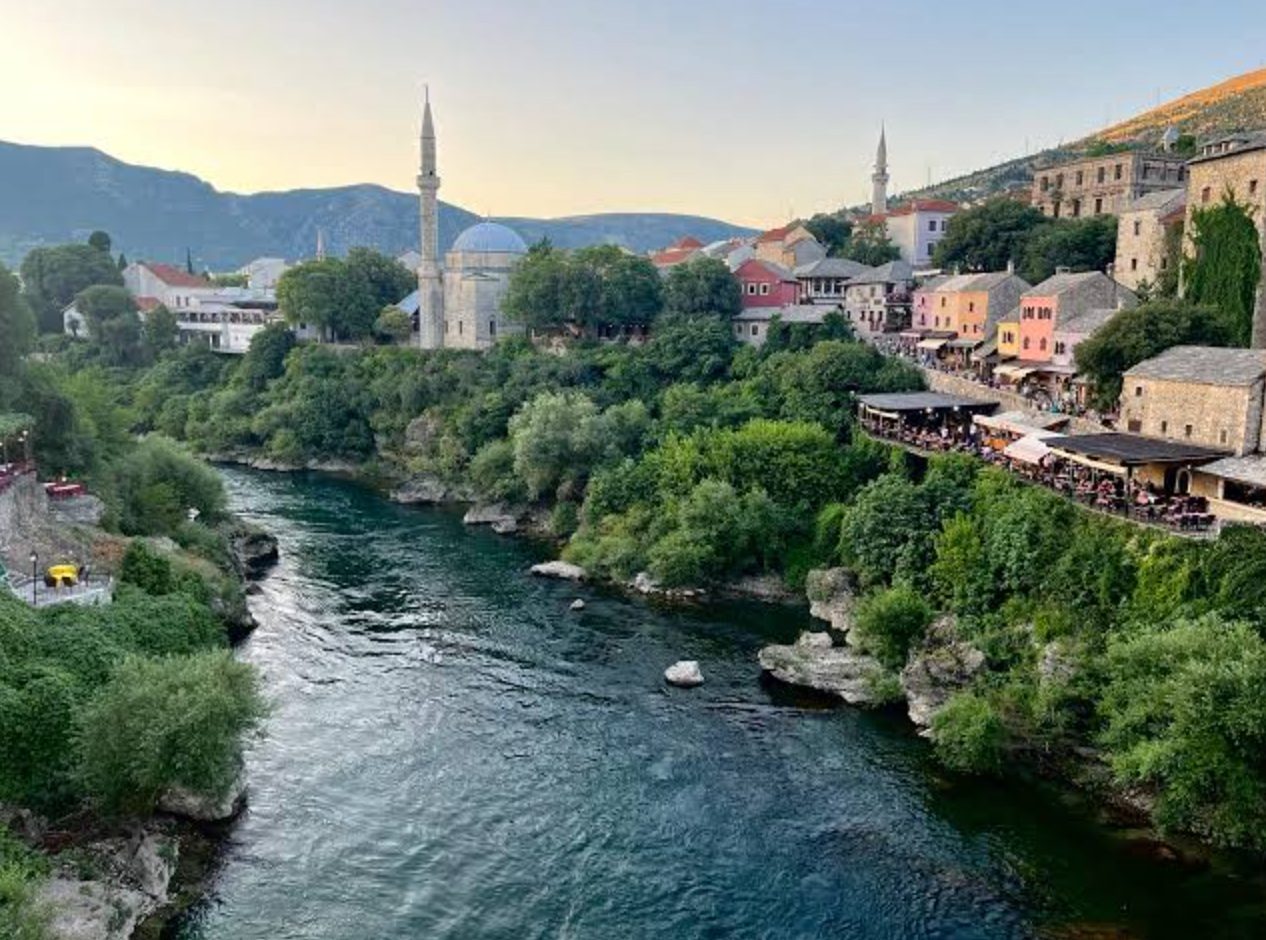
Yes, Bosnia and Herzegovina can be a safe and manageable destination for solo travelers, provided that you understand the risks that are genuinely relevant rather than treating the country either as completely trouble-free or as dangerous because of its wartime history. Most visitors travel around Sarajevo, Mostar, Banja Luka and the country’s main tourist routes without serious problems, while the issues most likely to affect an ordinary trip are petty theft, road safety and, when traveling or hiking outside populated areas, the continuing presence of landmines and unexploded ordnance.
Official travel advice is more cautious than the country’s generally relaxed atmosphere might suggest. The U.S. Department of State currently classifies Bosnia and Herzegovina as Level 2, meaning travelers should exercise increased caution because of crime, terrorism and landmines, while Canadian authorities advise a high degree of caution because of crime and the risk posed by mines in rural and isolated mountainous areas.
That does not mean solo travel should be avoided. It means Bosnia and Herzegovina is a destination where normal city precautions should be combined with one unusually important local rule: if you leave towns and established tourist routes, do not wander across abandoned land, unmarked paths or unfamiliar countryside.
Bosnia and Herzegovina Safety at a Glance
- Solo travel: Generally manageable for independent travelers, particularly on the established Sarajevo–Mostar and other major tourist routes.
- Petty crime: Pickpocketing and purse snatching occur in busy tourist areas and on public transport, particularly in larger cities.
- Violent crime: Foreign visitors are rarely targeted, although incidents connected with organized crime and firearms do occur.
- Landmines: The most unusual safety issue in Bosnia and Herzegovina. The main risk is in countryside, forests, isolated mountain areas, abandoned buildings and places away from established paved routes.
- Solo female travel: Possible without unusual restrictions, although the same precautions you would use when traveling alone elsewhere still apply, particularly at night.
- Driving: Requires more caution than driving around the main cities might initially suggest, especially on secondary and mountain roads.
- Public transport: Widely available, although crowded buses and trams are places where travelers should pay particular attention to valuables.
- Night safety: Central areas of Sarajevo and Mostar are generally straightforward to navigate, but isolated and poorly lit streets are best avoided when alone.
Is Bosnia and Herzegovina Safe? The Short Answer
For a tourist following the country’s normal travel routes, Bosnia and Herzegovina is not a destination where you should expect to face constant personal-security problems. Sarajevo, Mostar and Banja Luka receive independent visitors throughout the year, public transport connects the main cities, and there is no official advice telling tourists to avoid the country altogether.
At the same time, describing Bosnia and Herzegovina simply as a “low-crime country” is misleading because official travel advisories identify several genuine concerns. Pickpocketing and purse snatching occur in major urban centers, particularly around tourist areas and public transportation, while thefts from vehicles are another issue to consider if you are traveling by car.
More serious violence does occur, including incidents associated with organized crime, but travelers are unlikely to be deliberately targeted. The practical response is not to treat Sarajevo or other Bosnian cities as dangerous environments, but to avoid becoming complacent in crowded tourist areas, late-night bars and places where you would naturally exercise caution in any unfamiliar city.
The safety issue that genuinely distinguishes Bosnia and Herzegovina from most European destinations is the continuing presence of mines and unexploded weapons left from the 1992–1995 war. Highly populated areas and major routes have largely been cleared, so this is not something you need to think about while walking through central Sarajevo or crossing Mostar’s Old Bridge, but it becomes important if your itinerary includes rural exploration, hiking, abandoned buildings or leaving established roads and trails.
Is Bosnia and Herzegovina Safe for Solo Travelers?
Bosnia and Herzegovina works particularly well for solo travel because many of its most popular destinations are compact enough to explore independently, while buses and other public transport make it possible to move between the main tourist cities without renting a car.
A first-time solo traveler will generally find Sarajevo relatively easy to navigate on foot in the central areas, while Mostar’s historic center is even more compact. The main difficulties tend to be practical rather than security-related: transport information is not always presented as clearly online as it is in more heavily visited Western European destinations, some businesses still rely heavily on cash, and reaching rural attractions independently can require more planning.
When traveling alone, the most useful precaution is simply to maintain control of your belongings and avoid placing yourself in unnecessarily isolated situations, especially late at night. On public transport, keep your phone, wallet and passport somewhere that cannot easily be reached from behind, while in restaurants, cafés and crowded pedestrian areas, do not leave valuables unattended on a chair or table.
Solo travelers who plan to hike should be considerably more careful than visitors staying within cities. In Bosnia and Herzegovina, deciding to explore an unmarked path because it looks interesting can carry a different level of risk than it would in many other European countries, so established trails and locally recommended routes should always take priority over improvisation.
Is Bosnia and Herzegovina Safe for Solo Female Travelers?
Bosnia and Herzegovina can also be visited independently by women, and the practical safety considerations are broadly similar to those faced by other solo travelers: choose well-reviewed accommodation in a convenient area, avoid isolated streets late at night, keep control of drinks and valuables in nightlife settings, and arrange reliable transport if returning somewhere far from the center after dark.
It is better not to make sweeping comparisons claiming that street harassment is lower in Bosnia and Herzegovina than everywhere in Western Europe, since individual experiences vary considerably and there is no reliable dataset that supports such a broad conclusion. A more useful way to approach the country is to recognize that there is no special set of restrictions required for women traveling independently, while still following the same personal-security habits you would use on any solo trip.
In Sarajevo and Mostar, staying reasonably central makes solo travel substantially easier because restaurants, cafés, major sights and transportation are accessible without spending long periods walking through empty residential districts after dark. If you are planning to stay outside the center because accommodation is cheaper, check the route back before booking rather than judging the location only by its distance on a map.
When visiting mosques and other religious sites, modest clothing may be required or appreciated, with shoulders and knees covered where appropriate. This is primarily a matter of respecting the rules of individual religious sites rather than a general dress requirement for women traveling around Bosnia and Herzegovina.
Landmines in Bosnia and Herzegovina: What Tourists Actually Need to Know
Landmines are the most important Bosnia-specific safety issue, but they need to be understood in context. Travelers are not expected to encounter minefields while moving through central Sarajevo, Mostar or the country’s main urban tourist attractions; the continuing risk is concentrated primarily in less populated areas, rural landscapes, isolated mountains and places affected by the former front lines.
The simplest rule is to remain on paved roads, clearly established paths and marked hiking trails rather than taking shortcuts through fields, forests or abandoned land. Avoid entering abandoned or destroyed buildings, do not touch unexploded objects or war relics, and take local warnings seriously even when the surrounding landscape appears completely normal.
This becomes especially relevant for hikers because Bosnia and Herzegovina has outstanding mountains and increasingly attracts visitors specifically for outdoor travel. If you want to explore areas away from established tourist paths, using a knowledgeable local hiking guide is a sensible precaution rather than relying exclusively on an online trail map.
The danger should neither be exaggerated nor ignored. A city-break traveler spending several days between Sarajevo and Mostar will interact with this issue very differently from someone planning independent trekking through remote countryside, which is why generic statements that “Bosnia has landmines” are much less useful than understanding where the risk actually applies.
Petty Crime and Pickpocketing
For a conventional city trip, petty crime is much more likely to affect you than any of the country’s more dramatic-sounding risks. Official travel advice specifically warns about pickpocketing and purse snatching in Sarajevo, Banja Luka, Tuzla and Mostar, with foreigners particularly vulnerable in crowded tourist locations and on public transportation.
In Sarajevo, take extra care on busy trams and buses and around heavily visited parts of the center, including Baščaršija. You do not need to walk around gripping your bag constantly, but carrying an open backpack with your phone or wallet in an outside compartment is an unnecessary risk.
The same basic rule applies in Mostar, especially during busy summer periods when the narrow streets surrounding the Old Bridge can become extremely crowded with day-trippers. Keep valuables in a zipped compartment, avoid leaving your phone on an outdoor café table close to the pavement, and carry only the amount of cash you expect to need that day.
Vehicle theft is another consideration for road trips. Do not leave luggage, cameras or shopping visible inside a parked car, even if you are stopping only briefly, and be particularly careful at tourist viewpoints or outdoor attractions where vehicles may be left unattended for longer periods.
Taxi Safety and Overcharging
Taxis are widely available in Sarajevo and other major towns, and official travel guidance recommends using registered taxis. In Bosnia and Herzegovina, registered taxi license plates begin with “TA”, which provides a simple visual check before you get into the vehicle.
Make sure the meter is being used rather than assuming the final price will be reasonable simply because the journey is short. If you are uncertain about a taxi at an airport, bus station or tourist attraction, asking your accommodation to recommend or arrange a registered service is often easier than negotiating with an unknown driver.
The original version of this guide described restaurant overcharging as a widespread scam in which visitors might be prevented from leaving until an inflated bill was paid, but there is not enough reliable evidence to present this as one of the country’s principal tourist risks. Checking menu prices before ordering is sensible anywhere, but it should not be portrayed as a defining safety issue in Bosnia and Herzegovina without stronger evidence.
Is Sarajevo Safe for Solo Travelers?
Sarajevo is generally the easiest place in Bosnia and Herzegovina for a first-time solo visitor because the central tourist districts are compact, busy and well connected by public transport. Baščaršija and the surrounding central neighborhoods remain active into the evening, with restaurants, cafés and bars providing enough pedestrian activity that visitors do not usually need to organize every evening around taxis.
The main everyday risk is property crime rather than violence directed at tourists. Pickpocketing occurs in areas frequented by visitors and on public transport, so trams deserve particular attention during busy periods.
After dark, the same geographic distinction that applies in many cities becomes more important: a busy restaurant street in the center presents a very different environment from an empty residential road farther uphill. If you are staying outside the central area, check public transport and taxi options before going out rather than assuming you will want to walk the entire distance home late at night.
Travelers with rental cars should also avoid leaving belongings visible inside the vehicle, particularly at tourist locations around Sarajevo and Mount Trebević, where thefts from cars have been specifically mentioned in official travel advice.
Is Mostar Safe?
Mostar is also straightforward for most solo travelers, particularly if you are staying near the historic center. The Old Bridge and the surrounding pedestrian streets attract large numbers of visitors, which means the area can feel extremely busy during daytime rather than isolated.
Crowds create the usual opportunity for pickpocketing, so protect phones and wallets when the narrow streets become congested, especially in peak summer months.
The greater safety consideration arises if you use Mostar as a base for exploring rural Herzegovina. Destinations such as Blagaj and Počitelj are established tourist stops, but if you begin hiking or exploring countryside away from recognized routes, mine awareness becomes relevant again. Do not treat abandoned land or unsigned tracks as shortcuts.
Is Banja Luka Safe?
Banja Luka does not receive the same volume of international tourism as Sarajevo or Mostar, but the same general precautions apply. Petty theft can occur in crowded public spaces, although a tourist is far more likely to deal with an ordinary practical inconvenience than a serious security incident.
The main reason to add extra planning is if Banja Luka forms the starting point for outdoor activities or travel into more isolated parts of the country. Once you leave populated areas, road conditions, mobile coverage and the possibility of mine-contaminated land make spontaneous off-road exploration a poor idea.
Is Bosnia and Herzegovina Safe at Night?
The central areas of Sarajevo and Mostar can generally be navigated at night without unusual measures, particularly around streets with restaurants, cafés and other pedestrian activity. That does not mean every district should be treated identically, and official guidance recommends avoiding isolated and poorly lit places after dark.
If you are traveling solo, the more useful question is therefore not simply “Is Sarajevo safe at night?” but “How am I getting back to my accommodation?” A hotel or hostel within walking distance of the center can make the entire trip easier, while an inexpensive room far outside the main districts may mean relying on taxis late at night.
Late-night clubs and cafés also deserve somewhat more awareness because official travel advice notes that although foreigners are rarely targeted by organized-crime violence, there remains a possibility of being caught near an unrelated incident. The probability is low, but if an argument or confrontation develops around you, leaving rather than watching what happens is the obvious choice.
Is Public Transportation Safe in Bosnia and Herzegovina?
Public transportation is a practical way for solo travelers to move around Bosnia and Herzegovina. Local tram and bus services operate in the major cities, while intercity buses connect destinations including Sarajevo, Mostar, Banja Luka and numerous smaller towns.
From a personal-safety perspective, crowded urban transport is primarily a pickpocketing concern. Keep your bag closed and positioned where you can see it, particularly when entering or leaving a busy tram or bus.
Travelers should also be cautious if approached by someone claiming to be a ticket controller and should follow the normal ticketing rules of the local transport system. Official Canadian travel guidance specifically mentions both pickpockets and people posing as ticket controllers as reasons for increased caution on public transportation.
Is It Safe to Drive in Bosnia and Herzegovina?
Driving requires more attention than many of the country’s other everyday travel risks. Road quality varies considerably, secondary roads can be poorly lit, speeding is common and mountain routes become substantially more difficult during bad weather.
Winter travel creates additional problems because snow, fog and ice can make mountain and secondary roads dangerous, while landslides may occasionally block routes. If you are planning a road trip rather than simply driving between Sarajevo and Mostar, build more time into the itinerary than the distance alone might suggest.
Do not deliberately leave surfaced roads in rural areas simply to reach a viewpoint or take a shortcut. The landmine risk is another reason that sticking to established roads is particularly important in Bosnia and Herzegovina.
If you park at a viewpoint or tourist attraction, take passports, money, electronics and luggage with you or keep everything completely out of sight.
Political Demonstrations and Large Gatherings
Political demonstrations occur periodically in Bosnia and Herzegovina, particularly in response to domestic political developments, commemorative dates or economic issues. Travelers should avoid demonstrations even when they appear peaceful because gatherings can become confrontational or disrupt roads and public transport.
This is primarily a situational issue rather than a reason to reconsider a trip. Monitor local news if a demonstration is taking place near where you are staying, follow instructions from local authorities and simply choose another route if you encounter a crowd forming.
Football matches can also attract intense rivalries, and official guidance warns that clashes between supporters occasionally occur. If you are not attending a match, there is little reason to remain around a stadium when large groups of rival supporters are gathering.
LGBTQ+ Travel Safety in Bosnia and Herzegovina
Same-sex sexual activity is legal in Bosnia and Herzegovina, but social attitudes remain more conservative than in many Western European destinations. Official UK travel advice notes that LGBT+ communities continue to report discrimination and incidents of violence, while public displays of affection may attract unwelcome attention.
For LGBTQ+ solo travelers, this does not mean avoiding Bosnia and Herzegovina altogether, but discretion can be sensible, particularly outside larger cities and in unfamiliar nightlife environments.
Practical Solo Travel Safety Tips
- Stay on marked routes when hiking. Do not leave established trails, paved roads or known tourist areas simply to explore unfamiliar countryside.
- Protect valuables on public transport. Keep phones, wallets and passports in closed compartments rather than easily accessible backpack pockets.
- Use registered taxis. Look for license plates beginning with “TA” and make sure the meter is running.
- Avoid leaving belongings inside parked cars. Theft from vehicles is an established risk, including around tourist areas.
- Avoid isolated streets late at night. Central areas can remain lively, but an empty road far from the center is a different situation.
- Download offline maps. They are useful when driving or hiking in areas where mobile coverage becomes inconsistent.
- Keep some cash available. Bosnia and Herzegovina remains relatively cash-oriented, particularly outside larger cities, and ATMs become less common in rural areas.
- Carry photo identification securely. Travelers may be required to show identification to local authorities.
- Do not enter abandoned buildings. Apart from structural risks, unexploded ordnance and mines remain a concern in some formerly affected areas.
- Avoid demonstrations and confrontations. If a protest, football-related disturbance or unrelated argument develops nearby, leave the area rather than remaining to watch.
Emergency Numbers in Bosnia and Herzegovina
Save the emergency numbers before your trip rather than relying on an internet connection when something goes wrong.
- 112: General emergency assistance.
- 122: Police.
- 123: Fire and rescue.
- 124: Ambulance.
If your itinerary includes hiking, rafting, driving through remote regions or other outdoor activities, travel insurance that includes appropriate medical and evacuation coverage is especially worth considering.
What Solo Travelers Should Worry About — and What They Probably Shouldn’t
For most visitors, the realistic risks are not dramatic. You are more likely to have to protect your phone on a crowded tram, deal with a difficult road or rethink an unmarked hiking route than encounter serious violence.
The country’s wartime history is highly visible, and seeing damaged buildings, memorials or mine warning signs can make Bosnia and Herzegovina feel more dangerous than the ordinary experience of walking through Sarajevo or Mostar actually is. At the same time, ignoring that history completely would be a mistake because landmines remain a practical safety consideration outside established urban and tourist environments.
The best approach lies between those two extremes: travel normally in cities, take conventional precautions with valuables and nightlife, but become significantly more conservative about where you walk once you enter rural or mountainous areas.
Frequently Asked Questions
Is Bosnia and Herzegovina safe for solo female travelers?
Yes, women can travel independently in Bosnia and Herzegovina, particularly along the main tourist route through destinations such as Sarajevo and Mostar. Choose accommodation in convenient areas, avoid isolated streets late at night, use registered taxis when necessary and follow normal solo-travel precautions rather than assuming the country requires a completely different approach.
Is Sarajevo safe for solo travelers?
Sarajevo is generally manageable for solo visitors, particularly in Baščaršija and other central districts. Pickpocketing and property crime are more relevant to tourists than targeted violent crime, so keep valuables secure on trams, buses and in crowded tourist areas.
Is Mostar safe for solo travelers?
Yes, central Mostar is generally easy to explore independently. The streets around the Old Bridge can become extremely crowded, making pickpocketing a more relevant concern than personal violence. Mine awareness becomes more important if you leave established tourist routes and explore rural areas around Herzegovina.
Is Bosnia and Herzegovina safe at night?
Busy central areas of Sarajevo and Mostar are generally straightforward at night, but solo travelers should avoid isolated or poorly lit streets and use registered taxis when accommodation is far from the center.
Are there still landmines in Bosnia and Herzegovina?
Yes. Mines and unexploded ordnance remain in parts of Bosnia and Herzegovina, especially rural, mountainous and formerly contested areas. Major roads and highly populated areas are largely clear, but travelers should remain on paved roads and marked trails and avoid abandoned buildings and unmarked countryside.
Is it safe to hike in Bosnia and Herzegovina?
Hiking can be safe when you follow established and marked routes. Do not improvise shortcuts across unfamiliar fields, forests or abandoned land, and consider hiring a local guide when exploring remote areas where mine contamination may still exist.
Is public transportation safe in Bosnia and Herzegovina?
Public transportation is widely used by both locals and visitors, although crowded buses and trams are environments where pickpocketing can occur. Keep valuables secure and be cautious around anyone unexpectedly claiming to be a ticket inspector.
Is it safe to drive in Bosnia and Herzegovina?
Yes, but road conditions require additional caution, particularly on mountain and secondary roads. Poor lighting, speeding, winter weather and variable road quality are more significant concerns than driving within the major cities.
What are the biggest safety risks in Bosnia and Herzegovina?
For most tourists, the most relevant risks are petty theft, road accidents and landmines or unexploded ordnance when leaving established roads and tourist areas. Organized-crime violence and terrorism are included in official travel advisories, but foreign visitors are rarely deliberately targeted in criminal disputes.
Bottom Line: Should You Travel Solo to Bosnia and Herzegovina?
Bosnia and Herzegovina is a realistic destination for a solo trip, and neither its Level 2 U.S. travel advisory nor its wartime legacy means that ordinary tourists need to move around the country in a constant state of alert. Sarajevo, Mostar and the other main tourist destinations can be explored independently using the same basic precautions that make sense elsewhere in Europe: protect valuables, pay attention to your surroundings, avoid poorly lit isolated places at night and use registered transport.
Where Bosnia and Herzegovina differs is outside those urban environments. Landmines and unexploded ordnance mean that wandering away from paved roads, marked hiking trails and established rural routes carries a risk that visitors should take seriously, even when the landscape appears completely harmless.
If you understand that distinction, solo travel here becomes much easier to evaluate: the cities require normal awareness, while remote countryside requires much stricter route discipline. For travelers interested in history, food, mountain scenery and less heavily visited parts of Europe, that additional preparation does not need to be a reason to skip the country.
 admin
admin