

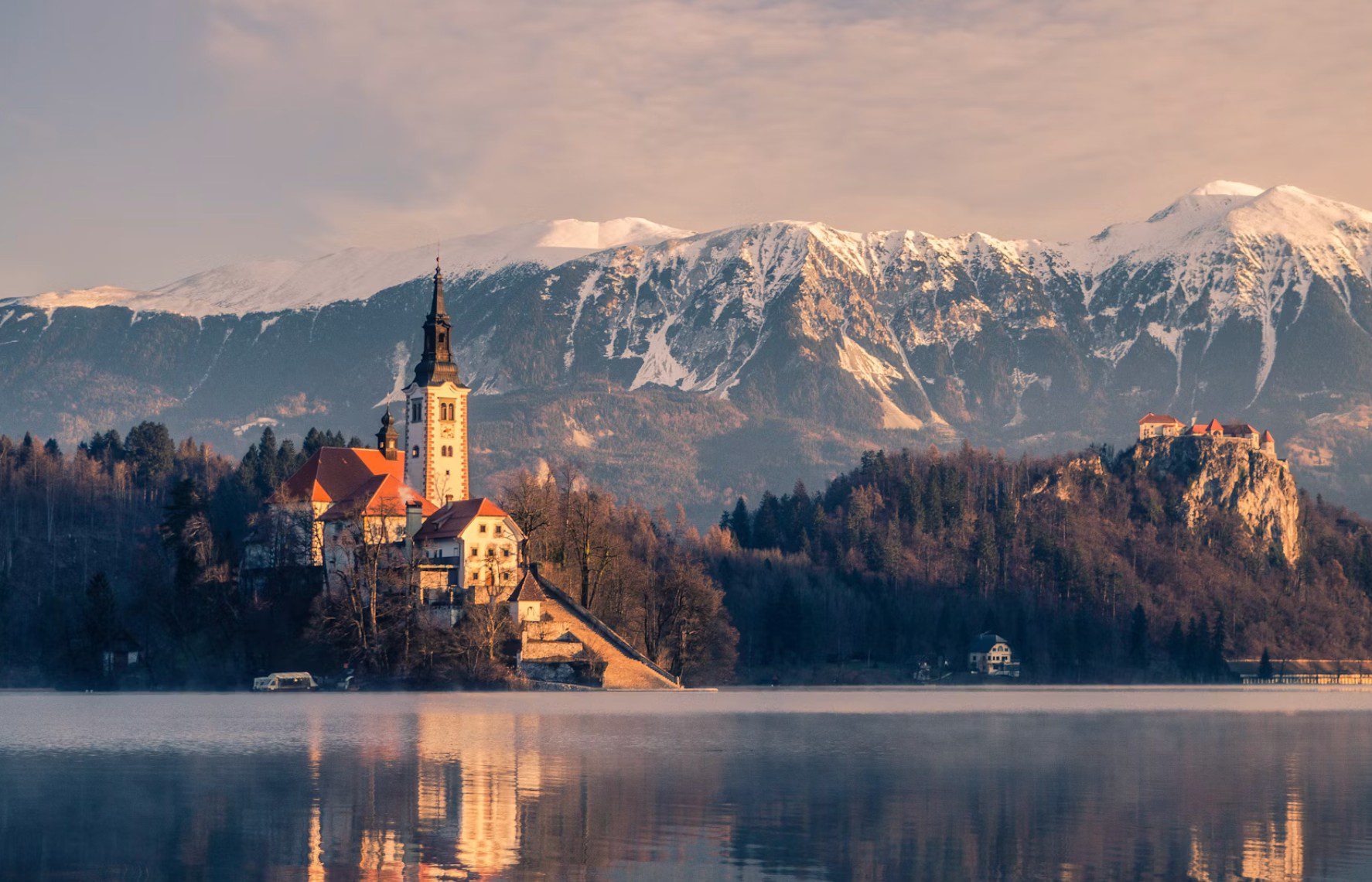
Slovenia isn’t as heavily touristed as some of its European neighbors, so doing your homework before arriving pays off. This guide covers the practical stuff that actually matters — visas, transport, costs, and cultural quirks — so you can spend less time figuring things out and more time enjoying your trip.
What makes Slovenia different from more tourist-heavy destinations is its remarkable diversity packed into a compact space: you can ski in the Alps in the morning, explore a cave system in the afternoon, and watch the sun set over the Adriatic in the evening. The country is also a global leader in green tourism and sustainability, meaning you’ll find clean cities, well-preserved nature, and a strong eco-conscious mindset wherever you go.
Slovenia at a Glance
- Capital: Ljubljana
- Currency: Euro (€)
- Language: Slovene (official), English widely spoken in tourist areas
- English spoken? Good in tourist areas, limited in rural areas
- Visa required? Visa-free for US, UK, EU, AU citizens (up to 90 days)
- Best time to visit: May-June and September-October
- Typical trip length: 5–7 days for highlights
- Time zone: UTC+1 (CET), UTC+2 in summer
- Power socket: Type F (230V, 50Hz)
- Tipping culture: 10% in restaurants if service not included, rounding up in taxis
- Emergency number: 112 (general), 113 (police)
Things to Sort Before You Land in Slovenia
Most visitors from the US, UK, EU, Canada, and Australia can enter Slovenia visa-free for up to 90 days within a 180-day period, as Slovenia is part of the Schengen Area. Your passport should be valid for at least three months beyond your intended departure date, though six months is recommended. Starting in 2026, travelers from visa-exempt countries may also need to register with ETIAS (European Travel Information and Authorization System) before traveling.
Travel insurance is strongly recommended. While Slovenia is in the EU and has a high standard of healthcare, it’s still wise to have coverage that includes medical evacuation — especially if you’re planning hiking, skiing, or other adventure activities. Check your policy covers mountain rescue and off-piste skiing if you plan on these.
The currency is the Euro (€). Cards are widely accepted in cities and tourist areas, but you’ll need cash for smaller establishments, rural inns, mountain huts, and local markets. ATMs are easily found in cities and most towns. Use ATMs inside banks or shopping malls to avoid skimming.
For connectivity, local SIMs are available from operators like Telekom Slovenije, A1, and T-Mobile. Coverage is generally good in cities and along main routes, but can be patchy in mountain areas. Many travelers find that eSIM options provide convenient coverage before arrival.
Getting Around Slovenia: What First-Timers Need to Know
Renting a car is the most flexible way to explore Slovenia — especially if you want to reach remote wineries, mountain trailheads, or the Soča Valley. However, you’ll need a vignette (toll sticker) for highway driving, which you must purchase before entering motorways. Fines for non-compliance are steep. Roads are generally well-maintained, but mountain passes can be challenging.
Public transport is reliable and affordable. Buses are often the best way to connect major points like Ljubljana, Lake Bled, and the coast. Trains serve longer city-to-city routes well, but bus routes are better for reaching lakes and remote areas. In Ljubljana’s car-free city center, you can hop on free electric “Kavalirs” carts to get around easily.
Taxis and ride-hailing apps like Uber are available in cities. Taxis are generally safe and reasonably priced, but if you’re hailing one on the street, agree on the fare beforehand or ensure the meter is running.
One honest note: if you’re relying solely on buses, you’ll be limited to routes between major towns. For exploring wine regions, national parks, and remote villages, a car is your best bet.
Money in Slovenia: Budget, Costs, and Payment Tips
Slovenia offers good value compared to Western Europe, though prices have risen in recent years. For budget travelers, expect to spend around €50–€70 per day, while mid-range travelers might spend €90–€150. Accommodation is reasonable, but expect to pay more during peak summer months in spots like Lake Bled and Piran.
What’s surprisingly affordable: local wine, public transport, and meals at family-run gostilnas (traditional inns). What costs more than expected: accommodation in peak season, taxis from the airport, and dining right on the main squares.
ATMs are widely available, but fees vary. Use ATMs inside banks or shopping malls to avoid skimming. Tipping isn’t mandatory but appreciated — rounding up the bill or leaving 10% in restaurants if service isn’t already included is common practice.
One money mistake first-timers commonly make: assuming cards are accepted everywhere. In rural villages, mountain huts, and local markets, cash is the only option. Carry a mix of denominations to be safe.
Culture and Etiquette: What to Know Before You Go
Slovenians are proud of their culture and identity — confusing Slovenia with Slovakia is a significant faux pas. Greetings are usually a firm handshake with direct eye contact. Use titles and last names until invited to switch to first names. Punctuality is valued, so arrive on time for tours or social gatherings.
When visiting churches, dress modestly — cover your shoulders and knees. Photography inside churches is often prohibited or restricted. Slovenians are generally polite and reserved; speaking loudly in public is considered rude.
One cultural misunderstanding tourists commonly make: expecting late-night dining. Lunch is usually the main meal of the day, and kitchens often close early in the evening. Don’t expect fast service — dining is a leisurely affair, and meals are meant to be savored.
What locals appreciate that tourists rarely do: learning basic Slovene phrases like “dober dan” (good day), “prosim” (please), and “hvala” (thank you). Slovenia has a strong cycling culture, so respect bike lanes when walking. Also, embrace the “leave-no-trace” philosophy — littering is frowned upon and can result in fines.
Food in Slovenia: What to Try and What to Skip
Slovenian cuisine reflects its geography, blending Alpine, Mediterranean, and Central European influences. Must-try dishes include:
- Kranjska klobasa — the famous Slovenian sausage made with pork, garlic, and spices
- Idrijski žlikrofi — small potato-and-pork dumplings from the town of Idrija
- Žganci — rustic buckwheat porridge often served with sauerkraut, meat, or cracklings
- Štruklji — rolled dumplings with various fillings, both savory and sweet
- Potica — a rolled nut cake traditionally served during holidays, with walnut, hazelnut, or cottage cheese fillings
- Fresh seafood — on the coast, try brodet (fish stew) or fresh mussels and squid
For drinks, don’t miss Slovenian wine — less than 10% is exported, so you’ll be tasting something special. Try Rebula (crisp white from the Brda region) or Teran (bold red from the Karst). Locals also love Laško or Union beer, and medica (honey brandy) is a traditional treat.
Where to eat cheaply without eating badly: look for gostilnas (family-run inns) away from main tourist squares. These serve authentic, affordable food and offer a more local dining experience. Skip restaurants right on the main square in Ljubljana or Bled — they often charge significantly more for the same dishes you’ll find one street back.
Mistakes First-Time Visitors to Slovenia Make
- Trying to see the entire country in too little time. Slovenia may be small, but its regions are distinct. Rushing through the Alps, lakes, caves, and coast in 2-3 days leads to constant driving and limited time at attractions. Slow down and focus on one or two regions.
- Forgetting the highway vignette. You must purchase a toll sticker before driving on motorways — fines are steep. It’s available at petrol stations, post offices, and online.
- Only staying in Ljubljana. The capital is wonderful, but Slovenia’s real charm lies beyond it — in mountain villages, vineyards, lakes, and coastal towns. Don’t miss them.
- Underestimating the mountains. Weather in the Julian Alps and Triglav National Park can change rapidly. Always check conditions, wear proper footwear, and let someone know your route before hiking.
- Not packing layers. Mountain weather can swing 20°C in a day. Even in summer, bring a waterproof jacket and warm layers for alpine areas.
- Booking accommodation too late in peak season. July and August, as well as December ski season, fill up quickly — especially in Lake Bled, Piran, and ski resorts. Book weeks or months ahead.
- Assuming you can use credit cards everywhere. Rural villages, mountain huts, and local markets are often cash-only. Always carry euros, especially outside cities.
- Missing quieter alternatives. Lake Bohinj offers a more serene experience than touristy Lake Bled. Consider it for a more peaceful escape — it’s just 30 minutes away by bus.
How Long Do You Need in Slovenia?
Minimum days: 3–4 days — enough for a day in Ljubljana, a day at Lake Bled, and a day exploring a cave system like Postojna.
Ideal trip length: 7–10 days — allows time for Ljubljana, Lake Bled and Lake Bohinj, the Julian Alps, the Soča Valley, and the Adriatic coast.
What you can realistically do in 4 days: Day 1: Ljubljana city center and Ljubljana Castle. Day 2: Lake Bled and Vintgar Gorge. Day 3: Postojna Cave and Predjama Castle. Day 4: Explore Ljubljana’s riverside and Tivoli Park.
With 7 days: Add Lake Bohinj and Triglav National Park, spend a day in the Soča Valley (kayaking or hiking), and visit Piran on the coast. Consider a wine-tasting tour in the Brda region.
For a full day-by-day itinerary, see our [Slovenia itinerary guide → internal link placeholder].
Frequently Asked Questions — First-Time Visitors to Slovenia
Is Slovenia easy to travel independently?
Yes, very. The country is compact, distances are short, and English is widely spoken in tourist areas. Public transport is reliable, though renting a car gives you the most flexibility, especially for reaching remote areas.
How much money do I need for a week in Slovenia?
Budget travelers can manage on around €350–€490 (€50-70 per day), while mid-range travelers might spend €630–€1,050 (€90-150 per day) for nicer accommodation, meals in restaurants, and car rental. Expect to pay more in peak season.
Do I need to know the local language in Slovenia?
Not in tourist areas — English is widely spoken in Ljubljana, Lake Bled, and coastal towns. In villages and rural areas, knowledge of Slovene is helpful, but locals are patient and welcoming. Learning a few phrases like “hvala” (thank you) goes a long way.
Do I need a visa for Slovenia?
Citizens of the US, UK, EU, Canada, Australia, and many other countries can enter visa-free for up to 90 days within a 180-day period, as Slovenia is part of the Schengen Area. Check current requirements with your country’s foreign office before traveling.
Is it safe to travel to Slovenia?
Yes. Slovenia is one of the safest countries in the world, ranking among the top 10 globally. Petty crime like pickpocketing can occur in tourist areas, but violent crime is rare. When hiking, take precautions — weather can change quickly and trails can be demanding.
Slovenia rewards independent travelers who do a bit of research — especially those willing to explore beyond Ljubljana and embrace the outdoors. Most first-timers come away surprised by the genuine hospitality, the incredible landscapes, and how safe and easy it is to get around. If you’re still planning, check visa rules for your passport, book accommodation in advance if visiting in summer, and pack layers — even in warm months, the mountains have their own weather.