

Azerbaijan isn’t as heavily documented as some other destinations, so doing your homework beforehand makes sense. This guide covers the practical stuff that actually matters — visas, transport, costs, and cultural quirks — so you can spend less time figuring things out and more time enjoying your trip.
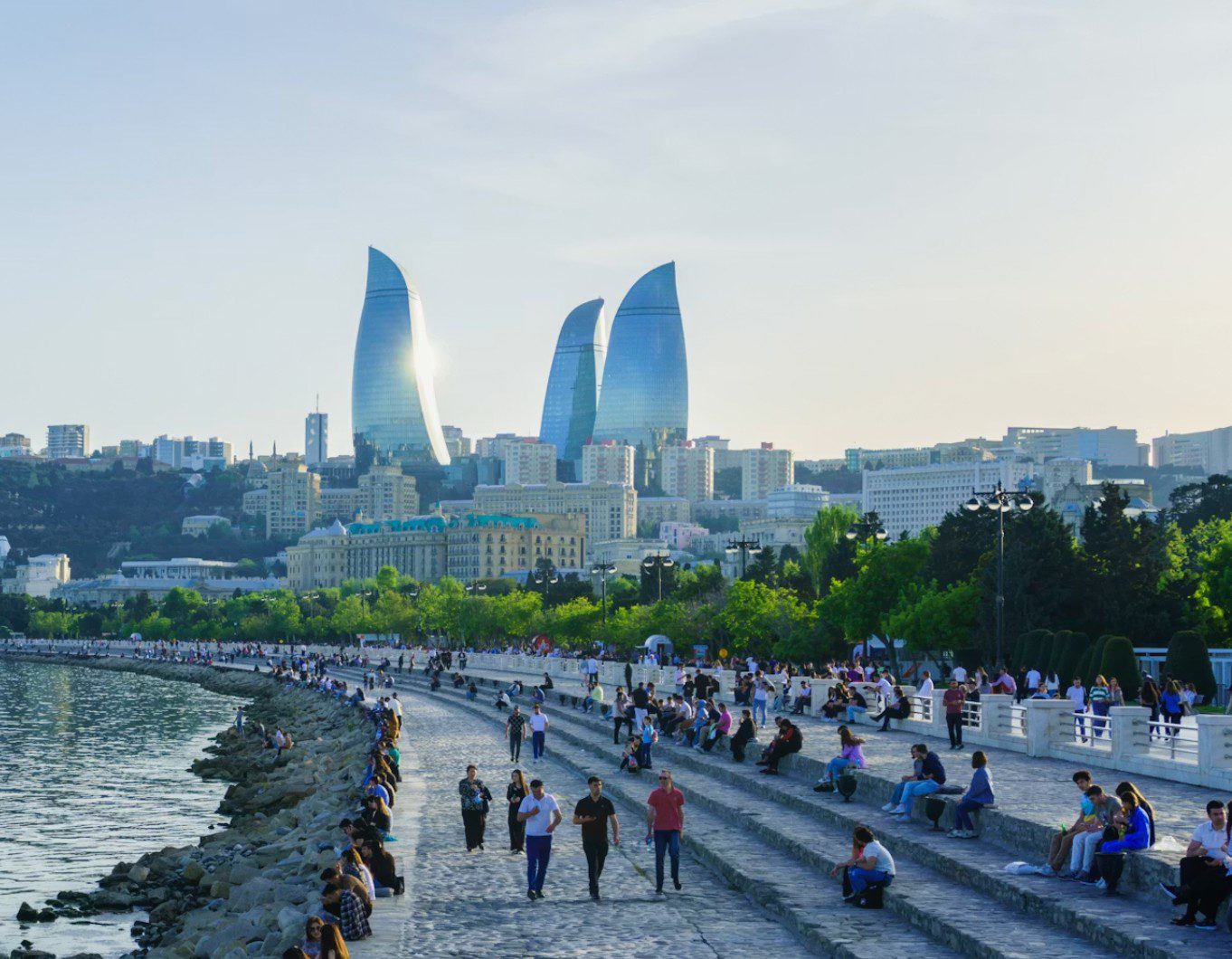
What makes Azerbaijan different from more tourist-heavy destinations is its extraordinary diversity: the country spans nine of the world’s eleven climate zones, meaning you can experience everything from semi-desert to alpine snow in a single trip. Baku’s skyline is futuristic, while ancient Silk Road caravanserais and Zoroastrian fire temples sit just a few hours away.
Azerbaijan at a Glance
- Capital: Baku
- Currency: Azerbaijani Manat (AZN)
- Language: Azerbaijani (official), Russian widely spoken
- English spoken? Good in Baku’s hotels and tourist spots, limited in rural areas
- Visa required? e-Visa required for US, UK, AU citizens; visa-free for some countries
- Best time to visit: May-June and September-October
- Typical trip length: 5–7 days to see highlights
- Time zone: UTC+4
- Power socket: Type F (230V, 50Hz)
- Tipping culture: 5-10% in restaurants for good service
- Emergency number: 112
Things to Sort Before You Land in Azerbaijan
Most US, UK, and Australian citizens need an e-Visa to enter Azerbaijan. You must apply at least three working days before your visit through the official government portal. The visa fee is $25 for standard processing and $60 for urgent. Your passport must be valid for at least three months beyond the visa’s expiry date. Citizens of some countries can enter visa-free — check the official portal before booking. Note that the land border with Georgia opened to international road traffic in mid-2025, but the border with Iran remains closed to foreigners.
Travel insurance is essential. Healthcare facilities in Baku are decent, but they’re limited outside the capital. Hospitals typically require up-front payment for treatment. If you’re planning mountain adventures or hiking, ensure your policy covers medical evacuation.
The local currency is the Azerbaijani Manat (AZN). Credit cards are widely accepted in Baku’s hotels and restaurants, but you’ll need cash for smaller establishments, markets, and rural areas. Carry small denominations — some taxis and smaller businesses may refuse large banknotes. Only exchange money at banks or official exchange points.
For connectivity, tourist SIM cards are easy to buy at the airport or in Baku — major operators include Azercell, Bakcell, and Nar. Coverage is generally good in cities, but can be patchy in mountain areas. Many travelers find that eSIM options provide convenient coverage before arrival. Download offline maps and a translation app before you go.
Getting Around Azerbaijan: What First-Timers Need to Know
Baku’s public transport is excellent and affordable — the metro and buses are convenient for independent travelers. A metro or bus ride costs just 0.60 AZN. You’ll need a BakıKart (around 2 AZN) to use public transport. Trains serve longer intercity routes, but buses and marshrutkas (minibuses) are the most common way to travel between towns. Marshrutkas don’t run on fixed schedules — they leave only when full.
For taxis, use ride-hailing apps like Bolt or Uber rather than hailing on the street. Bolt is available in Azerbaijan and charges a commission per ride. Taxi prices are very affordable — a short ride around Baku costs 3-5 AZN, and a trip from the airport to the city center is 15-25 AZN. Drivers near the airport and tourist attractions often ask for much more, so always use an app.
Renting a car gives you flexibility, especially if you plan to explore beyond Baku. Roads are generally good, but mountain routes can be challenging. If you head into the mountains, consider renting an SUV and bring water and snacks — some routes pass through remote areas.
One honest note: public transport in rural areas can be unpredictable. Schedules may change without notice, and not all routes appear on apps. Patience and flexibility are key when traveling outside Baku.
Money in Azerbaijan: Budget, Costs, and Payment Tips
Azerbaijan is an affordable destination. Budget travelers can expect to spend around $40–60 per day, while a comfortable trip costs $70–120 per day. For backpackers staying in hostels, a realistic daily budget is about $31.
What’s surprisingly cheap: public transport (0.60 AZN per metro ride), street food (3-5 AZN for doner or shawarma), and local wine (8-15 AZN per bottle in shops). What costs more than expected: accommodation in summer (prices can nearly double in July and August), imported goods, and restaurants right on the main squares.
ATMs are widely available in Baku, but fees vary. Use ATMs inside banks or shopping malls to avoid skimming. Tipping isn’t mandatory but is appreciated — 5-10% in restaurants for good service is customary.
One money mistake first-timers commonly make: assuming cards are accepted everywhere. In smaller towns, village restaurants, and local markets, cash is the only option. Also, avoid paying in foreign currency — always use manat.
Culture and Etiquette: What to Know Before You Go
Azerbaijanis are known for their hospitality — it’s not just a social norm but a sacred tradition. If you’re invited for tea, accept it graciously — it’s a gesture of friendship. If tea is served without sugar, it means your host wants you to stay longer; sugar will be brought later as a symbol of good conversation.
Greetings are usually a handshake — firm and direct. Elders are shown respect, and humility is valued over showiness. Avoid loud discussions in public, especially political ones. Do not bring up Armenia or the Nagorno-Karabakh conflict unless prompted.
While Baku is liberal and cosmopolitan, rural areas remain traditional. Pack modest clothing for rural excursions — cover your shoulders and knees. When visiting mosques, remove your shoes and dress respectfully. Women are expected to cover their hair in some religious sites, so carry a scarf.
One cultural misunderstanding tourists commonly make: rushing through meals. In Azerbaijan, dining is a leisurely affair meant to be savored, not rushed.
What locals appreciate that tourists rarely do: learning a few words of Azerbaijani. A simple “salam” (hello) or “çox sağ ol” (thank you) will make locals smile. Also, bringing small gifts (like sweets or souvenirs from your country) when invited to someone’s home is more appreciated than cash.
Food in Azerbaijan: What to Try and What to Skip
Azerbaijani cuisine is deeply rooted in home kitchens and village hearths. Must-try dishes include:
- Dolma — grape leaves stuffed with minced meat, rice, and herbs
- Piti — a slow-cooked lamb and chickpea stew served in clay pots, best tried in Sheki
- Qutab — thin flatbreads stuffed with herbs, meat, or pumpkin
- Lavangi — stuffed poultry or fish with walnuts and spices
- Kebabs — grilled meat skewers, a staple of Azerbaijani cuisine
- Sheki halva — a layered nut and syrup dessert, a regional specialty
For drinks, try fresh pomegranate juice — Azerbaijan is famous for its pomegranates. Local wines are also worth trying; the country has a long winemaking tradition. And of course, tea — the Azerbaijani way is served in pear-shaped glasses with lemon and jam.
Where to eat cheaply without eating badly: look for family-run cafés and teahouses away from main squares. The most unforgettable meals are often shared in roadside teahouses or at a guest’s home. Avoid restaurants right on the main square in Baku — they often charge significantly more for the same dishes you’ll find one street back.
Mistakes First-Time Visitors to Azerbaijan Make
- Assuming Baku represents all of Azerbaijan. Baku dazzles, but rural regions have preserved cultures and cuisines that differ drastically from the capital. Plan at least one trip outside Baku — to Sheki, Quba, or Lahij.
- Thinking everyone speaks English. In Baku’s hotels you’ll find English speakers, but in the countryside, Russian and Azerbaijani dominate. Learn basic phrases and download a translation app.
- Only carrying large banknotes. Some taxis and smaller businesses may refuse large notes. Carry small change in manat.
- Underestimating the climate. Azerbaijan spans nine climate zones. Baku may be sunny while mountain villages are snow-covered. Pack layers regardless of season.
- Not using local ride-hailing apps. Taxis without meters overcharge tourists. Always use Bolt or Uber for city rides.
- Relying too heavily on tourist infrastructure. Unlike Western Europe, Azerbaijan doesn’t have a dense tourist support system. Booking platforms may not list rural guesthouses. Ask locals and be flexible.
- Treating Azerbaijan as just a transit stop. It’s not a country to rush through. Even 5-7 days allows you to see the contrasts between Baku, Sheki, and the Greater Caucasus.
- Ignoring cultural etiquette. Avoid loud discussions in public, especially political ones. Greet people respectfully and avoid public displays of confrontation.
How Long Do You Need in Azerbaijan?
Minimum days: 3–4 days — enough for a day in Baku, a day exploring the Old City and Flame Towers, and a day trip to Gobustan or the Ateshgah Fire Temple.
Ideal trip length: 7 days — allows time for Baku, a day trip to the Fire Temple and Burning Mountain, travel to Sheki (stop at the Diri Baba mausoleum on the way), and a night in the Greater Caucasus mountains.
What you can realistically do in 4 days: Day 1: Baku’s Old City, Maiden Tower, and Baku Boulevard. Day 2: Heydar Aliyev Center and Highland Park. Day 3: Day trip to Ateshgah Fire Temple and Yanardag Burning Mountain. Day 4: Explore the National Carpet Museum or day trip to Gobustan’s mud volcanoes.
With 7 days: Add Sheki to see the Palace of the Sheki Khans and a caravanserai, spend a night in the mountain village of Xinaliq, and visit Lahij for cobbled streets and coppersmiths.
For a full day-by-day itinerary, see our [Azerbaijan itinerary guide → internal link placeholder].
Frequently Asked Questions — First-Time Visitors to Azerbaijan
Is Azerbaijan easy to travel independently?
Yes, with some caveats. Baku is easy to navigate with good public transport and ride-hailing apps. However, rural areas require more flexibility and patience — marshrutkas don’t run on fixed schedules, and booking platforms may not list guesthouses in remote villages.
How much money do I need for a week in Azerbaijan?
Budget travelers can manage on around $280–$420 ($40-60 per day), while a comfortable trip costs $490–$840 ($70-120 per day). For backpackers staying in hostels, a week costs about $216.
Do I need to know the local language in Azerbaijan?
Not in Baku — English is spoken in hotels and tourist spots. In rural areas, Russian is more useful than English. Learning a few Azerbaijani phrases like “salam” (hello) and “çox sağ ol” (thank you) will be appreciated.
Do I need a visa for Azerbaijan?
Most travelers from the US, UK, and Australia need an e-Visa obtained through the official government portal at least 3 working days before travel. Some nationalities are visa-free — check the official portal before booking.
Is it safe to travel to Azerbaijan?
Azerbaijan is one of the safest countries in the region with friendly, welcoming people. Petty crime can occur in crowded areas, and protests are rare but may be suppressed. Avoid the Nagorno-Karabakh region and border areas with Armenia due to ongoing tensions.
Azerbaijan rewards independent travelers who do a bit of research — especially those willing to venture beyond Baku and embrace the contrasts between ancient and modern. Most first-timers come away surprised by the genuine hospitality, the incredible food, and how easy it is to get around if you use the right apps. If you’re still planning, check e-Visa requirements for your passport, book accommodation in advance if visiting in summer, and pack layers — with nine climate zones, you’ll experience everything from Caspian heat to mountain cool.