

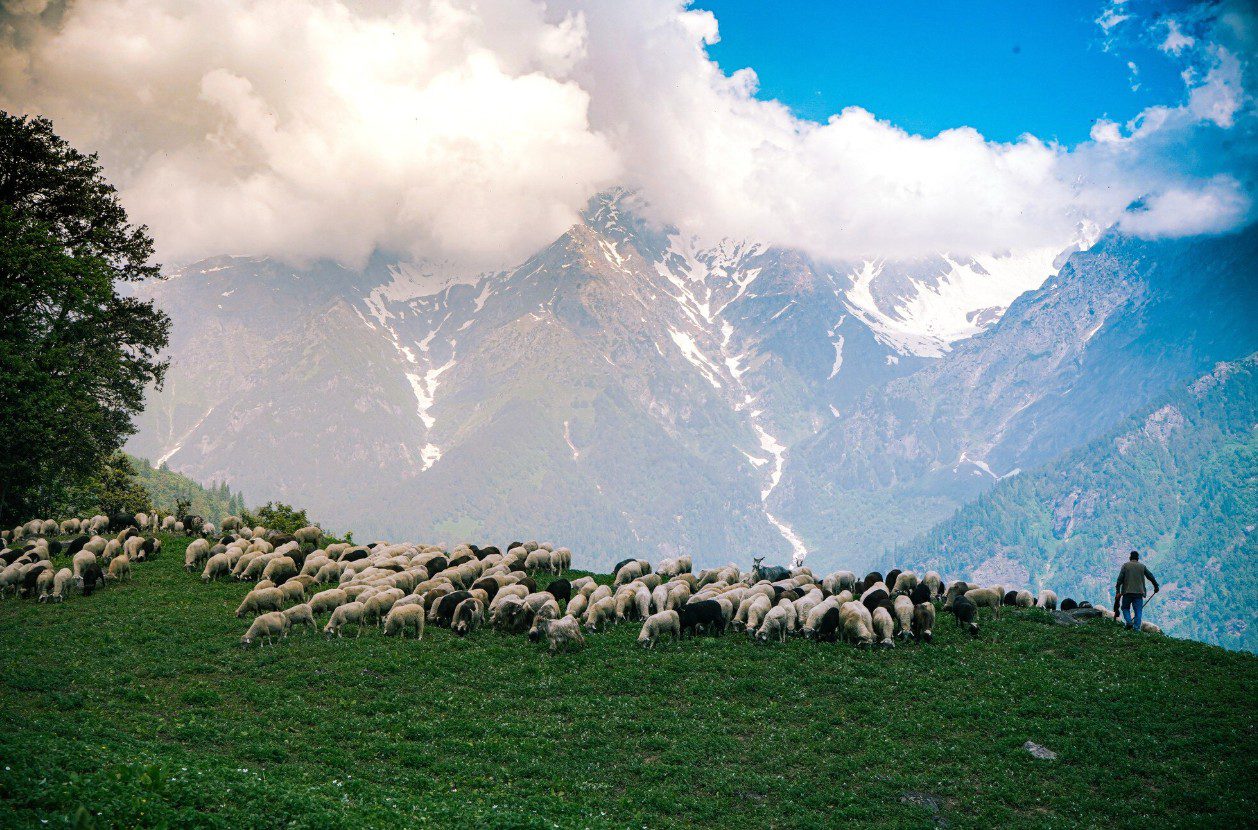
Do you need a car in Kyrgyzstan? Yes, if you want to see anything beyond Bishkek and the main highways — public transport doesn’t reach the mountain lakes, remote valleys, or high-altitude pastures that most travelers come for. Driving here is different from what most tourists expect: roads range from decent asphalt highways to rugged gravel tracks with river crossings, and livestock often roam freely onto the road.
This guide covers everything you need to know about renting a car in Kyrgyzstan — requirements, costs, road conditions, and common mistakes to avoid.
Car Rental in Kyrgyzstan — Quick Facts
- Minimum age to rent: 21–25 depending on the company
- License required: Valid driving license; IDP or certified translation required for licenses not in Latin script
- International Driving Permit needed? Highly recommended; mandatory if your license uses non-Latin script
- Driving side: Right-hand side
- Average daily rental cost: Economy ~$20–40/day, 4×4 SUV ~$65–100/day
- Fuel type / cost: Petrol/diesel, ~$0.80–1.00/liter
- Major rental companies present: Nomad Car Rental, Nomads Life, various local agencies
- Toll roads: No major toll roads
- Parking in cities: Reasonably easy in Bishkek; free in most areas
Do You Need a Car in Kyrgyzstan?
Public transport in Kyrgyzstan covers the main corridors — Bishkek, Issyk-Kul, and the Bishkek–Osh highway — reasonably well. Marshrutkas and shared taxis run between major towns. However, the places most travelers come for — Song-Kul Lake, Kel-Suu Lake, Tash Rabat, and the high mountain pastures — sit at the end of gravel roads with no public transport.
You’ll need a car to reach any remote mountain destination. While a sedan can handle the paved road around Issyk-Kul and the main highway to Osh, you’ll need a 4×4 with high clearance for Song-Kul, the southern shore of Issyk-Kul, and most side valleys.
If you’re staying only in Bishkek or taking organized tours, you can skip renting a car. Here’s a simple rule of thumb: staying only in the city — skip it. Want to explore mountain lakes, high pastures, or remote valleys — rent one.
What You Need to Rent a Car in Kyrgyzstan
The minimum rental age varies by company, typically between 21 and 25 years old. Most companies require at least 2–5 years of driving experience. Younger drivers may be unable to rent or may face additional requirements.
License requirements depend on your home country. Kyrgyzstan is a signatory to the Vienna Convention on Road Traffic, so licenses from many countries are legally valid. However, if your license uses non-Latin script (Cyrillic, Arabic, Chinese, etc.), you must carry either an International Driving Permit or an official certified translation into Russian or Kyrgyz.
For US citizens and travelers from countries not in the Vienna Convention, an IDP is mandatory. Even for those with Latin-script licenses, an IDP is strongly recommended to avoid misunderstandings with traffic police. Copies, photos, and digital versions are not accepted — you must carry the original physical license.
A credit card is required for the security deposit — expect $200–1,000 depending on the vehicle. Some companies accept cash deposits, but ask in advance. Debit cards may not be accepted. You’ll also need your passport at pickup.
How Much Does It Cost to Rent a Car in Kyrgyzstan?
Economy cars typically cost $20–40 per day, while 4×4 SUVs start around $65–100 per day in season. In 2025, some local companies offer economy cars from $13–24 per day.
Book well in advance if you need a 4×4 — there aren’t many specialized providers, and vehicles sell out fast during peak season. Some companies advise booking at least six months ahead for July and August.
Local rental agencies are generally cheaper but may have less reliable support. International chains have limited presence, so you’ll mostly be dealing with local operators. Hidden costs include airport delivery fees, cross-border authorization fees (if permitted), and additional driver fees.
May is the cheapest month to rent; July is the most expensive, with prices roughly 7% higher than the annual average. Prices approximate, based on research as of October 2025.
Car Rental Insurance in Kyrgyzstan — What’s Actually Covered
Most rental companies include mandatory third-party liability insurance (MTPL) and comprehensive CASCO coverage in the rental price. However, basic coverage comes with a deductible (excess) that varies by vehicle class — in some cases, 10% of the vehicle’s value in the event of a total loss.
Tires, windshield, and undercarriage damage may be excluded from standard coverage. You can often purchase additional coverage to reduce your excess, but the exact options depend on the company.
Before relying on your credit card or travel insurance, verify they cover rentals in Kyrgyzstan — many international policies don’t. Understanding your deductible is crucial — if you have an accident, you’ll be liable for this amount out of pocket.
What Driving in Kyrgyzstan Is Actually Like
Main highways — including the road around Issyk-Kul and the Bishkek–Osh highway — are paved and in reasonable condition. However, road conditions vary greatly. Even in cities, you’ll encounter potholes and construction. In remote mountain areas, the situation becomes more challenging.
Local driving habits are aggressive. Drivers overtake frequently, tailgate, change lanes unexpectedly, and the traffic can feel chaotic. Outside cities, expect livestock on the road — sheep, horses, and cows often stand directly on rural roads and highways. Do not honk or try to scare them; just wait patiently.
Signage is in Kyrgyz and Russian, generally clear on main routes but inconsistent on secondary roads. Mobile signal is strong in Bishkek and larger towns but can disappear completely in mountain areas and remote gorges. Download offline maps (Maps.me or Google Maps) before leaving the city.
Speed limits are 60 km/h in cities and 90 km/h on highways (unless posted otherwise). Seatbelts are mandatory for all passengers. The blood alcohol limit is effectively zero — strict penalties apply. Traffic police do monitor highways, and checkpoints are common, particularly when leaving cities. If stopped, stay calm and polite, present your documents (driver’s license, rental agreement, vehicle papers), and do not offer money directly — fines must be paid officially.
Parking and Fuel — Practical Tips
Parking in Bishkek is reasonably easy and mostly free, though central areas may have paid zones. In smaller towns and rural areas, parking is generally informal and free.
Fuel stations are widely available in cities and along major routes, but scarce in remote mountain regions. Fill up before heading into the mountains. Fuel is affordable — approximately $0.80–1.00 per liter. Most stations accept cash; cards are accepted in major cities but may not work in rural areas. A full tank covers roughly 500–700 km depending on the vehicle.
Common Car Rental Mistakes in Kyrgyzstan
- Not booking a 4×4 early enough — there are limited specialized providers, and 4x4s sell out months in advance during peak season
- Relying solely on GPS without offline maps — mobile signal drops in remote areas; download offline maps before leaving the city
- Not checking the deductible — some companies have high excess amounts that can be 10% of the vehicle’s value
- Assuming your credit card covers rental insurance — many international policies exclude Kyrgyzstan; verify before you rely on it
- Driving outside official roads — this is prohibited by Kyrgyz law and can result in fines up to $500 or vehicle confiscation
- Ignoring livestock on the road — animals roam freely onto highways; never drive fast around blind corners in rural areas
- Not carrying an IDP or certified translation — if your license isn’t in Latin script, you risk fines or vehicle impoundment
- Attempting night driving on mountain roads — extremely dangerous due to livestock, poor lighting, and lack of guardrails
Driving Across Borders From Kyrgyzstan
Crossing into Kazakhstan or Uzbekistan is possible by prior agreement with some rental companies, but requires notarized authorization and additional insurance. Most companies restrict travel to neighboring countries and may require a Green Card (international insurance certificate). Note that the rules for foreign-registered vehicles in Kyrgyzstan are strict — foreign citizens may only drive foreign-registered vehicles in the country for up to six months, after which the vehicle must be removed.
Frequently Asked Questions
Do I need an International Driving Permit for Kyrgyzstan?
It depends on your license. If your license uses non-Latin script, you must carry an IDP or an official certified translation. Even with a Latin-script license, an IDP is highly recommended to avoid issues with traffic police.
Is it safe to drive in Kyrgyzstan?
Yes, but caution is needed. Road safety is a significant concern — the country has a fatality rate comparable to the Central Asia average. Roads outside cities can be rough, and local drivers are aggressive. Avoid driving at night, especially on mountain roads.
Can I rent a car at the airport in Kyrgyzstan?
Yes, Manas International Airport in Bishkek has rental delivery services. Most companies require advance booking, and they will meet you on arrival with the vehicle and paperwork.
What type of car should I rent for Kyrgyzstan’s roads?
A sedan is fine for Bishkek and the paved highway around Issyk-Kul. For mountain destinations — including Song-Kul Lake, Kel-Suu, and most off-pavement routes — you need a 4×4 SUV with high clearance.
Are there restrictions on where I can drive a rental car in Kyrgyzstan?
Yes. Driving outside official roads is prohibited by law and may result in fines up to $500 or vehicle confiscation. Some areas — such as Altyn Arashan Gorge — are only accessible with professional drivers.
Bottom line: rent a car if you’re heading into the mountains or remote valleys. Stick to organized tours if you’re not confident driving on gravel roads. Whatever you decide, make sure your insurance covers the rental excess — it’s one of the most common unexpected costs.
 admin
admin