

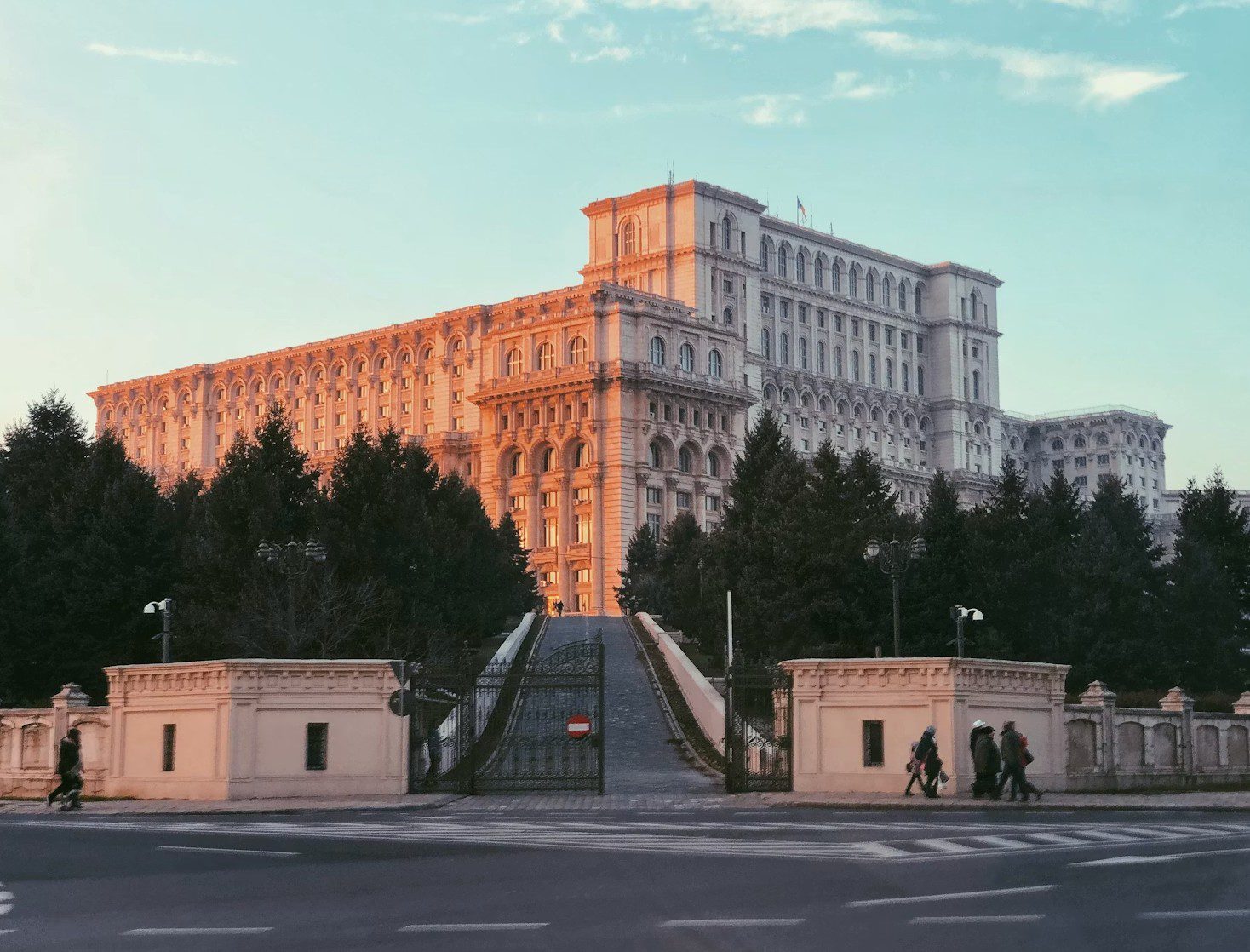
The best time to visit Romania depends on what you want to do. For city sightseeing and hiking: May, June, or September. For Black Sea beaches: July through September. For skiing: December through March. For fewer crowds and lower prices: May or October. Here is the full breakdown.
Romania is a large country where the Carpathian Mountains split the territory, creating significant regional climate differences. The Black Sea coast has its own microclimate, while Transylvania and the capital Bucharest experience hot summers and cold winters, with mountain areas remaining cooler year-round.
Romania by Month — Quick Overview
Average temperatures below are for Bucharest; mountain areas like the Carpathians are significantly cooler. Crowds and prices are relative to the yearly peak.
- January: 1°C high, -6°C low. Low crowds. Low prices. Skiing in Poiana Brașov and Sinaia; quiet cities.
- February: 4°C high, -3°C low. Low crowds. Low prices. Ski season continues; Dragobete love festival.
- March: 11°C high, 0°C low. Low-Medium crowds. Medium prices. Mărțișor spring festival; snow still on slopes.
- April: 18°C high, 6°C low. Medium crowds. Medium prices. Easter celebrations; wildflowers bloom; hiking starts.
- May: 24°C high, 11°C low. High-Medium crowds. High-Medium prices. Perfect weather; wine fairs; lilacs in bloom.
- June: 27°C high, 14°C low. High crowds. High prices. Warm, flexible; Black Sea swimmable; high trails open.
- July: 29°C high, 16°C low. Peak crowds. Peak prices. Hottest month; beach season peaks; medieval festivals.
- August: 29°C high, 15°C low. Peak crowds. Peak prices. Untold Festival; heat in lowlands; mountain escapes.
- September: 25°C high, 11°C low. High-Medium crowds. High-Medium prices. Wine harvest; clear skies; best all-round month.
- October: 18°C high, 6°C low. Low-Medium crowds. Medium prices. Fall colors peak; fewer crowds; lower prices.
- November: 10°C high, 2°C low. Low crowds. Low prices. Wine festivals; quiet; first snow in mountains.
- December: 4°C high, -3°C low. Low-Medium crowds. Low-Medium prices. Christmas markets; skiing starts; National Day.
Peak Season (July–August): Crowds, Heat, and High Prices
Summer is the warmest and most reliable weather window for the coast and mountains. Daytime highs in Bucharest hover around 29°C, and southern lowlands can push 35°C or more. The Black Sea warms to a swimmable 23–24°C, and high-altitude trails in the Carpathians are fully clear of snow.
This is when everyone shows up. The Black Sea resorts like Mamaia and Vama Veche get packed, especially in August. The medieval citadel of Sighișoara sees heavy foot traffic during its annual Medieval Festival on the last weekend of July. Parking in popular spots becomes a genuine challenge.
Prices spike. Accommodation in Bucharest, Brașov, and the coast can cost double what you would pay in May or October. Restaurants fill up, and you will need reservations for the better ones.
Who is this season for? Families with school-age children, beach lovers who want guaranteed warm Black Sea water, and first-time visitors who want everything open and operating at full capacity.
Honest downsides: Bucharest’s old town and the Black Sea resorts are packed by midday. The heat in southern Romania can feel oppressive, and afternoon thunderstorms are common in the mountains.
Shoulder Season (May–June and September–October): The Sweet Spot
May and June
May brings daytime highs around 24°C, rising to 27°C by June. The snowmelt means rivers are high, waterfalls are at their peak, and hiking trails in the Carpathians become accessible. Meadows in Transylvania bloom with wildflowers, and the Seven Ladders Canyon near Brașov is at its best.
Crowds are moderate, with weekends busier than weekdays. Prices are noticeably lower than July and August, and you can still find good deals on accommodation. The Black Sea is warm enough for swimming from late June, but the water is still brisk in May.
Limitations: some mountain huts and high passes may not be fully snow-free until June. The coast is not fully operational until the summer season officially kicks off in June. May is also the month with the highest rainfall, averaging around 70 mm. This is a great window for couples, solo travelers, and hikers who want good weather without the peak-season prices.
September and October
September delivers the single best weather-crowd balance of the year. Temperatures stay around 25°C, and the Black Sea remains warm from summer, often swimmable well into late September. The summer haze lifts, offering crystal-clear views of the Carpathians. This is also the start of the wine harvest, where you can join locals picking grapes.
October cools to around 18°C, which is perfect for hiking and photography. The fall foliage around the Carpathians and Transylvania is spectacular. The crowds have thinned significantly, and prices drop compared to summer. Accommodation is easier to book.
What starts closing: some mountain huts close for the season in late October. If you want to hike above 2,000 meters, aim for the first half of October. For wine lovers and photographers, October is a sophisticated travel window.
Off Season (November–April): Quiet, Cheap, and Underrated
Winter is cold. In Bucharest, daytime highs hover around 1–4°C, and temperatures can drop well below freezing. The mountains get serious snow, and many high passes become impassable. But if you dress properly, this is the cheapest and quietest time to explore the cities and the ski slopes.
From December to March, ski resorts like Poiana Brașov, Sinaia, and Predeal offer well-groomed slopes at a fraction of the cost of Western European resorts. Poiana Brașov is the go-to spot for skiing and snowboarding, while Sinaia calls out to experienced skiers with wide bowls and gullies.
Who should consider this season? Budget travelers, photographers who want empty city streets, and anyone who genuinely hates crowds. Accommodation prices drop 50% or more compared to summer. February, in particular, is a great month for culture with the Dragobete love festival.
One honest limitation: many mountain routes are inaccessible due to snow, and public transport becomes less frequent. November is cool and damp, with reduced sunlight. December, however, is magical with Christmas markets across all major cities.
Best Time to Visit Romania Based on What You Want
For Black Sea Beaches and Swimming
Best months: June, July, August, September. The Black Sea water is warmest from June through September. Beach resorts like Mamaia, Vama Veche, and Eforie Nord are fully open, with beach bars and water sports operating at full capacity.
For Hiking and Mountain Adventures
Best months: May, June, September, October. The trails in the Carpathians, including the Făgăraș Mountains with Moldoveanu Peak, are accessible. May offers wildflowers, September offers clear views, and October offers golden fall colors.
For Sightseeing and City Exploration
Best months: April, May, September, October. These months offer comfortable daytime temperatures for exploring Bucharest, Brașov, Sibiu, and medieval Sighișoara. The heat of summer makes walking tours less pleasant, so avoid July and August if you want to be outdoors.
For Budget Travelers
Best months: November, January, February, March (excluding the Christmas and New Year holiday period). Accommodation and flights are significantly cheaper, and you can often find hotel rooms for half the summer price.
For Avoiding Crowds
Best months: May and October. These months offer low-season crowd levels with decent weather. May gives you spring blossoms and green landscapes; October gives you fall colors and wine harvest. You will not get the peak-season sea temperatures, but the trade-off is worth it for peace.
A Few Things to Know Before You Book
Booking lead time matters. For July and August, book accommodation three to four months in advance, especially for the Black Sea coast and Poiana Brașov. For the shoulder seasons, four to six weeks is usually sufficient. In winter, you can often book on arrival except for the holiday weeks around Christmas and New Year.
What to pre-book: accommodation in Mamaia and the coast for summer stays. Ski equipment and passes at Poiana Brașov or Sinaia during winter peak weeks. For high-mountain hiking, arrange guides ahead of time for remote areas.
Visa timing: Romania is part of the Schengen Area as of 2025, so visa rules align with Schengen requirements. This does not affect seasonal timing, but check the latest entry requirements before you go.
A practical note specific to Romania: the country has multiple climate zones, so check both Bucharest and mountain weather before you pack. In summer, the mountains are a reliable escape from the capital’s heat. In winter, pack layers — even cities get cold.
Frequently Asked Questions
What is the best month to visit Romania overall?
September. The weather is warm but comfortable, the Black Sea is still swimmable, the wine harvest is underway, the crowds have thinned, and the light is clear for photography. It is the month that delivers the most without the downsides of peak summer.
Is Romania good to visit in October?
Yes, especially for wine lovers and hikers. Temperatures average 18°C during the day, which is ideal for walking tours and vineyard visits. The fall foliage peaks in the second half of the month, and accommodation prices are lower than September. Higher mountain trails may be closing, so stick to lower elevations.
What is the rainy season in Romania?
May and June are the wettest months, with May averaging around 70 mm of rainfall. However, these showers are usually short-lived, and the sun comes back quickly. September is relatively dry, with only about 44 mm of rain.
Is Romania worth visiting in winter?
Yes, but with the right expectations. December is magical for Christmas markets in Bucharest, Brașov, and Sibiu. December through March is the prime season for skiing at Poiana Brașov, Sinaia, and Predeal. If you do not ski, avoid January and February — the weather is cold and grey in the lowlands.
What is the hottest month in Romania?
July has the highest average daytime highs at 29°C in Bucharest, and southern lowlands can exceed 35°C. August is nearly as warm, with daytime highs around 29°C. For relief, head to the Carpathian Mountains, where it stays comfortably cool.
The bottom line: pick September for the best all-round experience. If you want spring blossoms, go in May. If you want high-altitude trekking, July and August are your months. If you want snow, December through March is your ski window. Each season works for someone.