

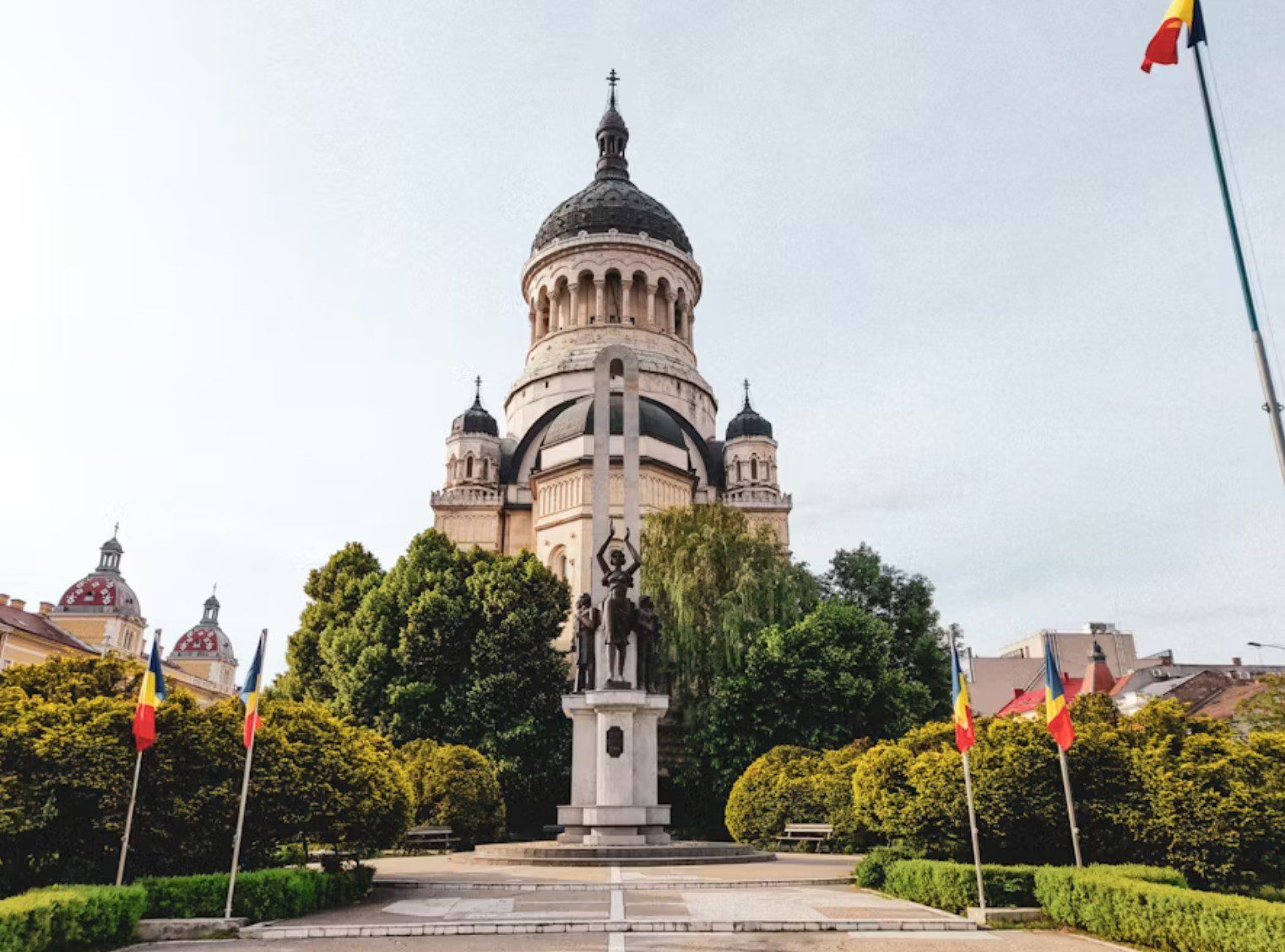
Romania isn’t as heavily documented as some other European destinations, so doing your homework beforehand makes sense. This guide covers the practical stuff that actually matters — visas, transport, costs, and cultural quirks — so you can spend less time figuring things out and more time enjoying your trip.
What makes Romania different from more tourist-heavy destinations is its wild, untamed character. You’ll find horse-drawn buggies in villages, Europe’s largest population of brown bears roaming the Carpathian forests, and a pace of life that feels untouched by modernity. Yet its cities are utterly contemporary, with thriving tech scenes, specialty coffee, and world-class festivals.
Romania at a Glance
- Capital: Bucharest
- Currency: Romanian Leu (RON)
- Language: Romanian (official)
- English spoken? Widely in cities and tourist areas, limited in rural regions
- Visa required? Visa-free for US, UK, EU, AU citizens (up to 90 days)
- Best time to visit: April–May and September–October
- Typical trip length: 7–10 days to see highlights
- Time zone: UTC+2 (EET), UTC+3 in summer
- Power socket: Type F (230V, 50Hz)
- Tipping culture: 10% in restaurants, expected
- Emergency number: 112
Things to Sort Before You Land in Romania
Romania joined the Schengen Area in 2024, with full land border integration completing in early 2025. Most visitors from the US, UK, Canada, Australia, and EU countries can enter visa-free for up to 90 days within a 180-day period. Your passport should be valid for at least six months beyond your arrival date. Starting in late 2026, travelers from visa-exempt countries will need ETIAS authorization before traveling, so check current requirements before you go.
Travel insurance is strongly recommended. While Romania has a public healthcare system, private hospitals with English-speaking staff are available in cities. If you have an EHIC or GHIC card, carry it for access to state-provided treatment on the same terms as Romanian residents. Non-EU travelers should hold comprehensive travel medical insurance covering treatment, hospitalization, and emergency repatriation.
The local currency is the Romanian Leu (RON). Cards are widely accepted in cities, but smaller towns, rural areas, and farmers’ markets are cash-only. ATMs are widely available, but stick to established banks like BCR, ING, BRD, Raiffeisen, or Banca Transilvania to avoid skimming and unfavorable fees. Avoid independent ATMs, which often apply less favorable rates.
For connectivity, Romania is one of the few EU countries where SIM cards can generally be purchased without complex registration requirements. Prepaid starter packs are available in shops near metro stations and at the airport. EU visitors can use their data and calls at domestic rates under the “Roam Like at Home” rules.
Getting Around Romania: What First-Timers Need to Know
Bucharest’s metro is the fastest and most reliable way to cross the city, bypassing often considerable road traffic. For buses, trams, and trolleybuses, you can tap a contactless bank card directly on the orange validators — a single ticket is valid for 90 minutes and includes transfers. The metro operates separately; you can tap a contactless card at the gates or buy single trips and day passes at station machines.
For intercity travel, trains are cheap but can be slow and unreliable — aging tracks mean average speeds of around 80 km/h. The most popular and recommended railway route is Bucharest to Brașov, a journey of about 2 hours 50 minutes through the Carpathians. This route features Romania’s newest and fastest train, introduced in late 2024, running twice daily on return journeys. When buying train tickets, always request seat reservations — a standard ticket only guarantees transport, not a specific seat.
Renting a car is essential for remote areas not connected to public transport. While more highways are being opened, secondary roads can be narrow, and roads are often one-lane. The Transfăgărășan Highway, one of Europe’s most spectacular mountain roads, is only open from June to September due to heavy snowfall. If your driving license isn’t issued in the EU or UK, you’ll need an International Driving Permit to drive in Romania.
Taxis are available and inexpensive, but scams do occur. Always ensure the meter is running or agree on a price beforehand. For the most reliable option, use Uber or Bolt in cities — both apps display upfront pricing and driver details. Traffic jams are common, particularly on popular tourist routes such as the Prahova Valley and around weekends.
Money in Romania: Budget, Costs, and Payment Tips
Romania offers solid value compared to Western Europe, though it’s no longer as inexpensive as people might think. Budget travelers can expect to spend around $30–60 per day, while mid-range travelers might spend $60–100. A hostel dorm costs around 70–150 lei ($15–30), while a basic room for two is 150–300 lei ($30–60).
What’s surprisingly cheap: public transport (1.50–3 lei, about $0.30–0.60), street food like mici (5–15 lei, $1–3), and local beer (10–25 lei, $2–5). What costs more than expected: mid-range and upscale hotels, fine dining, specialty coffee, and wine are closer to Western European standards.
ATMs are widely available, but withdrawal fees apply — use a travel-friendly debit card like Monzo or Revolut to minimize charges. Tipping is customary and expected — leave around 10% for good service, even when service is included on the bill.
One money mistake first-timers commonly make: assuming cards are accepted everywhere. In rural villages, farmers’ markets, and local shops, cash is the only option. Also, currency exchange desks at the airport offer poor rates — pay by card where possible or withdraw lei from an ATM in the city center.
Culture and Etiquette: What to Know Before You Go
Romanians are friendly and welcoming, and hospitality is deeply valued — they genuinely want to make a good impression. Greetings are usually a firm handshake with direct eye contact. Use titles and last names until invited to switch to first names.
When visiting Orthodox churches, dress modestly — women should cover their hair and shoulders, and men should remove hats. Photography inside churches is often prohibited or restricted.
One cultural misunderstanding tourists commonly make: rushing through meals. Lunch is usually the main meal of the day, and many shops close between 1:00 PM and 3:00 PM for the traditional lunch break. Check “Program” signs on doors for opening hours — they often include midday closures and weekly closing days.
What locals appreciate that tourists rarely do: learning a few words of Romanian. A simple “bună” (hello), “bună ziua” (good day), “mulțumesc” (thank you), or “la revedere” (goodbye) will make locals smile. Romanians are very patriotic and love to share their heritage, so showing interest in their culture is always appreciated.
It’s worth noting that some topics are still considered taboo in Romania, including homosexuality and the Roma population — avoid these subjects in conversation.
Food in Romania: What to Try and What to Skip
Romanian cuisine is hearty, flavorful, and influenced by Balkan, Hungarian, and Ottoman traditions. Must-try dishes include:
- Sarmale — the national dish: cabbage or vine leaves stuffed with minced pork, rice, and herbs, simmered slowly in tomato sauce, traditionally served with polenta and sour cream
- Mici (mititei) — grilled skinless sausages made from a blend of beef, lamb, and pork with garlic and spices, best enjoyed with mustard and a cold beer
- Ciorbă de burtă — sour tripe soup, a hangover cure and comfort food, flavored with fermented wheat bran and garlic
- Cozonac — sweet bread with swirls of walnut paste, cocoa, and raisins, similar to Italian panettone
- Papanași — fried cheese dough dumplings served with sour cream and jam
For drinks, try țuică (plum brandy) as an aperitif and local wines — Romania is Europe’s sixth-largest wine producer, with indigenous grapes like fetească neagră and fetească regală. The Dealu Mare region, about 1.5 hours from Bucharest, is the country’s most popular winemaking region.
Where to eat cheaply without eating badly: look for small family-run cafés and teahouses away from main squares. Street stalls offer mici, covrigi (pretzels), and merdenele at a fraction of restaurant prices. Restaurant portions are generous — ask your server before ordering too much.
Mistakes First-Time Visitors to Romania Make
- Not carrying enough cash. Cards are accepted in cities, but rural areas and local markets are cash-only. You’ll need lei for taxis, village guesthouses, and small vendors.
- Assuming the Transfăgărășan Highway is always open. It’s only accessible from June to September — outside these months, it’s closed due to heavy snowfall.
- Taking unlicensed taxis from the airport. Use the booking machine in the arrivals hall or book Uber/Bolt. Avoid drivers who approach you inside the terminal.
- Not booking accommodation or tours in advance. July and August are peak season when many Romanians travel internally — main roads and attractions get crowded.
- Thinking Romania is tiny. It’s the 9th largest country in Europe — distances are significant, and travel between regions takes time.
- Not checking museum opening hours. Many museums and historic sites close on Mondays and Tuesdays, with seasonal hours that vary.
- Underestimating the climate. Summers can be scorching with temperatures above 38°C, while winters are cold with snow in the mountains.
- Ignoring wildlife warnings. Romania has Europe’s largest brown bear population — never hike alone in bear territory, and avoid camping in remote areas without precautions.
How Long Do You Need in Romania?
Minimum days: 3–4 days — enough for a weekend city break in Bucharest or Brașov.
Ideal trip length: 7 days — allows time to explore Transylvania: Bucharest, Brașov, Bran Castle, Peleș Castle, and Sighișoara.
What you can realistically do in 5 days: Day 1: Bucharest — Palace of Parliament, Old Town, and Village Museum. Day 2: Travel to Brașov via Sinaia (Peleș Castle). Day 3: Explore Brașov’s Old Town and Black Church. Day 4: Bran Castle and Râșnov Fortress. Day 5: Return to Bucharest or continue to Sighișoara.
With 10–14 days: Add the painted monasteries of Bucovina, the Merry Cemetery of Săpânța, a Danube Delta boat trip, and the wooden churches of Maramureș.
For a full day-by-day itinerary, see our [Romania itinerary guide → internal link placeholder].
Frequently Asked Questions — First-Time Visitors to Romania
Is Romania easy to travel independently?
Yes, with some planning. Cities have good public transport and ride-hailing apps. However, rural areas require flexibility — trains are slow, buses unreliable, and not all roads are well-maintained. Renting a car is essential for reaching remote areas.
How much money do I need for a week in Romania?
Budget travelers can manage on around $210–$420 ($30–60 per day), while mid-range travelers might spend $420–$700 ($60–100 per day) for nicer accommodation and meals. A hostel dorm costs $15–30, a basic double room $30–60, and a meal for two with wine rarely exceeds $30–40.
Do I need to know the local language in Romania?
Not in cities — English is widely spoken, especially among younger generations. In rural areas, English is limited — learning a few Romanian phrases like “bună” (hello) and “mulțumesc” (thank you) will go a long way.
Do I need a visa for Romania?
Citizens of the US, UK, EU, Canada, Australia, and many other countries can enter visa-free for up to 90 days within a 180-day period. Starting in late 2026, ETIAS authorization will be required for visa-exempt travelers.
Is it safe to travel to Romania?
Yes, Romania is significantly safer than many countries to its west, with crime generally low and gun violence almost nonexistent. Pay attention to petty theft and being overcharged in some farmers’ markets. A bigger concern is aggressive driving — road accident rates are higher than the EU average.
Romania rewards independent travelers who do a bit of research — especially those willing to venture beyond Bucharest and embrace the wild, authentic character of the countryside. Most first-timers come away surprised by the genuine hospitality, the incredible landscapes, and how safe and affordable it is. If you’re still planning, check visa rules for your passport, book accommodation in advance for summer, and pack layers — the mountains have their own weather regardless of the season.