

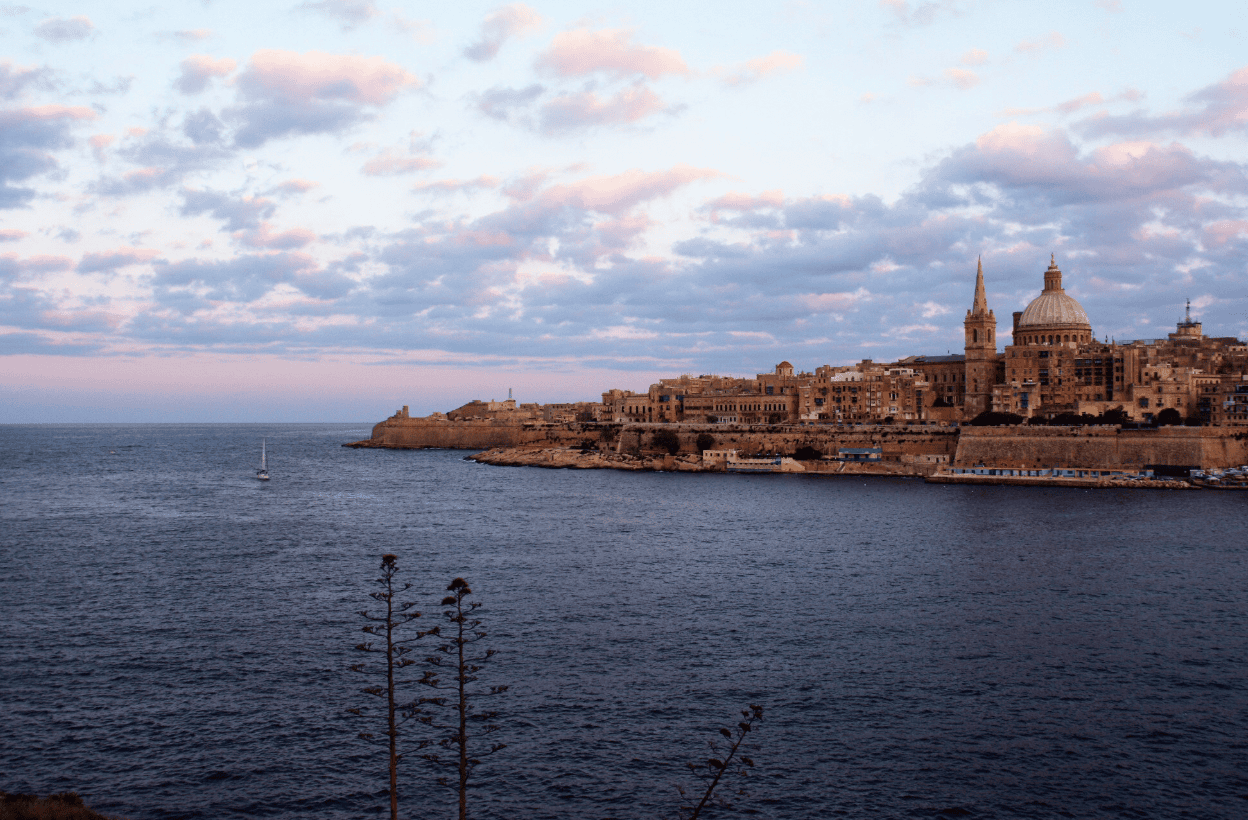
Do you need a car in Malta? Probably not if you’re staying in Valletta, Sliema, or St. Julian’s — but yes, if you want to explore hidden beaches, remote temples, and traditional villages at your own pace. Driving here is different from what most tourists expect: you’ll drive on the left, roads can be narrow and winding, local drivers are assertive, and parking in popular areas is a daily challenge.
This guide covers everything you need to know about renting a car in Malta — requirements, costs, road conditions, and common mistakes to avoid.
Car Rental in Malta — Quick Facts
- Minimum age to rent: 21 (higher for some vehicle categories; young driver fee applies under 25)
- License required: Valid driving license; EU licenses accepted; IDP recommended for non-Latin script licenses
- International Driving Permit needed? Not for EU licenses; recommended for others
- Driving side: Left-hand side (British legacy)
- Average daily rental cost: Economy €20–45/day, SUV €50–80/day
- Fuel type / cost: Petrol/diesel, ~€1.40–1.60/liter
- Major rental companies present: Hertz, Avis, Europcar, Sixt, local agencies
- Toll roads: No toll roads on the islands
- Parking in cities: Very difficult in Valletta, Sliema, and tourist hotspots
Do You Need a Car in Malta?
Malta is small — just 27km long and 14km wide — so you might wonder if renting a car is worth it. The answer depends entirely on your itinerary. Public transport consists only of buses, with extensive routes connecting major towns, but services don’t reach every beach or remote attraction.
You’ll benefit from a car if you want to explore hidden coves and secluded beaches, visit multiple villages in a single day, take day trips to Gozo without relying on tour schedules, or travel with young children or mobility issues. You’ll need a car to reach remote beaches and traditional fishing villages like Marsaxlokk, the megalithic temples of Mnajdra and Ħaġar Qim, and quiet spots along the northern coast.
If you’re staying only in Valletta, Sliema, or St. Julian’s — walking and buses are sufficient, and driving is more hassle than it’s worth. Parking is limited, traffic is heavy, and the CVA (Controlled Vehicular Access) system in Valletta charges a fee for vehicles entering the city. Here’s a simple rule of thumb: staying only in the city — skip it. Want to explore beaches, temples, and villages — rent one.
What You Need to Rent a Car in Malta
The minimum rental age is 21, but you must have held a full driving license for at least 1–2 years. Some companies require 25 for certain vehicle categories, and drivers under 25 typically pay a young-driver surcharge.
License requirements are straightforward. If you hold an EU license, it’s valid in Malta. For UK, US, and most other nationalities, your domestic license is accepted for up to 12 months. If your license uses non-Latin script (Arabic, Chinese, Japanese, etc.), you should carry an International Driving Permit. A credit card in the main driver’s name is essential — most rental companies require one for the deposit, and debit cards are often not accepted. Expect a deposit hold of €1,000–2,500 depending on the vehicle and insurance package.
You’ll also need your passport or national ID at pickup.
How Much Does It Cost to Rent a Car in Malta?
Economy cars typically cost €20–40 per day in the off-season, rising to €40–80 per day during summer (June–September). SUVs and larger vehicles run €50–80 per day. Prices can double during peak season — book in advance to lock in lower rates.
Local rental agencies are generally 30–50% cheaper than international chains but may have less reliable support. International companies offer standardized service and easier booking but at a premium. Hidden costs include airport pickup surcharges, additional driver fees, young-driver surcharges, and a separate deposit of around €200 to cover potential traffic fines.
Check the fuel policy carefully. Most rentals use a “full-to-full” policy — you receive the car with a full tank and must return it full. Returning with less fuel results in expensive refueling charges. Some companies offer “full-to-empty” where you prepay for a full tank, but if you don’t use all the fuel, you’re paying for nothing.
Prices approximate, based on research as of October 2025.
Car Rental Insurance in Malta — What’s Actually Covered
Basic rental insurance typically includes Collision Damage Waiver (CDW) and Theft Protection (TP), but these come with a high excess — typically €800–1,500 that you’re liable for if something happens. Tires, wheels, undercarriage, roof damage, interior damage, and lost keys are often excluded from basic coverage.
You can purchase Super CDW at the counter for €10–20 per day to reduce your excess to zero. Alternatively, buy standalone excess insurance online from third-party providers — much cheaper at €3–7 per day. Before relying on your credit card or travel insurance, verify they cover rentals in Malta — many policies don’t.
What Driving in Malta Is Actually Like
Malta drives on the left — a legacy of British rule. If you’re from Europe, North America, or most other countries, this takes some adjustment. The steering wheel is on the right side of the car, indicators are on your left, and you overtake on the right. Remember: the driver should always be closest to the centre of the road.
Road conditions vary. Main roads are generally well-maintained, but roads can be narrow and winding, especially in villages. Potholes exist, road markings may be faded, and signage isn’t always clear — GPS navigation is essential. There are no motorways in Malta.
Local driving habits can be assertive. Expect sudden lane changes, creative parking, and flexible interpretation of traffic rules. Some drivers don’t use indicators on roundabouts, and overtaking can be enthusiastic. Stay alert and drive defensively.
Speed limits are 50 km/h in towns and built-up areas, 60–80 km/h outside towns depending on the road. Speed cameras are used, usually forewarned by signs. Seatbelts are mandatory for all passengers. Children under 135 cm must ride in the back seat. The blood alcohol limit is 0.08%, but driving after any alcohol is not recommended. Headlights must be used in tunnels and at night.
Police checkpoints are common. If stopped, present your license, rental agreement, and ID. In the event of an accident, contact the police and your rental company immediately — you’ll need a police report.
There are no toll roads in Malta, but there are speed cameras and the CVA (Controlled Vehicular Access) system in Valletta, which charges for entering the city.
Parking and Fuel — Practical Tips
Finding parking can be the biggest challenge of driving in Malta. In Valletta, Sliema, and tourist areas, parking is very limited. Use public parking garages where available and arrive early in summer — beaches fill up by 10am.
Parking zones are colour-coded: – White lines: Free parking, no time limit – Blue lines: Paid parking — use the ControlledParking.mt app or pay machines – Green lines: Resident permit holders only – Yellow lines: No parking at any time
In Valletta, use the park-and-ride services or the MCP car park at the entrance. A fee applies to vehicles entering Valletta (max €6.50). Blue zone rates are typically €0.50–1.50 per hour.
Fuel is widely available. Petrol and diesel are sold at stations across the island — often open 24 hours. Fuel costs approximately €1.40–1.60 per liter, government-regulated. Most stations accept cards, but carry some cash for older pumps. A full tank covers roughly 500–600 km depending on the vehicle.
Common Car Rental Mistakes in Malta
- Not photographing the car before driving off — take detailed photos and video of existing scratches, dents, and interior condition at pickup to avoid disputes
- Assuming your credit card covers rental insurance — many policies exclude Malta; verify before you rely on it
- Forgetting to download offline maps — mobile signal is generally good, but offline maps help in rural areas
- Driving in Valletta unnecessarily — use park-and-ride services instead. The CVA system charges for entry
- Relying on a debit card for the deposit — most agencies require a credit card, and debit cards are frequently rejected
- Parking in green or yellow zones — green is resident only; yellow means no parking. Towing is swift and expensive
- Choosing the wrong fuel policy — always choose “full-to-full” rather than “full-to-empty” to avoid inflated refueling charges
- Not checking Gozo ferry permissions — most companies allow taking the car to Gozo, but confirm at pickup
Driving Across Borders From Malta
As an island nation, driving a rental car across borders is not applicable. The most you’ll need to consider is taking the ferry to Gozo, which most rental companies allow at no extra charge. The Gozo Channel ferry operates between Cirkewwa (Malta) and Mgarr (Gozo), crossing takes 25 minutes, and cars can be driven on and off. Confirm permission with your rental company at pickup.
Frequently Asked Questions
Do I need an International Driving Permit for Malta?
Not for EU licenses. If your license isn’t in Latin script or English, an IDP is recommended. Licenses from UK, US, Australia, and most other countries are accepted for up to 12 months.
Is it safe to drive in Malta?
Yes, but caution is needed. Roads can be narrow and winding, and local drivers can be assertive. Drive defensively, obey speed limits, and never drive after drinking. Traffic in popular areas can be heavy, especially during rush hours.
Can I rent a car at the airport in Malta?
Yes, Malta International Airport has rental desks from international chains including Hertz, Avis, Europcar, and Sixt, along with local agencies. Airport locations are convenient but may cost more than off-airport pickups.
What type of car should I rent for Malta’s roads?
A compact car is ideal — Malta’s roads can be narrow, and parking is tight. Automatics are available but more expensive and sell out quickly — reserve early if needed. Local agencies often offer better deals for small cars.
Can I take my rental car to Gozo?
Yes, most rental companies allow you to take your car to Gozo on the ferry at no extra charge. The ferry runs every 45 minutes, takes 25 minutes, and costs €15.70 return including the driver. Confirm with your rental company before booking.
Bottom line: rent a car if you want flexibility to explore beaches, temples, and villages at your own pace. Skip it if you’re staying in central Valletta or Sliema. Whatever you decide, make sure your insurance covers the rental excess — it’s one of the most common unexpected costs.
 admin
admin