

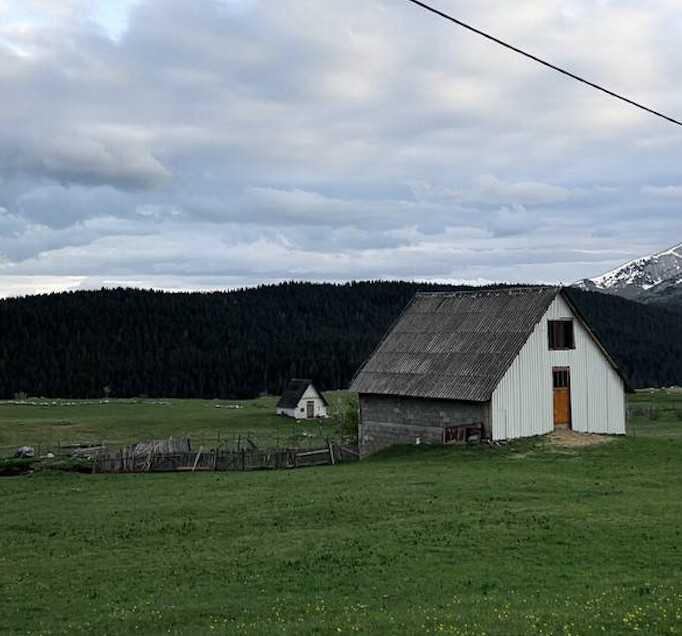
Žabljak is Montenegro’s premier mountain destination, set at 1,456 metres above sea level on the Durmitor plateau. It is the highest town in the Balkans. You come here for hiking, rafting, skiing, and access to Durmitor National Park. The town has about 1,700 permanent residents, but it swells with visitors in summer and winter. Here is exactly what to do, where to stay, and what you need to know before you go.
What Žabljak Is and Why You Should Go
Žabljak is the gateway to Durmitor National Park, a UNESCO World Heritage site that covers 390 square kilometres of alpine terrain. The town itself is not the attraction — it is a functional base with hotels, restaurants, and gear rental shops. The main draw is the surrounding landscape: 49 peaks over 2,000 metres, 18 glacial lakes, and the Tara River Canyon, which is the second deepest canyon in the world at 1,300 metres.
The town is at the centre of a road network that connects to the rest of Montenegro. The drive from Podgorica takes about 2.5 hours, from Kotor about 3 hours, and from Dubrovnik about 4 hours. The roads are mostly paved but can be narrow and winding, especially the section from Mojkovac to Žabljak, which climbs steeply through forest and past small mountain villages.
The main downside is the weather. Žabljak has a harsh alpine climate. Summer temperatures average 20 to 25 degrees during the day but drop to 10 degrees at night. Winter temperatures often fall below -10 degrees, and snow can persist from November to May. The town is also remote, with limited services compared to coastal Montenegro. There is one small supermarket, a handful of restaurants, and no large hospital. If you need medical care beyond basic first aid, the nearest hospital is in Nikšić, an hour and a half away.
What to Do in Žabljak
Black Lake
Black Lake is the most accessible and most visited attraction in Durmitor National Park. It sits 3 kilometres from the centre of Žabljak and is reachable by a 40-minute walk or a 5-minute drive. The lake is actually two lakes connected by a narrow channel: Big Lake and Little Lake. The total surface area is about 0.7 square kilometres, and the depth reaches 52 metres. The water is clear, cold, and surrounded by pine forest.
A wooden walkway circles Big Lake. The walk is about 3.5 kilometres and takes an hour at a relaxed pace. The trail is flat and suitable for most fitness levels. There is a small cafe at the lake entrance, and you can rent rowboats and kayaks for 10 to 15 euros per hour. The lake is most photogenic in the early morning when the water is still and the mountains reflect in the surface. The downside is the crowds: in July and August, the car park fills by 10 AM, and the walkway becomes congested with families, school groups, and tour buses.

Durmitor Hiking Trails
Durmitor has over 200 kilometres of marked hiking trails. The most famous route is the summit of Bobotov Kuk, the highest peak in Durmitor at 2,523 metres. The hike starts from the Sedlo pass, which is about 20 kilometres from Žabljak by road. The trail is steep and exposed, gaining 700 metres of elevation over 3.5 kilometres. It takes 3 to 5 hours to reach the summit and return. The last section involves scrambling on loose rock, and the route is not suitable for inexperienced hikers or those with a fear of heights.
A shorter and easier option is the trail from the Sedlo pass to the Zminje Jezero, or “Snake Lake,” a small lake at 2,100 metres. The hike takes 1.5 hours round trip and has gentler terrain. The Prutaš peak is another popular summit, slightly lower than Bobotov Kuk and with a less technical climb.
All trails are marked with red and white paint circles on rocks and trees. The markings are clear in summer but can be obscured by snow early in the season. If you are not confident in navigation, hire a local guide. A full-day guided hike costs 50 to 80 euros per person depending on group size.
Rafting the Tara River
The Tara River Canyon is the deepest canyon in Europe and the second deepest in the world after the Grand Canyon. The river flows for 80 kilometres through the canyon, and the rafting season runs from April to October. The water levels are highest in May and June from snowmelt, offering Class III and IV rapids. The most common route is the 18-kilometre section from Brštanovica to Šćepan Polje. The trip takes 3 to 4 hours on the water and costs 40 to 60 euros per person including equipment and transport.
The rafting is commercially operated and accessible to most people with basic fitness. It is not a wilderness expedition — you will share the river with other rafts, and the operators have well-established safety systems. The water is cold year-round, but wetsuits are provided in the shoulder seasons. The main downside is the logistics: the rafting start point is an hour’s drive from Žabljak, and you need to arrange transport with your operator.
Skiing and Snowboarding in Winter
Žabljak has a ski resort called Savin Kuk, about 4 kilometres from the town centre. The resort has three ski lifts and 7 kilometres of marked runs. The longest run is 3.5 kilometres, and the vertical drop is 450 metres. The slopes are mostly intermediate, with one beginner area and one black run. The season runs from December to March, but snow conditions vary significantly from year to year. The resort is small by Alpine standards — you can ski all the runs in half a day — but it is uncrowded and affordable. A day pass costs 15 to 20 euros.
Ice Cave
The Ice Cave is a natural underground chamber about 15 kilometres from Žabljak, near the village of Mala Crna Gora. The cave maintains ice throughout the year, and the formations are visible from a short ladder descent. The cave is not a large system — you can see the main chamber in 15 minutes — but it is unusual and photogenic. The site is not officially managed, and access is via an unmarked path from the road. Local guides offer trips for 15 to 20 euros per person. The interior is cold even in summer, so bring a jacket.
Where to Stay in Žabljak
The accommodation in Žabljak is functional rather than luxurious. The town has a mix of hotels, guesthouses, and private apartments. The hotel scene is dominated by Hotel Soa, a modern 4-star property near the town centre with 48 rooms. A double room in summer costs 80 to 150 euros per night. The older Hotel Durmitor is more basic and more affordable, with rooms from 50 to 80 euros. Guesthouses and apartments offer the best value, with private rooms for 30 to 50 euros in summer and apartments sleeping four for 60 to 80 euros. The standard is basic, and many guesthouses do not have heating outside the winter months.
The most memorable accommodation option is the traditional mountain huts in the national park. The Vrata Hut is 12 kilometres from Žabljak and sleeps 12 people in bunk beds. It is remote, with no electricity and shared facilities. A bed costs 15 to 20 euros per night, and you need to bring your own food and sleeping bag. The huts are only open in summer and require advance booking through the national park office.
The downside of staying in Žabljak is the limited food options. The restaurants serve hearty, heavy local cuisine — grilled meats, stews, potatoes, and cheese. Vegetarian options are limited, and the quality is inconsistent. The best restaurant in town is Restaurant Durmitor, near the town centre, which serves solid local cooking for 12 to 20 euros per main course. The restaurants close early in winter, often by 9 PM, so plan your meals accordingly.
Getting to Žabljak
Žabljak is 165 kilometres from Podgorica, the capital of Montenegro. The drive takes 2.5 to 3 hours by car, depending on the condition of the winding mountain roads. The route from Podgorica goes through Nikšić and then climbs through the Plužine pass. The highest point on the road is 1,800 metres, and snow can close the pass in winter. From Kotor, the drive is 180 kilometres and takes about 3 hours via Nikšić.
Public transport is limited. There is a daily bus from Podgorica to Žabljak, taking 3 hours and costing 10 to 15 euros. There are also buses from Nikšić, but the schedules are infrequent and not reliable. Most visitors rent a car or hire a private driver. A taxi from Podgorica airport to Žabljak costs 80 to 120 euros. The road is not suitable for large vehicles, so if you are renting a car, choose a compact with good ground clearance.
If you are coming from the coast, note that the road from Kotor to Žabljak is not always open in winter. The section through the Lovćen National Park can close due to snow, and the alternative route via Nikšić adds an extra hour. Check the weather and road conditions before you travel between November and April.
Best Time to Visit
The best time to visit Žabljak depends on what you want to do. For hiking and rafting, July to September offers the best conditions. The trails are snow-free, the days are long, and the weather is mild. July and August are the busiest months, with the highest accommodation prices and the most visitors. June is also good, with snowmelt keeping the rivers high for rafting, but some trails may still be snow-covered.
For winter sports, December to March is the season. Snow is reliable from January to February, but conditions vary year to year. The ski resort has limited snowmaking capability, so skiing is dependent on natural snow. The temperature drops significantly at night, and the roads can be icy.
The off-seasons of May and October are also viable. The weather is cool and the crowds are thin, but the trails may be muddy, and some facilities close for the winter. The rafting season does not start until mid-May, and the ski lifts are not running by October. You will have the town mostly to yourself but with fewer services.
What to Pack
Pack layers regardless of the season. Even in July, the temperature can drop to 10 degrees at night, and rain is common. Bring a waterproof jacket and sturdy hiking boots. In winter, bring warm, insulated clothing and snow boots. The UV exposure is high at altitude, so sun protection is essential year-round. Mosquitoes are present in summer, particularly near the lakes, so bring repellent if you plan to be near water.
Frequently Asked Questions
How do I get to Žabljak from Podgorica?
The drive takes 2.5 to 3 hours by car via Nikšić and Plužine. There is also a daily bus from Podgorica’s main bus station, taking 3 hours and costing 10 to 15 euros. A taxi from the airport costs 80 to 120 euros.
Is Žabljak worth visiting in summer?
Yes, if you enjoy hiking, rafting, and mountain scenery. The hiking trails are extensive, the Black Lake is accessible, and the rafting on the Tara River is one of the best activities in the region. The town is cooler than the coast, making it a good summer escape from the heat.
What is the best hike in Durmitor?
The climb to Bobotov Kuk at 2,523 metres is the most famous but also the most challenging. For a shorter and easier hike, the trail from Sedlo pass to Zminje Jezero takes 1.5 hours round trip. The walk around Black Lake is flat and suitable for all fitness levels.
Is there a ski resort in Žabljak?
Yes, Savin Kuk is 4 kilometres from the town centre and has three lifts, 7 kilometres of runs, and a day pass costing 15 to 20 euros. The resort is small but affordable and uncrowded. The season runs from December to March, depending on snow conditions.
Can I visit Žabljak as a day trip from Kotor?
It is possible but not recommended. The drive takes 3 hours each way, leaving you only a few hours to see the sights. It is better to stay at least one night and spend two full days in the area.
What should I pack for a trip to Žabljak?
Pack layers, a waterproof jacket, sturdy hiking boots, and sun protection. In winter, bring warm, insulated clothing and snow boots. Even in summer, nights are cold, and rain is common.
Žabljak is the best base for exploring Montenegro’s mountain interior, but it is a place for outdoor activities, not for luxury or nightlife. The town is functional, the accommodation is basic, and the restaurants are limited. But the landscape — the lakes, the peaks, the canyons — is genuinely impressive and worth the journey. Plan for at least two full days, come with appropriate gear, and be prepared for variable weather. If you do that, Žabljak will be one of the highlights of your trip to Montenegro.
 admin
admin