

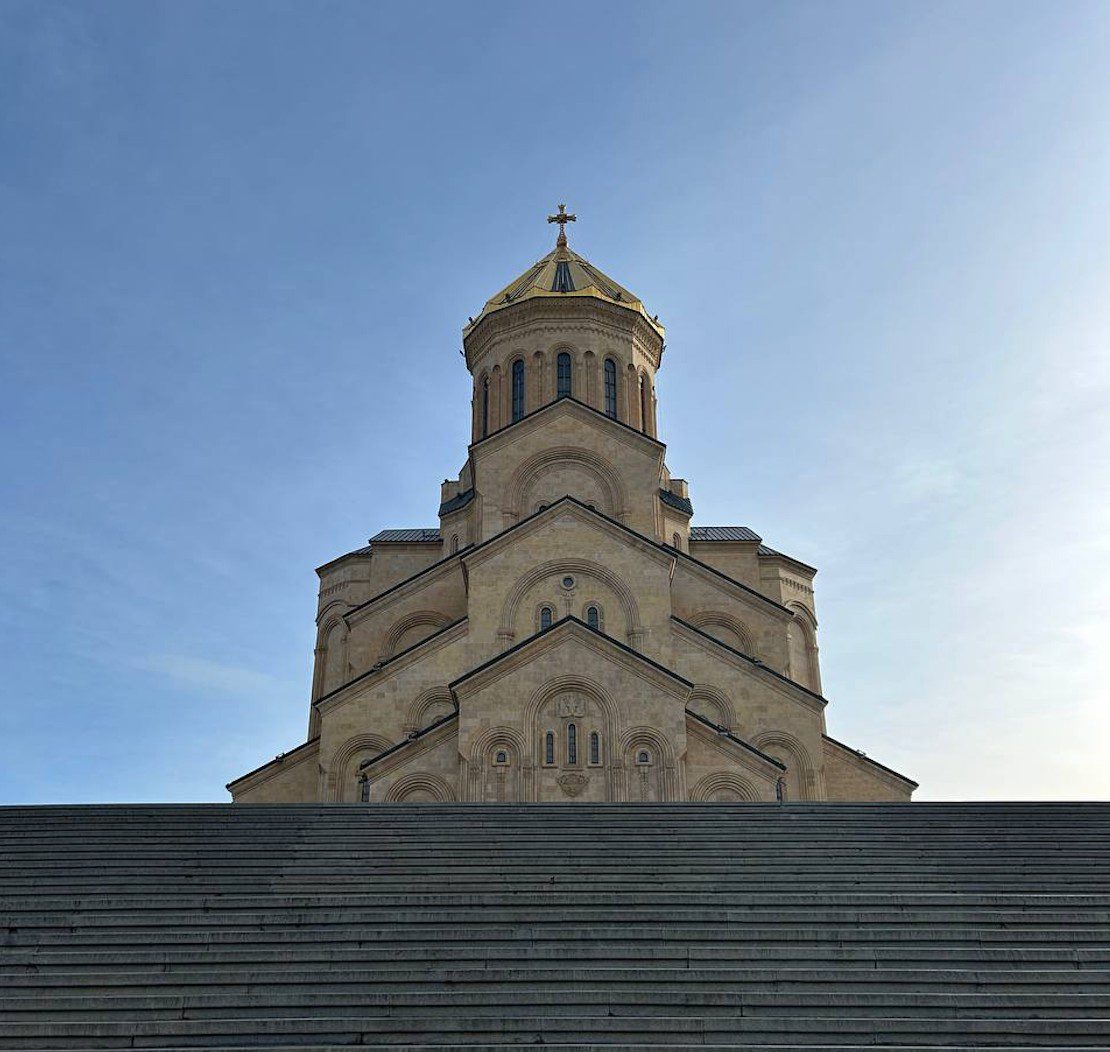
Georgia appears small on a map, which tricks many first-timers into thinking they can see it in a few days. Between the mountain terrain, winding roads, and a language that uses its own unique script, there’s plenty that can catch you off guard. You’re smart to research ahead—because this Caucasus nation rewards preparation in ways that transform a good trip into an unforgettable one. What makes Georgia different from more tourist-heavy European destinations is how dramatically the experience shifts once you leave the capital: Tbilisi feels cosmopolitan, but two hours east you’re in ancient wine country, and three hours north you’re surrounded by peaks that rival the Alps.
This guide walks you through visas, cash, transport, food, and the mistakes you’ll want to avoid—straight advice from someone who’s learned the hard way, so you don’t have to.
Georgia at a Glance
- Capital: Tbilisi
- Currency: Georgian Lari (GEL)
- Language: Georgian (Kartuli)—uses its own Mkhedruli script
- English spoken? Widely among under-40s in cities; rural areas rely on Russian or Georgian
- Visa required? Visa-free for 96 nationalities including US, UK, EU, Canada, Australia—up to 365 days
- Best time to visit: May–June and September–October (pleasant weather, fewer crowds)
- Typical trip length: 7–10 days; fewer than 4 nights is rushed
- Time zone: UTC+4 (no daylight saving)
- Power socket: Type C/F (European standard, 220V)
- Tipping culture: 5–10% in restaurants in big cities; not expected but appreciated
- Emergency number: 112
Things to Sort Before You Land in Georgia
Georgia offers visa-free entry to citizens of 96 countries, including the US, UK, EU member states, Canada, and Australia. Your passport needs to be valid for the duration of your stay—though some airlines prefer six months of validity, so check with your carrier. Citizens of India and other countries without visa-free access can apply for an e-visa online, which costs US$20 and takes about five days to process.
One thing that catches people off guard: Georgia’s healthcare system is improving but still below Western European standards. Serious medical issues may require evacuation to Turkey or Europe, so travel insurance with evacuation coverage is essential. There’s no reciprocal healthcare agreement with any country.
The currency is the Georgian Lari (GEL). Exchange rates fluctuate, but as of mid-2026, expect around 2.73 GEL to 1 USD and 3.13 GEL to 1 EUR. ATMs are widespread in cities, but in rural areas and small towns, cash is king. Many guesthouses in the mountains prefer cash payments, and markets won’t take cards at all. Bring US dollars or euros to exchange locally for better rates than you’ll get at airport ATMs.
Local carriers Magti, Geocell, and Beeline offer tourist SIM cards starting at around 15 GEL with generous data packages. Coverage is good in cities but patchy in remote mountain areas. If your phone supports eSIM, that’s the easiest route. Download offline maps on Google Maps or Maps.me before you arrive—mountain roads often lose signal. Google Translate doesn’t support Georgian, but it does support Russian, which many Georgians speak as a second language.
Getting Around Georgia: What First-Timers Need to Know
Renting a car gives you the most freedom, especially if you’re planning to explore the mountains, wine regions, or monasteries outside the main cities. Roads have improved significantly in the last two decades, but they’re often single-lane, potholed, and poorly lit at night. An international driving permit is required by most rental companies, and a 4×4 is strongly recommended for highland routes. Expect rental costs to be higher than in Western Europe due to limited competition.
Public transport options are functional but limited. Marshrutky—privately run minibuses—connect most towns and cities. They’re cheap and frequent, but you can’t book in advance: you pay and board on the day at the bus station. The Georgian Railway runs a modern, comfortable train service between Tbilisi and Batumi (about 5 hours, 36 GEL), which is worth taking for the views alone. Internal flights from Tbilisi to mountain regions like Svaneti are affordable and save hours of driving, but book weeks ahead in summer.
In Tbilisi, the metro is efficient and cheap. For taxis, never hail one on the street—use ride-hailing apps Bolt or Yandex Go for fixed, fair prices. The number 37 bus runs from Tbilisi Airport to the city center 24/7 and costs just 0.50 GEL.
One honest note that guidebooks tend to skip: travel times are deceptive. Georgia is small on a map, but mountain roads mean what looks like a short distance can take hours. Tbilisi to Kazbegi is about 3–4 hours; Tbilisi to Batumi is 5–6; and the road to Svaneti is slow going. Budget extra time for every journey.
Money in Georgia: Budget, Costs, and Payment Tips
Georgia remains affordable by European standards, though prices have been rising as tourism grows. Here’s what a realistic daily budget looks like:
- Family guesthouse or hostel dorm: 30–50 GEL (€10–20) per night
- Average hotel room: 150 GEL (€60) per night
- Dinner at a local restaurant: 25 GEL (€10) per person
- Coffee: 3–8 GEL (€1–3)
- Bottle of local wine: 5–25 GEL (€2–10)
- Marshrutka ride between cities: 10–30 GEL depending on distance
What’s surprisingly cheap: bread from street bakeries (1–2 GEL), fresh produce from local markets, and wine—you can get a decent bottle for less than a coffee in some countries. What costs more than expected: rental cars (pricier than Western Europe due to limited competition) and hotels in Tbilisi and Batumi during peak summer.
ATMs are everywhere in cities. Use bank-affiliated ATMs to avoid excessive fees; independent machines often charge high commissions. Notify your bank before travel. One money mistake first-timers commonly make: assuming cards work everywhere. In rural areas, local markets, guesthouses, and even some museums, cash is the only option.
Prices are based on research as of June 2026 and may vary.
Culture and Etiquette: What to Know Before You Go
Georgian hospitality is legendary, and you’ll feel it from the moment you arrive. When meeting someone, a handshake is standard. Learn the phrase gamarjoba (hello) and madloba (thank you)—even a clumsy attempt will win you goodwill.
The vast majority of Georgians are Orthodox Christian, and they appreciate visitors dressing modestly when entering churches and monasteries. Women should cover their shoulders and heads in many churches; men should remove hats. Most churches provide loaner shawls and smocks at the entrance, so don’t worry if you forget.
Dining customs carry significance. If you’re lucky enough to attend a traditional supra (Georgian feast), the tamada (toastmaster) leads elaborate toasts throughout the meal—and you’re expected to join in. One thing that surprises many first-timers: never toast with beer. Georgians only toast enemies with beer; wine or chacha (grape brandy) is the proper choice.
When offered chacha, take it slowly—this isn’t a light spirit. One cultural misunderstanding tourists commonly make: wearing swimwear in towns outside the beach. It’s considered inappropriate. What locals appreciate: visitors who show interest in Georgia’s winemaking traditions, polyphonic singing, or mountain villages—rather than just ticking off Instagram spots.
Food in Georgia: What to Try and What to Skip
Georgian cuisine rivals any in Europe, and it’s one of the main reasons travelers return. These are the dishes you can’t miss:
- Khachapuri—cheese-filled bread in several regional styles. The Adjarian version is boat-shaped with a runny egg and butter on top; it’s the one you’ll see all over Instagram.
- Khinkali—giant dumplings filled with spiced meat and broth. Eat them correctly: hold the twisted top (don’t eat it), bite a small hole, sip the broth, then finish the dumpling. Locals count empty dumpling tops to see who ate the most.
- Mtsvadi—skewered meat grilled over coals, often marinated in pomegranate juice.
- Pkhali—walnut and vegetable paté, often made with spinach or eggplant. A staple appetizer you’ll see everywhere.
Local drinks worth knowing: Georgian wine is among the oldest in the world (8,000 years of continuous production). Try Saperavi (red) and Rkatsiteli (white), especially amber wines fermented in qvevri (clay vessels buried underground). Chacha is the local grape brandy—it’s strong, so treat it with respect.
Where to eat cheaply without eating badly: look for restaurants where locals are eating, not tourists. Food is excellent value everywhere, but main square restaurants in Tbilisi or Batumi charge premium prices for the same dishes you’ll find one street back for half the cost.
Mistakes First-Time Visitors to Georgia Make
Underestimating travel times. Georgia is small on a map, but mountain roads are winding and slow. A journey that looks like two hours on Google Maps can easily take four.
Only packing for the city. Summer in Tbilisi can hit 35°C, but the mountains stay cool even in July. Pack layers—a fleece and jacket are essential if you’re heading to the High Caucasus.
Assuming English is everywhere. Urban under-40s speak English well, but in rural areas, Russian is the second language. Having a translation app for Russian (or Georgian) is a backup that’ll save you.
Relying entirely on public transport for mountain regions. Marshrutky connect main towns, but they don’t take you to trailheads, remote monasteries, or hidden villages. Without a car, you’ll need taxis or day tours.
Not having cash for guesthouses. Many family-run guesthouses in rural areas—especially in Svaneti and Tusheti—only accept cash. You’ll be stuck if you arrive with an empty wallet.
Dressing inappropriately for churches. Even if it’s 35°C outside, churches expect covered shoulders and knees. Most provide loaner clothing, but it’s better to be prepared.
Trying to visit Abkhazia or South Ossetia. These breakaway regions are Russian-occupied, and entering via unauthorized crossings is illegal and can result in serious legal trouble. Stick to territory controlled by the Georgian government.
Booking last-minute accommodation in summer. July and August fill up fast, especially in Tbilisi, Batumi, and mountain villages like Kazbegi. Book at least a month ahead.
READ ALSO:
- Is Georgia Safe to Travel Solo in 2026? Honest Guide
- Best Time to Visit Georgia: Month-by-Month Guide 2026
- Best eSIM for Georgia in 2026: Tested Options
How Long Do You Need in Georgia?
Minimum days to see the highlights: 5–7 days (allows for Tbilisi, one mountain trip, and the wine region).
Ideal trip length: 7–10 days (gives you time for Tbilisi, the mountains, Kakheti wine region, and a Black Sea stop).
What you can do in different trip lengths:
- 5 days: Tbilisi (2 nights), Kazbegi day trip or overnight (1 night), Kakheti wine region (1–2 nights)
- 7 days: Tbilisi (2 nights), Kazbegi/Stepantsminda (1–2 nights), Kakheti wine region (2 nights), Batumi or Kutaisi (1–2 nights)
- 10 days: Same as 7 days, with an extension to Svaneti (Mestia) or deeper mountain hiking
Short trip skeleton (5 days): Tbilisi → Kazbegi (overnight) → Kakheti → return to Tbilisi.
Ideal trip skeleton (7–10 days): Tbilisi (2 nights) → Kazbegi (1–2 nights) → Kakheti wine region (2 nights) → Batumi or Kutaisi (2 nights) → return to Tbilisi.
For a full day-by-day itinerary, see our Georgia itinerary guide.
Frequently Asked Questions — First-Time Visitors to Georgia
Is Georgia easy to travel independently?
Yes—with some caveats. The cities and well-trodden routes (Tbilisi, Batumi, Kakheti) are straightforward, with good infrastructure and English widely spoken. The mountains require more planning: you’ll need a car, or you’ll be reliant on infrequent marshrutky. Independent travel is absolutely doable, but research is essential.
How much money do I need for a week in Georgia?
Budget around 500–900 GEL (€200–350) per person for a week on a mid-range budget (guesthouse stays, local meals, transport). Budget travelers can do 350–500 GEL (€140–200), while those wanting hotels and nice restaurants will spend 900+ GEL (€350+).
Do I need to know the local language in Georgia?
No. English is widely spoken in tourist areas and cities, especially by younger Georgians. Rural areas are different—older people will speak Russian as their second language. Learning gamarjoba (hello) and madloba (thank you) will get you a long way.
Is Georgia safe for travelers?
Georgia is remarkably safe, with low crime rates. The biggest risk is road accidents, so drive defensively and be careful crossing streets. Since October 2024, there have been protests in Tbilisi following parliamentary elections; check your government’s travel advice before visiting. Avoid the occupied regions of Abkhazia and South Ossetia.
Do I need a car in Georgia, or can I use public transport?
You can manage without a car along the main routes: Tbilisi, Batumi, and Kakheti are connected by train and marshrutky. But for the mountains (Kazbegi, Svaneti, Tusheti), a car gives you freedom that public transport can’t match. If you’re short on time, consider day tours or hiring a driver for specific legs.
Final Thoughts
Georgia rewards travelers who do their homework and go in with realistic expectations. It’s not a place to rush—the country is small, but its roads and mountains demand patience. Visit in May, June, or September to catch the best weather without the peak-season crowds.
Most first-timers say the same thing after their trip: “I wish I’d spent more time in the mountains.” Plan your itinerary with that in mind—the cities are wonderful, but Georgia’s soul lives in the Caucasus. Ready to start planning? Check out our Georgia itinerary guide and packing list for the Caucasus for more detail.