

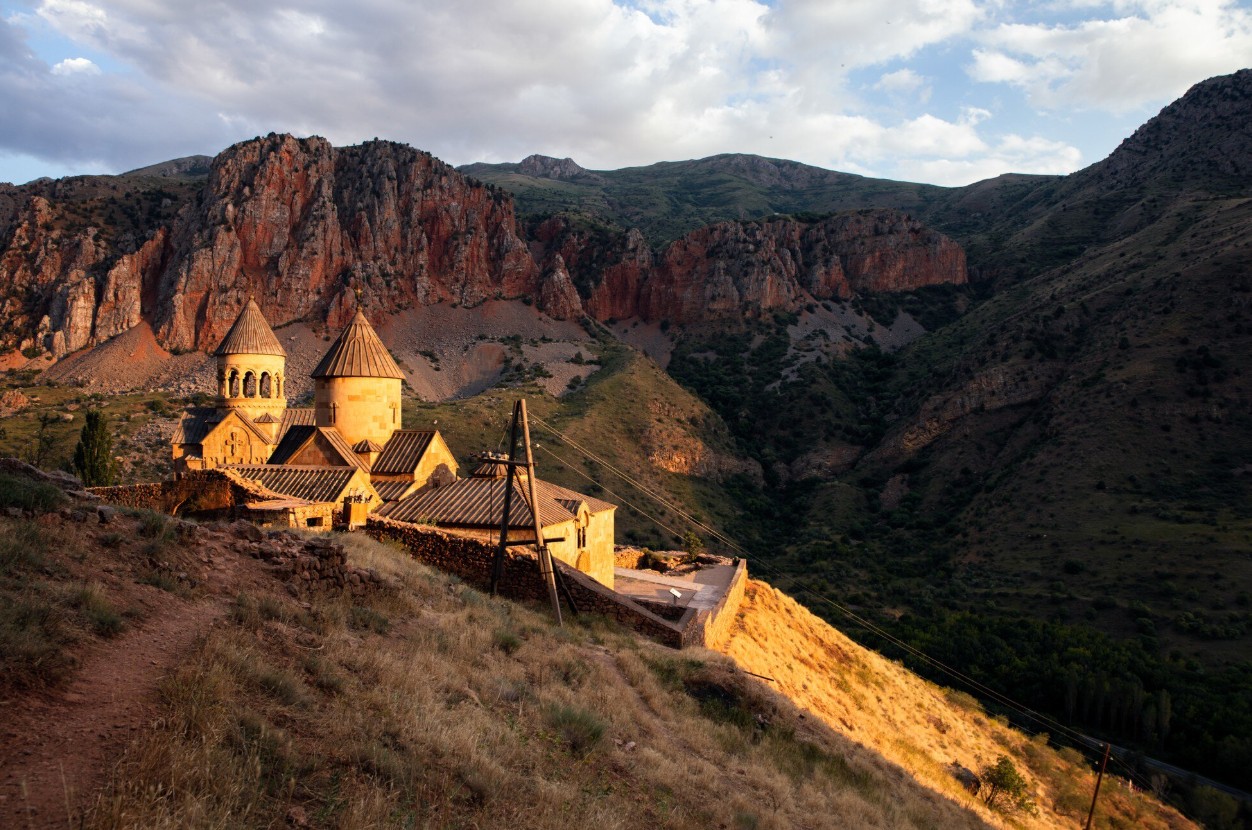
Yes, Armenia is still relatively cheap to visit in 2026, particularly when compared with Western Europe and many more established tourist destinations, although Yerevan is no longer the ultra-budget capital that older travel guides sometimes suggest. Local public transport remains extremely inexpensive, traditional food can still offer excellent value and guesthouses outside the capital are often affordable, while central Yerevan hotels, rental cars and private day trips can push the total cost of a trip much higher.
For most travelers, a realistic Armenia travel budget is approximately €35–50 per person per day for a budget trip, €65–100 per day for comfortable mid-range travel and around €120–190 or more for travelers who prefer better hotels, rental cars, private drivers and frequent restaurant meals. These estimates exclude international flights because airfare varies considerably depending on your departure point and whether you fly directly to Yerevan or combine Armenia with Georgia.
The biggest advantage of traveling in Armenia is that you can keep the basic cost of everyday life very low while choosing selectively where to spend more. A ride on Yerevan’s metro, bus or trolleybus costs only 150 AMD, many monasteries and landscapes can be visited without expensive entrance tickets, and traveling to another city by train or marshrutka costs relatively little. The budget rises much faster when you start arranging private transportation to remote monasteries and mountain regions, because many of Armenia’s most interesting places are spread across the countryside rather than concentrated along one convenient public transport corridor.
How Much Does It Cost to Visit Armenia in 2026?
The cost of an Armenia trip depends primarily on accommodation and transportation. Food, urban public transport and many attractions remain inexpensive enough that they rarely dominate the budget, whereas choosing a private hotel room in central Yerevan or renting a car for a week can immediately move a trip from budget to mid-range.
- Budget traveler: approximately €35–50 per person per day.
- Mid-range traveler: approximately €65–100 per person per day.
- Comfortable traveler: approximately €120–190+ per person per day.
- Road-trip traveler with a rental car: usually closer to €90–150+ per person per day, depending on whether the vehicle is shared.
These are practical planning ranges rather than fixed national averages. A backpacker staying in a Yerevan hostel and traveling to Gyumri by train can spend much less than a solo traveler booking boutique hotels and private tours, even though both may visit many of the same attractions.
Couples usually get better value than solo travelers because hotel rooms, taxis, private drivers and rental cars can be divided between two people. This difference becomes particularly important outside Yerevan, where a private car is sometimes the easiest way to combine several monasteries or natural attractions within one day.
How Much Does One Week in Armenia Cost?
For a seven-day Armenia trip excluding international flights, these are useful 2026 planning ranges:
- Budget trip: approximately €245–350 per person for one week.
- Mid-range trip: approximately €455–700 per person for one week.
- Comfortable trip: approximately €840–1,330+ per person for one week.
A week based around Yerevan with day trips by public transport or shared tours can remain close to the lower end of these ranges, while a fast-moving itinerary covering Yerevan, Dilijan, Lake Sevan, Gyumri and southern Armenia will usually cost more because transportation becomes a much larger part of the budget.
Traveling slowly is therefore one of the easiest ways to make Armenia cheaper. Spending three or four nights in Yerevan and several nights in one or two regional destinations usually costs less than changing hotels every day and arranging a separate transfer for every monastery or viewpoint.
Is Armenia Still Cheap in 2026?
Armenia remains affordable, but the answer depends heavily on what you compare it with. Against countries such as France, Italy, Germany or the United Kingdom, everyday travel expenses remain low. Compared with neighboring Georgia, however, the difference is much smaller, and some current restaurant prices are actually slightly higher in Armenia.
Current countrywide price data puts an inexpensive restaurant meal at around 4,000 AMD, while a mid-range three-course meal for two averages approximately 16,000 AMD before drinks. In Yerevan specifically, the inexpensive meal average is also around 4,000 AMD, while a mid-range dinner for two is closer to 19,000 AMD.
Coffee provides another useful indication of how Yerevan has changed. A cappuccino now averages approximately 1,300 AMD in the capital, which is still inexpensive compared with many Western European cities but no longer feels exceptionally cheap once several café stops are added to every day.
The strongest budget value remains in transportation, local guesthouses, bakeries, casual Armenian food and attractions outside the premium tourism market. Armenia now has an expanding selection of sophisticated restaurants, international hotels and design properties, so travelers can spend at almost any level if they choose to.
Accommodation Costs in Armenia
Accommodation is usually the largest expense in an Armenia travel budget, especially in Yerevan. The country has a strong guesthouse culture and plenty of apartments, but the capital also has an established international hotel market, which creates a wide price difference between the cheapest and most expensive places to stay.
Current booking data puts the average Yerevan hostel at roughly $18 per night, while three-star hotels average around $79 per night and four-star properties around $108. These averages should not be interpreted as minimum prices: simple hostels, private rooms and apartments can often be found below the hotel averages, particularly outside high-demand dates.
For planning purposes, budget travelers can often aim for roughly €10–20 per person for a hostel bed, while simple private accommodation commonly begins around €25–45 per room. A comfortable central hotel or good-quality apartment may require €50–90 or more per night, with boutique and international hotels extending well beyond €100.
Accommodation Costs in Yerevan
Yerevan is generally the most expensive place to stay on a standard Armenia itinerary because it receives the highest concentration of business and international tourism and has the country’s largest premium hotel market. Staying around Republic Square, Northern Avenue, Cascade or the most convenient sections of the city center usually costs more than choosing a residential neighborhood farther away.
The good news for budget travelers is that transportation is extremely cheap, so paying a premium simply to stay within a few minutes of Republic Square is not always necessary. A room near a metro station or convenient bus route can provide much better value while adding only a few hundred drams in transportation costs during the entire day.
Hostels are also a realistic option rather than a niche backpacker product. Current Yerevan listings place the average hostel cost at around $18 per night, with individual properties sometimes available below that level depending on the date.
Accommodation Costs in Gyumri
Gyumri can be considerably cheaper for accommodation, particularly if you choose one of the city’s family-run guesthouses. Current booking data puts the average guesthouse price around $23 per night, with some private rooms available for less than $20–25.
Hotels are more expensive than basic guesthouses, with current three-star averages around $58 per night, but Gyumri still generally provides strong value for travelers who want private accommodation without paying central Yerevan prices.
Because the historic center is compact, there is also less reason to spend extra money purely for location. Many inexpensive rooms remain within walking distance of the main streets, restaurants and architectural sights.
Accommodation Costs in Dilijan
Dilijan can be either inexpensive or surprisingly costly depending on the style of accommodation you choose. Family guesthouses and simple hotels remain accessible to budget travelers, while the town has also developed a significant boutique and resort market aimed at visitors looking for forest views, spas and more upscale weekend stays.
Current booking data places the historical average for a three-star Dilijan hotel around £42 per night, while four-star properties average substantially more. Travelers focused primarily on hiking and nature can usually reduce the cost by choosing a guesthouse rather than treating Dilijan as a resort destination.
Accommodation Costs Around Lake Sevan
Lake Sevan has one of the widest seasonal price ranges in Armenia. Simple guesthouses in Sevan town and surrounding settlements can remain affordable, while lakefront resorts and beach hotels become substantially more expensive during the warmest part of summer.
If you are visiting Sevan primarily as a day trip from Yerevan, accommodation does not need to affect your budget at all. If you want to stay beside the lake, compare properties away from the most obvious resort zones and check whether breakfast, parking or beach access are included in the room price.
How Much Does Food Cost in Armenia?
Food remains one of Armenia’s strongest value categories, particularly if you eat at bakeries, casual Armenian restaurants and places aimed primarily at local customers. Current national data puts an inexpensive restaurant meal at around 4,000 AMD and a three-course mid-range dinner for two around 16,000 AMD.
In Yerevan, the mid-range average is slightly higher at approximately 19,000 AMD for two people, while a cappuccino averages around 1,300 AMD and a domestic draft beer approximately 900 AMD. These are still reasonable prices, but eating breakfast, lunch and dinner in modern central restaurants every day can make food a meaningful part of the total travel budget.
A budget traveler can generally plan around €15–25 per day for food by mixing bakeries, casual meals and supermarkets, while €25–45 per day gives much more freedom to eat in restaurants throughout the day. Travelers interested in Yerevan’s newer restaurants, wine bars and cocktail venues can easily spend more.
Cheap Food in Armenia
Bakeries and casual food counters are among the easiest ways to reduce daily spending without relying on supermarket meals. Lavash, pastries, lahmajoun, sandwiches and other inexpensive dishes make it possible to eat a filling lunch for much less than the average sit-down restaurant price.
Traditional Armenian restaurants can also offer strong value, particularly when several people share dishes. Grilled meat, dolma, salads, vegetables, cheeses and bread are commonly ordered for the table, which means couples or small groups can often eat generously without ordering an individual main course for every person.
Markets are another useful option during summer and early autumn, when Armenia has abundant local fruit and vegetables. If you stay in an apartment, preparing breakfast or buying fruit and snacks for day trips can lower costs without taking much time away from sightseeing.
Restaurant Costs in Yerevan
Yerevan has changed dramatically as a food destination, and the price difference between an ordinary local restaurant and a fashionable central venue can now be substantial. The city has wine bars, contemporary Armenian restaurants, international cuisine and premium dining alongside inexpensive neighborhood cafés.
An inexpensive restaurant meal averages around 4,000 AMD, while a three-course mid-range dinner for two is approximately 19,000 AMD before drinks. It is therefore still possible to eat well at reasonable prices, but travelers should not assume that every restaurant in central Yerevan will feel cheap simply because they are in Armenia.
Restaurant Costs in Gyumri
Gyumri restaurant data shows an inexpensive meal at roughly the same level as Yerevan, around 3,900–4,000 AMD, although a mid-range meal for two averages closer to 16,000 AMD. The city also has plenty of inexpensive bakeries and casual restaurants, so travelers who are not specifically seeking higher-end dining can keep costs much lower.
Because Gyumri receives less international tourism than Yerevan, it is generally easier to find restaurants serving primarily local customers rather than navigating a concentrated premium dining district.
Public Transport Costs in Yerevan
Yerevan public transportation is one of the cheapest parts of an Armenia trip. The unified system covers buses, trolleybuses and the metro, with a standard single journey costing 150 AMD in 2026.
That is roughly €0.35 at the current exchange rate, which means even travelers using public transport several times every day will spend very little compared with accommodation or food.
Yerevan has only one metro line, so buses and trolleybuses are necessary for many journeys, but the integrated fare system makes moving between neighborhoods inexpensive. Contactless payment and the newer ticketing system have also made public transport easier to use than it was when visitors needed to rely more heavily on cash and older minibuses.
- Single journey: 150 AMD.
- Metro, bus and trolleybus: covered by the unified city transport system.
- Airport bus N201: 300 AMD one way.
- Airport bus N100: 500 AMD one way.
For a normal three- or four-day Yerevan stay, transportation can therefore remain one of the smallest lines in your entire budget.
How Much Does It Cost to Get from Yerevan Airport to the City?
Zvartnots International Airport has two inexpensive public bus connections. Shuttle bus N201 currently costs 300 AMD per person and operates approximately every 30 minutes between 07:00 and 22:00.
Bus N100 costs 500 AMD and provides a much broader schedule, running every 30 minutes during the day and hourly overnight. Payment options include electronic or paper QR tickets and bank-card payment directly on the bus.
This means a budget traveler can reach Yerevan for roughly €1 or less instead of immediately paying for a private airport transfer. Taxis remain convenient for late arrivals, groups or travelers carrying large amounts of luggage, but they are not necessary purely because airport public transport is unavailable.
How Much Does Intercity Transport Cost in Armenia?
Intercity transportation can be extremely inexpensive if your destination is served conveniently by train or marshrutka. The challenge is that Armenia’s railway network does not reach every major tourist attraction, while many monasteries and natural sights are located away from the main public transport routes.
The Yerevan–Gyumri corridor is one of the easiest examples. The railway operator sells local tickets online, while current 2026 route information places the weekend express at around 2,500 AMD one way. Marshrutkas are commonly around 1,500–2,000 AMD and can be faster or more frequent depending on the day.
For approximately €4–6, you can therefore travel between Armenia’s two largest cities, which makes Gyumri a very affordable addition to a Yerevan itinerary.
Other destinations can be more complicated. Dilijan, Lake Sevan and regional towns have shared transport options, but reaching several monasteries in one day often requires a combination of marshrutkas, taxis or an organized excursion.
Are Marshrutkas Cheap in Armenia?
Yes. Shared minibuses remain one of the lowest-cost ways to travel between Armenian towns and are often the best option when there is no convenient railway connection.
The main disadvantage is not price but usability. Departure points and timetables can be less intuitive for first-time visitors, vehicles may leave according to demand on some routes and reaching rural monuments often requires another taxi once you arrive in the nearest town.
For budget travelers with flexible schedules, this inconvenience can be worthwhile because even several intercity marshrutka journeys usually cost less than one day of car rental.
How Much Does It Cost to Rent a Car in Armenia?
Rental cars are one of the categories where Armenia stops looking exceptionally cheap. Current 2026 comparison data shows a strong seasonal pattern, with average base prices around €25 per day in February and approximately €50 per day in July, before insurance, fuel and optional extras are added.
The all-market average displayed by the same rental platform is currently higher, around €66 per day, which reflects the wide range of cars and current availability. For practical trip planning, assuming roughly €30–55 per day for a basic vehicle depending on season and booking conditions is safer than building a budget around the cheapest advertised deal.
A car can nevertheless be excellent value for two or more travelers because many of Armenia’s most impressive attractions are geographically dispersed. Garni, Geghard, Khor Virap, Noravank, Tatev, Lake Sevan and various mountain areas become much easier to combine when you control your own schedule.
For a solo traveler, the calculation is less favorable. A €45 rental plus fuel and insurance can easily exceed an entire backpacker daily budget, which makes shared tours, trains and marshrutkas much more attractive.
How Much Does Fuel Cost in Armenia?
Current rental-market data puts petrol around €1.18 per liter on average, so fuel is not negligible on a long road trip. Armenia is geographically compact, but mountain roads and indirect routes mean the actual driving distance between attractions can be greater than the straight-line map suggests.
A couple sharing both rental and fuel costs can still make a road trip reasonably economical, while a solo traveler should compare the full cost with joining organized day trips from Yerevan.
Do You Need a Rental Car in Armenia?
No. A rental car is useful rather than essential. Yerevan itself absolutely does not require one, and keeping a vehicle parked while exploring the capital adds cost without providing much benefit.
Gyumri can be reached easily by train or marshrutka, and Lake Sevan, Dilijan and several popular destinations have public or shared transport connections. The argument for renting a car becomes stronger when you want to visit several rural monasteries, stop spontaneously at viewpoints or spend significant time in less connected regions.
A cost-efficient strategy is therefore to spend the Yerevan portion of the trip without a car and rent one only for two or three days when exploring the countryside.
How Much Do Taxis Cost in Armenia?
Taxis and ride-hailing are inexpensive compared with many European countries, which makes them useful for short journeys even on a moderate budget. App-based services are preferable for visitors because the approximate fare is shown before the journey and there is less need to negotiate with a driver.
Within Yerevan, however, taxis are still much more expensive than the 150 AMD public transport fare, so taking several taxis every day can increase your urban transportation spending by many times without necessarily saving much time in heavy traffic.
Private taxis become more interesting outside the capital, particularly when several travelers can divide the fare. Hiring a car and driver for a group can sometimes compete surprisingly well with organized tour prices, especially when you want to choose your own stops and schedule.
How Much Do Attractions Cost in Armenia?
Armenia can be very inexpensive for sightseeing because many of the country’s most famous religious and natural attractions do not require a substantial entrance fee. Monasteries, churches, viewpoints and historic neighborhoods make it possible to fill entire days without repeatedly buying expensive tickets.
Paid attractions are also generally moderate. Garni Temple currently charges 1,500 AMD for a standard adult ticket, while the History Museum of Armenia in Republic Square charges 2,500 AMD for its permanent exhibition and Matenadaran charges 2,000 AMD for a standard adult museum ticket.
- Garni Temple: 1,500 AMD.
- History Museum of Armenia: 2,500 AMD.
- Matenadaran: 2,000 AMD.
- Many monasteries and churches: free general entry.
- Republic Square, Cascade and many city sights: free.
For most visitors, museum and attraction spending therefore remains a relatively small portion of the total budget. Guided excursions and private day trips cost far more than entrance tickets themselves.
How Much Does a Garni and Geghard Trip Cost?
Garni and Geghard are among the most popular day trips from Yerevan and illustrate the difference between cheap attractions and more expensive transportation. Garni itself costs only 1,500 AMD to enter, while Geghard Monastery does not require a standard admission ticket.
The cost of the day is therefore determined mainly by how you get there. Public and shared transportation keeps the trip inexpensive, while hiring a taxi or private driver for the entire route can cost many times more than the admission tickets.
For two or three travelers, dividing the cost of a car can still provide good value because Garni, Geghard and other nearby stops can be combined without worrying about minibus schedules.
How Much Does Gyumri Cost?
Gyumri is one of Armenia’s strongest budget destinations. Guesthouses average around $23 per night in current booking data, and inexpensive private rooms can be found around or below that level depending on dates.
Restaurant prices are also manageable, with an inexpensive meal averaging around 3,900 AMD and a mid-range dinner for two around 16,000 AMD. Cappuccino averages roughly 900 AMD, noticeably below Yerevan’s current level.
The city is compact enough to explore primarily on foot, which means urban transportation is almost irrelevant to the daily budget. Combined with a train or marshrutka costing only a few euros from Yerevan, Gyumri can reduce rather than increase the average cost of a multi-city Armenia trip.
How Much Does Dilijan Cost?
Dilijan is more variable because it functions both as a normal regional town and as a mountain leisure destination. Budget guesthouses can remain affordable, but attractive forest hotels, cabins and resort-style properties move quickly into mid-range or premium territory.
Current booking data places average three-star accommodation around £42 per night, although actual prices vary widely. Travelers primarily interested in Dilijan National Park and hiking can keep expenses low with a simple guesthouse, while a weekend centered around a spa or boutique hotel creates a completely different budget.
How Much Does Lake Sevan Cost?
Lake Sevan itself does not need to be an expensive destination because the main landscapes and many public areas can be enjoyed without major admission costs. Spending rises through accommodation, waterfront restaurants and private transportation rather than through the lake itself.
A day trip from Yerevan is usually the cheapest way to include Sevan, while staying overnight makes more sense if you want a slower itinerary or intend to explore other parts of Gegharkunik Province.
Summer weekends naturally bring more domestic tourism and stronger demand around popular lakefront areas, so travelers prioritizing value should compare accommodation slightly away from the most obvious beach and resort locations.
How Much Does Mobile Data Cost in Armenia?
Mobile connectivity is inexpensive enough that it should make little difference to the overall trip budget. Armenian operators sell prepaid plans and eSIMs, while international travel eSIMs provide another option for travelers who want connectivity installed before arrival.
Viva currently supports both new prepaid eSIM subscriptions and physical SIM cards, with eSIM replacement costing 500 AMD for existing subscribers while new users pay according to the selected tariff plan. Local plans vary in data allowance and change more frequently than most other travel costs, so compare the current prepaid offers shortly before your trip rather than relying on an old fixed price.
For most travelers, budgeting roughly €5–15 for a local data package is a reasonable starting point, although larger or unlimited packages can cost more. If Armenia is part of a Georgia–Armenia itinerary, compare a regional travel eSIM with buying a separate local plan in each country.
Do You Need Cash in Armenia?
Armenia uses the Armenian dram, abbreviated AMD. At the current rate in August 2026, €1 is worth approximately 427 AMD, although exchange rates fluctuate and should always be checked again when you travel.
Cards are widely accepted in Yerevan hotels, restaurants, supermarkets and modern businesses, but cash remains useful for marshrutkas, markets, smaller shops, rural guesthouses and some regional transportation.
You do not need to exchange your entire travel budget into cash at once. A combination of card payments and smaller withdrawals is usually more practical, particularly in Yerevan, while travelers heading into villages or mountain regions should carry enough drams for transportation and meals before leaving a larger town.
Budget Armenia: What €35–50 per Day Looks Like
A budget of approximately €35–50 per person per day remains realistic in Armenia if you take advantage of inexpensive transportation and accommodation rather than trying to fit a private-car itinerary into a backpacker budget.
- Stay in hostels or inexpensive family guesthouses.
- Eat at bakeries, markets and casual Armenian restaurants.
- Use Yerevan’s 150 AMD public transportation rather than taking taxis throughout the day.
- Travel to Gyumri and other connected destinations by train or marshrutka.
- Choose monasteries, neighborhoods, viewpoints and hikes as a large part of your sightseeing.
- Join shared tours when a remote attraction is difficult to reach independently.
- Avoid renting a car for the entire trip if you need it only for one or two regional days.
- Stay outside the most expensive central Yerevan blocks while remaining close to public transport.
This budget works particularly well for backpackers. Solo travelers who require private accommodation every night should usually expect to spend closer to €50–70 per day even when food and transport remain inexpensive.
Mid-Range Armenia: What €65–100 per Day Looks Like
A budget of approximately €65–100 per person per day provides a comfortable Armenia trip and is the range in which the country offers particularly strong value. You can stay in private accommodation, eat in restaurants every day and add several organized excursions without needing to calculate every small purchase.
- Comfortable guesthouse, apartment or mid-range hotel.
- Restaurant meals and café stops every day.
- Public transport in Yerevan plus occasional taxis.
- Train, marshrutka or shared tours for regional travel.
- Paid museums and attractions without a restrictive sightseeing budget.
- A rental car for part of the trip if the cost is shared between two travelers.
Couples receive especially good value within this range because splitting a €60 hotel room or €40–50 rental car substantially reduces the cost per person.
Comfortable Armenia: What €120–190+ per Day Looks Like
At approximately €120–190 or more per person per day, travelers can choose higher-quality hotels, dine in Yerevan’s more fashionable restaurants, use private transportation and rent a car without constantly trying to minimize expenses.
This is also where Armenia’s reputation as a cheap destination becomes less relevant. Boutique hotels, private drivers and premium restaurants increasingly operate at prices that would not look unusual elsewhere in Europe or the Caucasus.
The advantage is that a comfortable budget stretches much further once you leave Yerevan’s premium market and stay in regional guesthouses or smaller hotels.
Is Armenia Cheap for Solo Travelers?
Yes, although solo travelers need to manage accommodation and regional transportation carefully. Public transport is extremely inexpensive and Yerevan has good hostel availability, so backpackers can travel for very little.
The challenge begins when you want private hotel rooms and private day trips. A couple can divide a €60 room or €50 car rental, whereas a solo traveler pays the entire amount, making exactly the same itinerary significantly more expensive per person.
Joining group excursions can be particularly useful in Armenia because many popular sites are difficult to combine efficiently using public transportation alone. A group tour may cost more than marshrutkas but much less than hiring a private driver for one person.
Is Armenia Cheap for Couples?
Armenia provides very good value for couples because accommodation and transportation are the two largest variable costs and both can be shared. A private guesthouse room costing €40 becomes €20 per person, while a €50 rental car becomes €25 each before fuel.
This makes an Armenia road trip considerably more attractive for two people than for a solo traveler, particularly if the itinerary includes several monasteries and rural destinations that are awkward to reach by public transportation.
Is Armenia Cheap for a Road Trip?
Armenia can provide good road-trip value for two or more travelers, but car rental is expensive relative to other local costs. Spending €40–50 per day on a vehicle feels significant in a country where a city bus costs only 150 AMD and an inexpensive restaurant meal averages around 4,000 AMD.
The advantage is flexibility. A car allows you to combine attractions that would otherwise require several separate transfers and makes it easier to explore rural Armenia at your own pace.
The most cost-efficient approach is often a hybrid itinerary: explore Yerevan without a car, use the train for Gyumri and rent a vehicle only for the section involving remote monasteries, mountain landscapes or regions where public transport becomes inconvenient.
Is Yerevan Cheap?
Yerevan is affordable but no longer exceptionally cheap. Restaurant prices have increased, with an inexpensive meal now averaging around 4,000 AMD and a three-course dinner for two around 19,000 AMD, while three-star hotel averages are around $79 per night.
At the same time, several important costs remain remarkably low. A public transport journey is 150 AMD, the airport can be reached by bus for 300–500 AMD and much of central Yerevan can be explored on foot.
The city is therefore particularly good value for travelers who spend selectively: stay in a guesthouse or apartment, use public transport, eat some meals outside the most fashionable restaurant streets and then spend more on the museums or restaurants that genuinely interest you.
Is Gyumri Cheaper Than Yerevan?
Generally yes, particularly for accommodation and some everyday expenses. Current booking data puts Gyumri guesthouses at an average of about $23 per night, while Yerevan hostel and hotel markets are significantly more expensive once you move beyond dorm beds.
Restaurant differences are smaller than many travelers expect, but coffee and mid-range dining can still be cheaper in Gyumri. The city is also highly walkable, which keeps transportation spending close to zero.
Adding two nights in Gyumri can therefore reduce the average daily cost of a longer Armenia trip while giving you a noticeably different city experience from Yerevan.
Is Armenia Cheaper Than Georgia?
The two countries are close enough in price that there is no useful universal answer. Current country-level restaurant data actually places Armenia slightly above Georgia in several categories: an inexpensive restaurant meal is approximately 10% higher in Armenia, while the current average mid-range dinner for two is around 15% higher.
That does not mean an Armenia trip will necessarily cost more. Accommodation, transportation style and itinerary design matter much more than a small difference in restaurant averages. Yerevan’s 150 AMD city transport remains extremely inexpensive, while travelers in either country can spend significantly more once private drivers and mountain hotels are added.
If you are planning a combined Armenia and Georgia trip, it is better to use similar daily budgets for both countries and then adjust according to how much private transportation each itinerary requires.
Is Armenia Cheaper Than Western Europe?
Yes, especially at the budget and mid-range levels. Urban transportation, guesthouses, casual food and many attractions cost substantially less than in most Western European destinations.
The gap becomes smaller at the premium end. International hotels, boutique properties and private tours in Armenia can approach international tourism prices, so a luxury traveler should not expect the same percentage of savings as a backpacker.
When Is Armenia Cheapest to Visit?
Armenia does not have the extreme beach-season pricing pattern found in some Mediterranean countries, but accommodation and car rental still vary by season. Yerevan remains a year-round destination, while mountain and nature travel is more concentrated in the warmer months.
Car rental provides a clear example: current 2026 averages are approximately €25 per day in February and around €50 in July. Travelers planning a road trip can therefore save substantially by visiting during spring or autumn rather than the busiest part of summer.
For a broader Armenia trip, May, June, September and October often provide a particularly useful balance between pleasant weather and avoiding the strongest summer demand.
How Much Does Armenia Cost in Summer?
Summer does not make everyday expenses such as buses or ordinary restaurants dramatically more expensive, but accommodation in popular destinations and car rental can rise with demand.
July is currently the most expensive month in the national car-rental data, averaging around €50 per day compared with roughly half that amount in February. Popular mountain and lakeside accommodation can also become harder to book cheaply during weekends and holiday periods.
A budget traveler relying on hostels and public transport can therefore still keep costs low in July, while a road-trip traveler experiences a much more noticeable summer premium.
Hidden Costs to Budget for in Armenia
Most individual costs in Armenia are relatively small, but a trip can become more expensive than expected when transportation and small extras accumulate over several days.
- Private drivers for monasteries and rural attractions.
- Rental-car insurance, fuel and parking.
- Airport taxis when inexpensive public buses are available.
- Guided day trips to destinations that are difficult to reach independently.
- Restaurant service charges where they are included separately in the bill.
- ATM or foreign-card fees.
- Premium wine tastings and winery visits.
- Higher summer accommodation prices around Lake Sevan and popular nature destinations.
- International hotel prices in central Yerevan.
The largest hidden cost for many first-time visitors is transportation outside Yerevan. An attraction may be free to enter, but reaching three remote monasteries in one day can cost considerably more than the sightseeing itself.
How to Save Money in Armenia
- Use Yerevan public transport rather than taking taxis for every city journey.
- Take the airport bus instead of automatically booking a private transfer.
- Use trains and marshrutkas for destinations such as Gyumri when the timetable works.
- Stay in family guesthouses rather than relying exclusively on conventional hotels.
- Eat at bakeries and local Armenian restaurants for some meals.
- Explore free monasteries, neighborhoods and natural attractions rather than booking a paid excursion every day.
- Rent a car only for the part of the trip where it genuinely improves the itinerary.
- Share private drivers with other travelers when visiting remote attractions.
- Travel in spring or early autumn if you want cheaper rental cars and comfortable sightseeing weather.
- Compare local mobile plans with international travel eSIMs before paying for expensive roaming.
- Spend several nights in each region rather than paying for a new long-distance transfer every day.
Frequently Asked Questions
Is Armenia cheap to visit in 2026?
Yes. Armenia remains relatively inexpensive compared with much of Europe, particularly for public transportation, casual food, guesthouses and sightseeing. Yerevan hotels, rental cars and private regional tours are the categories most likely to increase your budget.
How much money do I need per day in Armenia?
Approximately €35–50 per person per day can cover a budget trip, while €65–100 is a realistic mid-range allowance. Travelers choosing better hotels, rental cars and private tours should budget approximately €120–190 or more.
How much does one week in Armenia cost?
Excluding international flights, a budget week can cost roughly €245–350 per person. A comfortable mid-range trip is more realistically around €455–700, while higher-end travel can reach €840–1,330 or more.
How much is a meal in Armenia?
An inexpensive restaurant meal currently averages around 4,000 AMD. A three-course mid-range dinner for two averages approximately 16,000 AMD nationally and around 19,000 AMD in Yerevan.
Is food cheap in Armenia?
Yes, particularly at bakeries, casual Armenian restaurants and markets. Yerevan also has a growing premium dining scene, so restaurant spending depends heavily on the type of venue you choose.
How much is public transport in Yerevan?
A standard journey on Yerevan’s unified public transport network costs 150 AMD. This covers the metro, buses and trolleybuses and makes city transportation one of the cheapest parts of an Armenia trip.
How much is the bus from Yerevan Airport?
Airport shuttle N201 costs 300 AMD one way, while bus N100 costs 500 AMD and provides a broader schedule including overnight service.
How much is the train from Yerevan to Gyumri?
The weekend express is currently around 2,500 AMD one way, while cheaper slower trains and marshrutkas may also be available. Check the South Caucasus Railway booking system for your exact travel date.
How expensive is car rental in Armenia?
Car rental prices vary significantly by season. Current 2026 averages range from approximately €25 per day in February to around €50 per day in July before fuel, insurance and optional extras.
Is Yerevan cheap?
Yerevan is affordable rather than extremely cheap. Public transportation remains very inexpensive and hostels provide strong value, but modern restaurants and central hotels have become noticeably more expensive than the city’s older budget reputation suggests.
Is Gyumri cheap?
Yes. Gyumri is one of Armenia’s strongest-value destinations, with current guesthouse prices averaging around $23 per night and inexpensive intercity connections from Yerevan.
Is Armenia cheaper than Georgia?
Not necessarily. Current restaurant data places Armenia slightly above Georgia in several categories, although transportation and accommodation vary by itinerary. For practical trip planning, similar daily budgets work well for both countries.
Do I need cash in Armenia?
Cards are widely accepted in Yerevan and larger tourist businesses, but Armenian drams remain useful for marshrutkas, markets, smaller shops, guesthouses and rural travel.
What currency does Armenia use?
Armenia uses the Armenian dram, abbreviated AMD. In late August 2026, €1 is worth approximately 427 AMD, although exchange rates change continuously.
What is the cheapest way to travel around Armenia?
Use buses and the metro within Yerevan, trains on routes such as Yerevan–Gyumri and marshrutkas for regional towns. Shared tours can be cost-effective when several attractions are difficult to reach independently, while rental cars make more financial sense for couples or groups than for solo travelers.
So, Is Armenia a Cheap Destination in 2026?
Armenia remains an excellent-value destination in 2026, but its affordability is more nuanced than the old image of an almost uniformly ultra-cheap Caucasus country. Yerevan now has hotels, restaurants and nightlife capable of absorbing a substantial travel budget, while car rental can cost more than many visitors expect relative to local food and public transportation.
What keeps Armenia affordable is the low cost of ordinary travel. A Yerevan bus or metro ride costs only 150 AMD, reaching Gyumri by public transportation costs only a few euros, many monasteries are free to enter and guesthouses outside the premium hotel market remain accessible to budget travelers.
For most visitors, approximately €65–100 per person per day provides enough money for a comfortable private room, restaurant meals, sightseeing and regional travel without constantly choosing the cheapest possible option. Backpackers can still travel for around €35–50 per day, while couples receive especially strong value because the cost of accommodation, taxis and rental cars can be divided between two people.
The main financial decision is transportation rather than food. If you use public transport where it works, join shared excursions for difficult routes and rent a car only when it genuinely improves the itinerary, Armenia remains easy to explore without a large budget. If you choose a private driver for every day trip and stay exclusively in central boutique hotels, the country can become considerably more expensive without changing the destinations you actually see.
Armenia is therefore not necessarily cheaper than every neighboring country, and current restaurant prices are broadly comparable with or slightly above Georgia in several categories, but it remains much cheaper than many Western European destinations and offers particularly strong value for travelers interested in history, mountain landscapes, food and independent travel.