

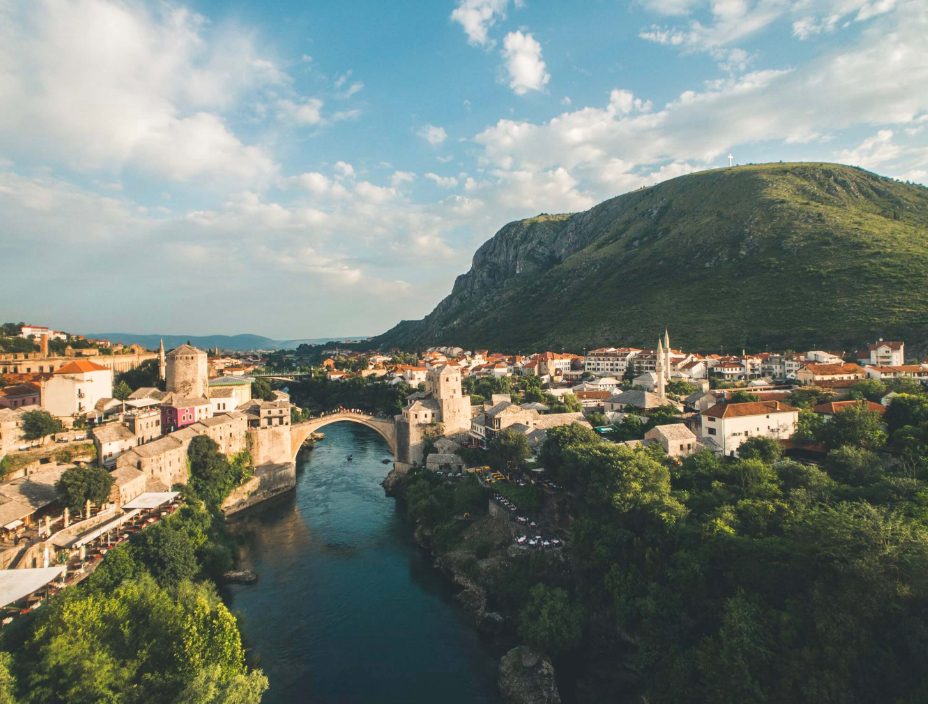
You’ve probably seen the photos — that famous bridge in Mostar, the old town of Sarajevo, waterfalls that look like they belong in a fairy tale. But Bosnia and Herzegovina isn’t a place you just show up to and figure out as you go. It’s a country with a complicated history, a unique culture, and a rhythm that takes a little getting used to. The trains don’t always run on time, the road signs can be inconsistent, and the locals might seem reserved until you make an effort. But that’s exactly why it’s worth it. Here’s what actually matters before you land in Sarajevo, from someone who’s made most of these mistakes already.
Bosnia and Herzegovina at a Glance
- Capital: Sarajevo
- Currency: Convertible Mark (BAM / KM), pegged to the euro at approximately 1 EUR = 1.95 BAM
- Language: Bosnian, Croatian, Serbian — mutually intelligible, written in both Latin and Cyrillic scripts
- English spoken? Widely spoken in Sarajevo, Mostar, and major tourist areas; limited in rural areas
- Visa required? Visa-free for US, UK, EU, Australian, and many other citizens for up to 90 days within a 180-day period
- Best time to visit: Spring (April–June) and autumn (September–October) for mild weather and fewer crowds
- Typical trip length: 5–7 days for a quick visit; 10–14 days ideal for seeing both cities and nature
- Time zone: UTC+1 (winter), UTC+2 (summer)
- Power socket: Type C and F (European standard), 230V
- Tipping: 10% in restaurants if service isn’t included; rounding up taxi fares is common
- Emergency numbers: Police: 122, General emergency: 112
One critical point: Bosnia and Herzegovina is not in the EU or the Schengen Area. Your European Health Insurance Card won’t help you here, and comprehensive travel insurance covering medical evacuation is essential.
Things to Sort Before You Land in Bosnia and Herzegovina
Visa and Entry Requirements
For citizens of the US, UK, EU, Australia, and many other countries, entry is straightforward: 90 days visa-free within a 180-day period. Your passport needs to be valid for at least three months beyond your planned departure date. If you’re staying in a private residence for three or more days, you or your host must register your stay with the local police within 48 hours of arrival.
If you’re crossing into Bosnia by land — especially from Croatia, Serbia, or Montenegro — border controls can vary in efficiency. Have patience, and keep a digital copy of your documents handy.
Travel Insurance
This is non-negotiable. There’s no agreement between Bosnia and Herzegovina and most countries for free healthcare. Tourists must pay for all medical care, even if they need to be hospitalised or evacuated — and this can be extremely expensive. Medical facilities may not meet Western standards, especially outside major cities. If you’re planning any outdoor activities like hiking, rafting, or skiing, make sure your policy covers those activities and potential rescue costs.
Currency and Cash
Bosnia and Herzegovina is predominantly a cash economy. While credit cards are accepted in large hotels and restaurants in cities, small shops, local markets, and rural areas expect cash. Euros are accepted in some places but at poorer exchange rates — get local currency instead.
The smart move: bring euros and exchange them at local banks or authorised exchange points in the city center (avoid the airport) for better rates. ATMs are widely available in Sarajevo and other cities, but use ATMs inside banks or shopping centers to avoid skimming devices. Always carry at least some cash in small denominations.
SIM Card and Connectivity
Local SIM cards are inexpensive and easy to purchase — you don’t even need a passport in some places. Providers like BH Telecom, M:tel, and HT Eronet offer solid coverage and affordable tourist packages. Data coverage is generally good in cities and along major routes but can be patchy in rural mountain areas. Free Wi-Fi is available in many cafes, hotels, and shopping centers.
Offline Apps to Download
Download Maps.me with offline Bosnia and Herzegovina maps before you arrive. Road signage can be inconsistent, and GPS isn’t always reliable in mountainous areas. Also grab a translation app — while younger people in cities speak English, older generations in rural areas may not.
Getting Around Bosnia and Herzegovina: What First-Timers Need to Know
Transport in Bosnia requires patience and flexibility — but that’s part of the charm.
Public Transport
Buses are the main mode of transport between major cities, with frequent and affordable services. Sarajevo to Mostar takes about 2.5 hours, and Sarajevo to Banja Luka takes about 5 hours. The train from Sarajevo to Mostar is one of the most stunning rail journeys in Europe — towering cliffs, canyons, and glimpses of village life frozen in time. It’s slow, but worth every second. Train services are limited overall, so don’t rely on them as your primary transport.
Renting a Car
Renting a car gives you the freedom to explore villages and mountain passes, but be warned: Bosnian roads are full of character. Signage is inconsistent, and locals drive with what one traveler described as “intuitive chaos.” Mountain roads are winding, and you’ll need a thick skin for occasional livestock crossings and drivers taking hairpin turns aggressively. An international driving license is required. Don’t drive at night unless you must — fog rolls in fast, and street lighting is uncommon outside major towns.
Between 15 November and 15 April, it’s obligatory to have winter tyres on vehicles.
Taxis and Rideshare
Taxis are cheap by Western standards, but always insist on the meter or negotiate the fare before getting in. Apps like Bolt operate in Sarajevo and offer more consistency. Taxi drivers from the two political entities (Republika Srpska and the Federation) may be unwilling to travel from one entity to another — plan accordingly.
The honest truth: Bosnia isn’t a perfectly functioning travel country — trains don’t always run punctually, road signs aren’t always clear (if they exist at all), and sometimes there’s a lack of infrastructure. But that’s exactly what makes the charm: it’s honest, spontaneous, and repeatedly surprising.
Money in Bosnia and Herzegovina: Budget, Costs, and Payment Tips
Daily Budget Breakdown
- Hostel dorm or budget guesthouse: 20–50 BAM (€10–25) per night
- Mid-range hotel: 50–100 BAM (€25–50) per night
- Coffee: Around 2 BAM (€1)
- Ćevapi (grilled meat rolls): 5–14 BAM (€2.5–7)
- Full meal at a restaurant: 15–30 BAM (€7.50–15)
- Inter-city bus ticket (Sarajevo–Mostar): Around 28 BAM (€14)
- Daily mid-range budget: €30–70 per day, covering food, accommodation, and transport
What’s Surprisingly Cheap
Bosnia is one of Europe’s most affordable destinations. Street food is a steal — a large grilled meat burger set costs around 25–30 BAM, and a cup of coffee is about 2 BAM. Supermarket prices are incredibly low — 1 litre of fresh milk costs about 5 BAM, and a large box of cherries is under 10 BAM.
What Costs More Than Expected
ATM fees can add up — withdraw larger amounts to minimise fees. Entrance fees to museums and historic sites are reasonable but add up if you’re doing many. Car rentals booked locally often require cash, meaning you lose credit-card insurance protection.
One Money Mistake First-Timers Make
Assuming you can tap your card everywhere like you’re in Berlin. Small towns and rural areas often work on cash-only. Always carry cash and keep small bills for taxis and markets where change might be difficult.
READ ALSO:
- Is Bosnia and Herzegovina Safe to Travel Solo? Honest Guide
- Best Time to Visit Bosnia and Herzegovina: Month-by-Month Guide 2026
- Best eSIM for Bosnia and Herzegovina in 2026: Tested Options
Culture and Etiquette: What to Know Before You Go
Bosnia is where mosques, Orthodox churches, and Catholic cathedrals coexist within blocks of each other. It’s a country built on resilience and cultural diversity — and it deserves respect.
Greeting Customs
Bosnians are warm people, but they don’t do superficial friendliness. A simple “Dobar dan” (good day) and “Hvala” (thank you) can open doors. Once they open up, you’re in. Hospitality is a cornerstone of Bosnian culture — expect to be welcomed with food, coffee, and heartfelt conversations, even from strangers.
Religious Sites
When visiting mosques, churches, and other religious sites, dress modestly — cover shoulders and knees, remove hats, and women may need to cover their hair in mosques. The Blagaj Tekke, a 15th-century Sufi monastery, is a particularly important spiritual site and deserves respect.
Photography Etiquette
It’s illegal to photograph military and police personnel, buildings, vehicles, or equipment. If in doubt, ask permission before taking photos. When visiting memorials like the Srebrenica Gallery in Sarajevo, approach with reverence, not as a photo opportunity.
One Cultural Mistake Tourists Commonly Make
Wading into political debates without understanding the weight behind your words. Bosnia’s history is complex and layered. Visit memorials with respect, don’t treat war-torn areas as Instagram backdrops, and listen more than you speak.
What Locals Appreciate
Curiosity and respect. Bosnia rewards travelers who come with questions, who listen deeply, and who don’t just pass through but allow themselves to be changed by the experience.
Food in Bosnia and Herzegovina: What to Try and What to Skip
Bosnian cuisine blends Turkish, Austrian, Hungarian, and Slavic traditions — hearty, comforting, and great value.
Must-Try Dishes
- Ćevapi: Small grilled beef or lamb sausages served with flatbread and onions — Bosnia’s national fast food. Try Ćevabdžinica Željo in Sarajevo’s Old Town, always with a queue and authentic flavour.
- Burek: Savory filo pastry pie stuffed with meat or cheese, popular street food.
- Begova čorba: Traditional chicken and vegetable soup, a must-try.
- Baklava and Tufahija: Sweet pastries — tufahija is an apple in syrup topped with nuts.
Local Drinks Worth Knowing
Bosnian coffee is strong, ritualistic, and served in copper cups — try it in Baščaršija. Rakia, the local fruit brandy, is often shared as a gesture of welcome. The food scene here is fantastic, with local shops offering first-class meals at bargain prices.
Where to Eat Cheaply Without Eating Badly
Local bakeries for burek, street vendors for ćevapi, and family-run restaurants away from main tourist squares offer the best value. In Sarajevo, the Old Town pedestrian streets are full of authentic options.
One Food Trap for Tourists
If a restaurant menu doesn’t have prices, leave. Some tourist-area establishments charge exorbitant prices — always check before ordering.
Mistakes First-Time Visitors to Bosnia and Herzegovina Make
Here’s what not to do.
- Only visiting Mostar as a day trip. Mostar is worth more than a quick stop from Croatia. One night isn’t enough — give yourself proper time to explore beyond the Old Bridge.
- Venturing off paved roads in rural areas. Unexploded landmines remain a danger throughout the country. Stay on main roads and marked trails, avoid abandoned buildings, and travel only during daylight hours.
- Underestimating driving times. Mountain roads are winding and drivers are aggressive — journeys take longer than they look on maps.
- Forgetting cash. Cards aren’t accepted everywhere. Small towns and local markets are cash-only.
- Carrying your passport unnecessarily. Leave a copy with family and carry a photocopy instead. If staying in private accommodation, ensure your host registers you with police.
- Relying on Google Maps for everything. Signage is inconsistent, and GPS isn’t always reliable in mountainous areas.
- Going out alone at night to isolated places. Crime is moderate, and firearms are widely available — risk being in the wrong place at the wrong time.
- Expecting the country to be “fixed” from the war. Bosnia is real, gritty, beautiful, and bruised. Come with respect for its history and its people’s resilience.
How Long Do You Need in Bosnia and Herzegovina?
Minimum Days to See the Highlights
5–7 days. You can cover Sarajevo, Mostar, and a day trip to Kravice Waterfalls in a week. It’ll be rushed, but it’s doable.
Ideal Trip Length
10–14 days. Enough time for Sarajevo (3 nights), Mostar (2 nights), a visit to the Kravice Waterfalls, and a few days exploring nature around Konjic or Jajce.
What You Can Realistically Do
5–7 days: Sarajevo (2–3 nights), Mostar (2 nights), with a day trip to Blagaj or Kravice Waterfalls.
10–14 days: Add Jajce and its waterfall, the rafting at Konjic, and time in Banja Luka.
Sample 7-Day Itinerary:
- Days 1–3: Sarajevo
- Days 4–5: Mostar with day trip to Blagaj and Kravice Waterfalls
- Days 6–7: Return to Sarajevo via Konjic
Frequently Asked Questions — First-Time Visitors to Bosnia and Herzegovina
Is Bosnia and Herzegovina easy to travel independently?
Yes — with patience. Public transport connects major cities, but timetables can be unpredictable. The language barrier is manageable in cities but can be challenging in rural areas. Independent travel is rewarding, but don’t expect Western European efficiency.
How much money do I need for a week in Bosnia and Herzegovina?
Budget travellers can manage on €30–40 per day (hostels, local food, public transport). Mid-range travellers should budget €50–70 per day for a private room, restaurant meals, and occasional taxis. Costs are slightly higher in Mostar’s Old Town and during summer.
Do I need to know the local language in Bosnia and Herzegovina?
Not for the main tourist route — younger Bosnians in cities speak good English. But learning “Dobar dan” (hello) and “Hvala” (thank you) is appreciated and can help you connect with locals.
Is it safe to drive in Bosnia and Herzegovina?
Yes, but drive with caution. Roads are poorly maintained in places, signage is inconsistent, and drivers can be aggressive. Avoid night driving outside major cities, and never leave valuables in your car. An international driving license is required, and you must have winter tyres from November to April.
Is Bosnia and Herzegovina safe for solo travelers?
Yes, but exercise standard urban precautions. Petty crime is common in tourist areas, and firearms are widely available. The biggest safety concern is the risk of landmines in rural areas — stay on paved roads and marked trails. Solo travelers consistently describe Bosnia as safe, welcoming, and deeply rewarding.
The Bottom Line
Bosnia and Herzegovina rewards travelers who do their homework. It’s not a polished, predictable destination — and that’s exactly why visitors fall in love with it. If you’re independent, flexible, and willing to embrace the unexpected, Bosnia will surprise you. If you need flawless infrastructure and precise timetables, you might find it frustrating.
Most first-timers say the same thing: “I wish I’d stayed longer.” The country grows on you — what starts as curiosity about a lesser-known corner of Europe often becomes an obsession. Walk slowly, listen deeply, and leave space for the unexpected.