

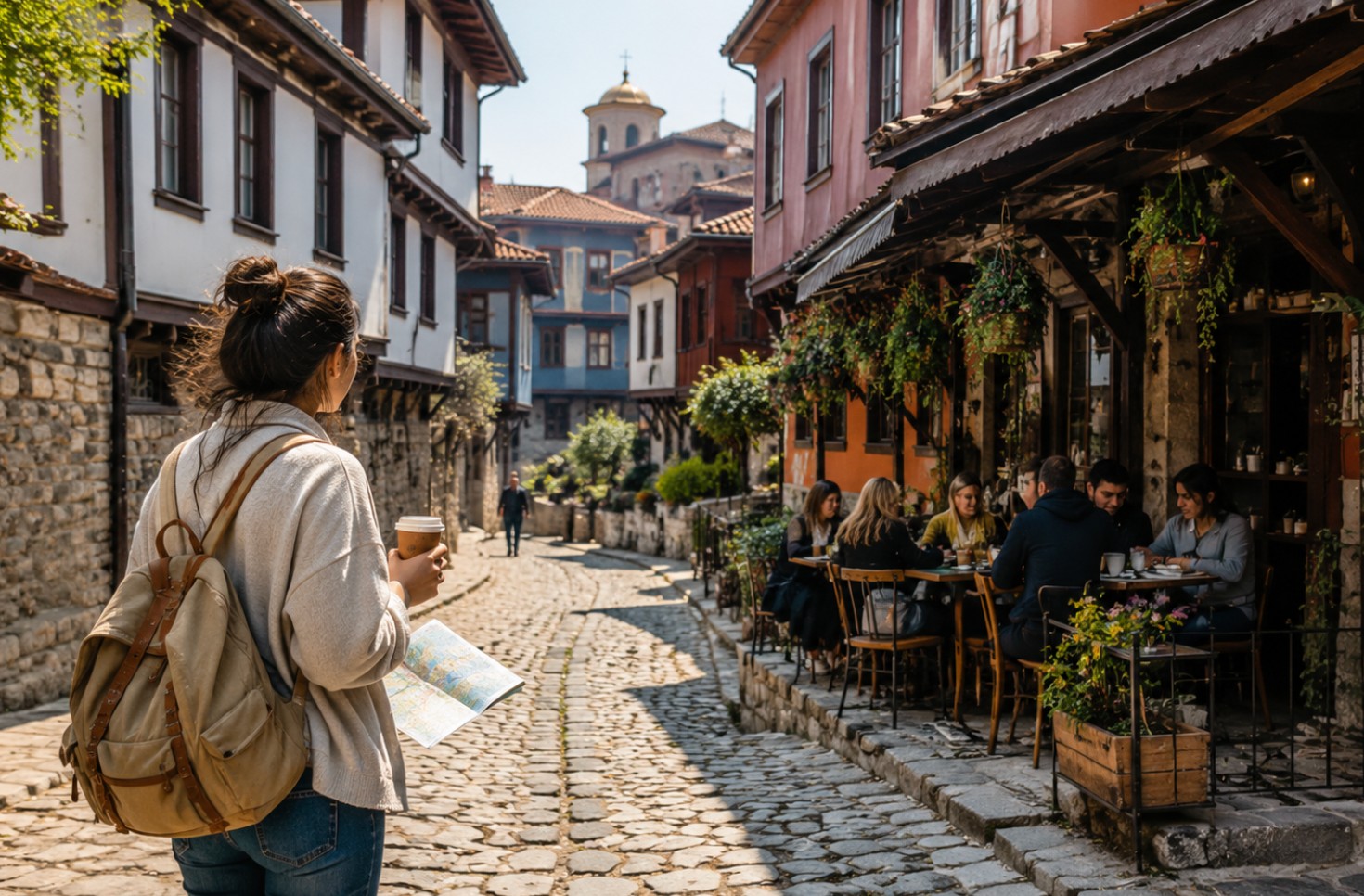
Yes, Bulgaria is still relatively cheap to visit in 2026, particularly compared with Western Europe and many better-known Mediterranean destinations, although it is no longer the exceptionally inexpensive country described in older travel guides. Restaurant prices have risen, accommodation on the Black Sea coast can become expensive during July and August, and rental-car rates roughly double between the cheapest and busiest parts of the year. At the same time, public transport remains extremely affordable, hostels and guesthouses can still cost very little, many historic sights are free or inexpensive, and a traveler who avoids peak-season resort pricing can have a comfortable trip without a large budget.
For most visitors, a realistic Bulgaria travel budget is approximately €35–50 per person per day for a budget trip, around €65–100 for comfortable mid-range travel and roughly €120–180 or more for travelers choosing better hotels, rental cars, frequent restaurant meals and paid activities. A summer holiday at a Black Sea resort can move above these ranges because accommodation is much more seasonal than everyday costs such as food and transport.
There is also an important practical change for anyone using older Bulgaria travel guides: Bulgaria adopted the euro on January 1, 2026. Since February 1, the euro has been the country’s only legal tender, and the mandatory period in which businesses displayed prices in both Bulgarian lev and euro ended on August 8, 2026. If you find older prices online in lev, the official conversion rate was fixed at €1 = 1.95583 BGN, but travelers visiting now should plan and pay in euros.
How Much Does It Cost to Visit Bulgaria in 2026?
The biggest variables in a Bulgaria travel budget are accommodation, season and transportation style. Food is relatively predictable, public transport costs very little and ordinary museum admissions rarely dominate the budget, whereas a beachfront hotel in August or a rental car during the summer peak can change your daily spending significantly.
- Budget traveler: approximately €35–50 per person per day.
- Mid-range traveler: approximately €65–100 per person per day.
- Comfortable traveler: approximately €120–180+ per person per day.
- Road-trip traveler: usually around €80–130+ per person per day, depending on whether accommodation and the rental car are shared.
- Peak-summer Black Sea trip: commonly €100–180+ per person per day when staying in private accommodation near the coast.
Those figures exclude international flights because the cost of reaching Bulgaria depends much more on your origin and airline than on prices within the country itself. They also assume ordinary independent travel rather than luxury hotels, private guides or premium resort packages, which can take the daily budget substantially higher.
How Much Does One Week in Bulgaria Cost?
For a seven-day Bulgaria trip without international airfare, these are useful planning ranges:
- Budget trip: approximately €245–350 per person.
- Mid-range trip: approximately €455–700 per person.
- Comfortable trip: approximately €840–1,260+ per person.
A week divided between Sofia and Plovdiv using trains and city transport can stay comfortably within the lower ranges because transportation is extremely inexpensive and both cities have affordable accommodation. A week involving a rental car, Rila, several mountain destinations and private hotels requires more, while seven nights at the Black Sea during August can cost considerably more than the same trip in June or September.
Couples generally receive particularly good value because hotel rooms, rental cars and taxis can be divided between two people. Solo travelers can still travel cheaply, but private rooms and cars have a much larger effect on an individual daily budget.
Is Bulgaria Still Cheap in 2026?
Bulgaria remains inexpensive in a European context, but the answer depends on what you compare. Current national price data puts an inexpensive restaurant meal at roughly €10, a three-course mid-range meal for two at around €41, a domestic draft beer around €2 and a cappuccino a little above €2. Those prices remain low compared with many Western European destinations, especially for travelers who prefer restaurants and cafés rather than cooking every meal themselves.
Sofia is noticeably more expensive than the national average. A basic restaurant meal currently averages close to €14, a three-course dinner for two is around €50 and a cappuccino is roughly €3. That is still reasonable for an EU capital, but it demonstrates why old articles describing €4 or €5 sit-down meals throughout central Sofia should not be used for a 2026 budget.
Other Bulgarian cities can feel cheaper. Plovdiv has a lower overall cost-of-living and restaurant index than Sofia, while Burgas and other regional centers generally remain affordable outside the most tourism-heavy coastal locations. The Black Sea resorts require a separate calculation because hotel demand, beach services and tourism-oriented restaurants create a different market from everyday life in Burgas or Varna.
What Currency Does Bulgaria Use in 2026?
Bulgaria uses the euro. The country officially joined the euro area on January 1, 2026, replacing the Bulgarian lev at the irrevocably fixed conversion rate of €1 = 1.95583 BGN.
During January 2026 there was a short dual-circulation period, after which the euro became the only legal tender from February 1. Businesses were also required to display many prices in both currencies during the transition, but that mandatory dual-pricing period ended on August 8, 2026.
This makes travel budgeting considerably easier than it was in previous years. You no longer need to exchange euros into lev when arriving from another euro-area country, and travelers using older guides should simply remember that the old rough conversion was approximately two lev to one euro.
Can You Still Exchange Bulgarian Lev?
Yes. Travelers who still have old Bulgarian banknotes or coins should not assume they have become worthless. The Bulgarian National Bank continues to exchange lev into euro indefinitely and without charge at its own counters.
Commercial banks were required to provide free exchange during the initial transition period, but that requirement ended on June 30, 2026 and banks may now charge their own conversion fees. For ordinary tourists arriving after the transition, however, there is little reason to obtain lev at all because normal spending is now conducted in euro.
Accommodation Costs in Bulgaria
Accommodation is inexpensive by European standards at the lower end of the market, but Bulgaria has an unusually broad range because the same country contains budget hostels, city business hotels, ski resorts, spa complexes and large Black Sea holiday properties.
For planning purposes, these ranges work better than one national average:
- Hostel dorm bed: approximately €6–15 per person.
- Basic private hostel room or guesthouse: approximately €20–40 per room.
- Simple apartment or budget hotel: approximately €30–55 per room.
- Comfortable mid-range city hotel: approximately €45–80 per room.
- Better central or resort hotel: approximately €70–120+ per room.
- Black Sea accommodation in July and August: commonly €60–120+ for a private room, with desirable beachfront properties and resorts costing considerably more.
- Higher-end ski or spa hotel: often €90–150+ depending on dates and destination.
Current hostel listings illustrate how cheap the bottom end can still be. Dorm beds in Sofia can begin below €10, with some private hostel accommodation also available around that level, while Plovdiv currently has dorm beds around the €10–15 range and inexpensive private rooms depending on dates.
The more important lesson is that Bulgaria should not be budgeted using hostel prices alone. A couple booking an ordinary private hotel room during shoulder season may spend €50 or €60 for accommodation, while someone visiting Sunny Beach, Nessebar or another popular coastal destination in August can encounter a very different price environment.
How Much Does Accommodation Cost in Sofia?
Sofia has the widest supply of accommodation in Bulgaria, which keeps competition relatively strong even though the capital is more expensive than most regional cities. Hostels remain exceptionally inexpensive, while simple guesthouses and apartments provide useful options for travelers who want privacy without paying for a conventional international hotel.
A realistic budget is around €8–15 for a hostel bed, approximately €30–50 for a simple private room and roughly €50–90 for a good mid-range hotel, although central four-star properties can easily cost more.
Location does not need to be treated as an all-or-nothing decision because Sofia’s metro is inexpensive and efficient. Staying a few stops outside the most expensive central blocks can reduce the room rate without adding meaningful transport costs, particularly because a normal metro journey costs less than €1.
How Much Does Accommodation Cost in Plovdiv?
Plovdiv is one of Bulgaria’s strongest value destinations. Current hostel listings show dorm beds from roughly €10 and inexpensive private rooms at surprisingly low starting prices, while comfortable boutique hotels and apartments remain relatively affordable compared with Sofia.
Travelers who want to stay inside the Old Town may pay more for atmosphere and historic architecture, but Plovdiv’s center is compact enough that staying slightly outside the most picturesque streets rarely creates a transportation problem.
A planning range of approximately €25–45 for basic private accommodation and €45–75 for a comfortable mid-range room works for many dates, although festivals and popular weekends can push prices higher.
How Expensive Is Bulgaria’s Black Sea Coast?
The Black Sea coast is the part of Bulgaria where describing the country simply as cheap becomes most misleading. Varna and Burgas are real cities with local economies and can remain reasonably priced throughout the year, while Sunny Beach, Golden Sands, Nessebar and other summer destinations operate much more like seasonal Mediterranean resorts.
Current restaurant data in Varna places an inexpensive meal around €10.25, a three-course dinner for two around €53 and a cappuccino around €2.60. Burgas is similar, with an inexpensive meal around €11.50 and a mid-range dinner for two around €41. Everyday food therefore remains affordable even near the coast.
Accommodation is the larger variable. July and August bring the strongest demand, especially for hotels close to the beach, family rooms and resorts with pools or all-inclusive packages. A room that represents excellent value in May or late September may cost considerably more during school holidays.
Budget travelers can still control coastal costs by staying in Varna or Burgas, choosing guesthouses away from the waterfront or traveling in June and September rather than the peak weeks of July and August.
Is Sunny Beach Cheap?
Sunny Beach can be cheap compared with major Mediterranean resorts, but it is not necessarily cheap compared with the rest of Bulgaria. The destination is built around tourism, so accommodation, bars, nightlife, beach services and restaurants in the most heavily visited areas are priced for holidaymakers rather than for ordinary Bulgarian everyday spending.
A package holiday can sometimes provide better value than independently booking a central resort hotel, particularly for families or travelers who intend to spend most of the trip at the beach. Independent travelers should compare the full cost rather than assuming an apartment will always be cheaper once meals, beach facilities and transfers are added.
If your goal is a low-cost Bulgaria trip rather than a resort holiday, Sofia, Plovdiv, Veliko Tarnovo and many inland destinations normally provide better value.
Is Nessebar Expensive?
Historic Nessebar attracts large numbers of summer visitors because its old peninsula is both a beach destination and a UNESCO World Heritage site. Restaurants and accommodation inside or immediately beside the most tourist-oriented historic area can therefore cost more than equivalent options in nearby residential neighborhoods.
The town does not require a large sightseeing budget, however. Much of the experience comes from walking through the old streets, seeing historic churches from outside and exploring the peninsula, so it is entirely possible to visit Nessebar without turning the day into an expensive excursion.
Accommodation is where booking strategy matters most. Staying nearby rather than directly in the most atmospheric part of Old Nessebar can reduce the cost substantially during peak summer.
How Much Does Accommodation Cost in Bansko?
Bansko is highly seasonal because winter ski demand and summer hiking demand create different accommodation markets. Current booking data puts average three-star hotel prices around the equivalent of €70 per night and four-star properties around €90, while particular weekends and high-demand ski periods can cost considerably more.
The town also has a large apartment market, which can make longer stays surprisingly affordable, especially for two or more travelers sharing a property.
For a ski holiday, accommodation is only one part of the calculation. Lift passes, equipment rental, lessons and mountain restaurants can make Bansko substantially more expensive than an ordinary cultural trip through Sofia and Plovdiv.
How Much Does Food Cost in Bulgaria?
Food remains one of Bulgaria’s strongest value categories, particularly outside Sofia’s most central and fashionable areas. Current countrywide data gives a useful benchmark:
- Inexpensive restaurant meal: approximately €10.20.
- Three-course mid-range dinner for two: approximately €41.
- Fast-food combo meal: approximately €8.70.
- Domestic draft beer: approximately €2.
- Cappuccino: approximately €2.20.
- Bottled water in a restaurant: approximately €1.
A traveler does not need to rely on supermarkets to keep the daily food budget reasonable. Bakeries, casual grills and traditional restaurants can provide substantial meals, while lunch menus and restaurants away from the most heavily tourist-oriented streets often cost less than the national restaurant average suggests.
For a budget traveler, approximately €15–25 per person per day can cover food when mixing bakeries, supermarkets and inexpensive restaurants. Around €25–45 provides a much more relaxed restaurant budget, while €50 or more allows regular drinks, cafés and higher-end dining without much attention to individual prices.
How Much Does Food Cost in Sofia?
Sofia is the country’s most expensive major city for many everyday visitor expenses. Current data puts an inexpensive restaurant meal at approximately €13.90, a three-course mid-range dinner for two at €50, a domestic draft beer around €3 and a cappuccino slightly above €3.
The averages should not be interpreted as minimum prices. Bakeries, traditional lunch spots and neighborhood restaurants still provide meals below those levels, while restaurants around Vitosha Boulevard and fashionable central areas can easily cost more.
A realistic Sofia food budget is approximately €18–30 per person per day for budget-conscious travel and €30–50 for someone eating most meals in sit-down restaurants.
How Much Does Food Cost in Varna?
Varna currently averages around €10.25 for an inexpensive restaurant meal, approximately €53 for a three-course dinner for two and about €2.60 for a cappuccino. A domestic beer is around €2.50.
These prices make Varna reasonably affordable despite being the country’s most important northern Black Sea city. The main seasonal cost pressure comes from accommodation and beach tourism rather than ordinary restaurant food.
Restaurants directly beside the sea or in highly tourism-oriented zones can naturally charge more, so using the citywide average as a guaranteed beach-front menu price would be unrealistic.
How Much Does Food Cost in Burgas?
Burgas remains similarly affordable, with a basic restaurant meal around €11–12 and a three-course dinner for two around €41 in current price data. Coffee and domestic beer generally remain only a few euros.
Because Burgas is both a functioning city and a coastal destination, it is easier to find restaurants aimed at local customers than in a purpose-built resort such as Sunny Beach. This can make Burgas a useful base for travelers who want the Black Sea without resort pricing every day.
Cheap Bulgarian Food to Try
Eating cheaply in Bulgaria does not require avoiding Bulgarian cuisine. Many traditional dishes are naturally well suited to inexpensive restaurants, bakeries and casual taverns.
- Banitsa for a low-cost breakfast or snack.
- Shopska salad, especially during the summer vegetable season.
- Kebapche and kyufte from grills and casual restaurants.
- Tarator during warm weather.
- Bean soup and other traditional soups.
- Kavarma in traditional restaurants.
- Mekitsi for an inexpensive breakfast.
- Local yogurt, cheese, fruit and bread from supermarkets and markets.
Ordering several dishes to share also works naturally in traditional Bulgarian restaurants, which can keep a group meal affordable while allowing everyone to try more than one local specialty.
How Cheap Is Public Transport in Sofia?
Sofia’s public transport is exceptionally inexpensive for a European capital. From January 2026, the standard short-transfer ticket costs €0.80, while a 60-minute transfer product costs €1.10.
- Single metro ticket: €0.80.
- 30-minute transfer ticket: €0.80.
- 60-minute transfer ticket: €1.10.
- Calendar-day transport pass: €2.
- 24-hour pass including night transport: €3.
- 72-hour pass including night transport: €7.60.
Contactless bank-card payment is available across much of the system, with automatic fare aggregation helping passengers avoid paying more than the relevant daily cap when the same payment method is used consistently.
For a visitor who stays in central Sofia and walks between the main sights, transport may add only a few euros to the entire city stay.
How Much Does Sofia Airport to the City Cost?
Sofia Airport is directly connected to the city by metro line M4, making the airport transfer one of the cheapest major-city airport journeys in Europe. The metro journey into central Sofia takes roughly 25 minutes and a standard ticket costs €0.80.
That makes a taxi unnecessary for most solo budget travelers unless they arrive at a time when the metro does not suit them, are carrying substantial luggage or have accommodation far from a convenient station.
For two or more travelers a taxi may still be worth comparing for convenience, but the alternative is a sub-€1 public transport journey rather than an expensive airport train.
How Much Does It Cost to Travel Between Bulgarian Cities?
Intercity transport is generally inexpensive, particularly by train. Sofia, Plovdiv, Burgas, Varna and many regional cities are connected by Bulgarian State Railways, although journey times can be considerably slower than the distances might suggest.
A recent published BDZ second-class fare for the direct Sofia–Plovdiv route is roughly €5–6 one way, with reserved seats adding only a small additional charge on services where reservation is available. Exact fares and schedules can change, so check the current train rather than building an itinerary around an old departure time.
Buses provide another inexpensive option and are often faster or more convenient for destinations without useful railway service. For a typical multi-city cultural trip, domestic transportation is unlikely to become one of the largest budget categories unless you use taxis or private transfers extensively.
Train or Bus: Which Is Cheaper in Bulgaria?
Trains are frequently the cheapest choice for longer journeys, especially when compared with private transport, and they can provide exceptionally good value for travelers who are not in a hurry.
Buses may cost slightly more on some routes but can save substantial time or provide direct links where the railway requires a connection. Plovdiv, Veliko Tarnovo, Rila-region destinations and the Black Sea should therefore be planned route by route rather than assuming one mode is always superior.
The cost difference is often small enough that schedule and journey time matter more than saving the final few euros.
How Much Does It Cost to Rent a Car in Bulgaria?
Rental-car prices are highly seasonal. Current 2026 market data shows average daily rates ranging from roughly €14 in November to approximately €41 in August.
- January: approximately €18 per day.
- February: approximately €18 per day.
- March: approximately €17 per day.
- April: approximately €17 per day.
- May: approximately €16 per day.
- June: approximately €25 per day.
- July: approximately €40 per day.
- August: approximately €41 per day.
- September: approximately €23 per day.
- October: approximately €19 per day.
- November: approximately €14 per day.
- December: approximately €20 per day.
These figures are broad market averages rather than guaranteed economy-car quotations. Automatic vehicles, larger cars, airport pickup, additional insurance and young-driver fees can push the actual rental cost substantially above the monthly average.
The seasonal difference is more useful than any individual number. A seven-day rental based on the November average costs roughly €100 before extras, whereas seven days at the August average approaches €290 before fuel and insurance.
Is Renting a Car Worth It in Bulgaria?
A car is unnecessary for a simple Sofia–Plovdiv city trip, but it becomes useful for Rila Monastery, rural mountain regions, smaller historic towns and itineraries containing multiple stops that would otherwise require several bus changes.
For couples and groups, the economics improve substantially because both the rental and fuel are shared. A €40 summer rental represents €20 each for a couple before fuel, while the same vehicle immediately consumes most of a solo backpacker’s daily budget.
A good compromise is to use public transport in Sofia and between major cities, then rent a vehicle only for the road-trip portion of the itinerary.
How Much Does Fuel Cost in Bulgaria?
Fuel has been unusually volatile during summer 2026, so it should not be treated as a fixed annual cost. Around August 20, regular A95 petrol averaged approximately €1.56 per liter, while diesel had climbed to approximately €1.82 per liter.
That remains below the EU average, but diesel in particular has risen considerably during the summer. Travelers planning a long road trip should therefore check the current weekly price rather than relying on figures from the beginning of the year.
For a compact petrol car consuming around six liters per 100 kilometers, a 700-kilometer road trip at €1.56 per liter would use roughly €65 in fuel. Actual consumption obviously depends on the vehicle, mountain roads, traffic and driving style.
How Much Do Attractions Cost in Bulgaria?
Bulgaria is inexpensive for sightseeing because many of its most recognizable urban attractions involve no admission fee. Walking through central Sofia, seeing the open-air Serdica ruins, exploring Plovdiv’s Old Town or wandering around historic Nessebar can occupy substantial parts of a day without requiring expensive tickets.
Museums and archaeological attractions generally cost a few euros rather than the €20–30 increasingly common at major Western European attractions, although larger heritage complexes can cost more.
Rila Monastery provides a useful example. The monastery contains several separate museum exhibitions rather than requiring every visitor to buy one expensive universal entrance ticket. In 2026, the Church History Museum costs €5, Hrelov Tower €3, the monastery economy museum €3 and a combined ticket for all museum exhibitions costs €12.
A traveler primarily interested in architecture, churches, old towns and outdoor sights can therefore keep the attraction budget extremely low, while museum-focused visitors should allow perhaps €5–15 on a typical sightseeing day.
Is Rila Monastery Expensive to Visit?
No. The main additional spending comes from optional museum exhibitions, transportation and food rather than one high mandatory sightseeing ticket.
The monastery’s current combined museum ticket costs €12 and includes all of its museum exhibitions. Travelers who only want one section can buy individual tickets, including €5 for the Church History Museum and €3 for Hrelov Tower.
Getting there can cost more than the attraction itself. Public transportation options are limited compared with Sofia or Plovdiv, so travelers often use an organized day tour, rental car or private transfer, making transportation the main expense associated with the visit.
How Much Does Mobile Data Cost in Bulgaria?
Mobile data is inexpensive and increasingly convenient for visitors because Bulgarian operators now publish prepaid eSIM products directly in euros.
Yettel currently offers a tourist-oriented prepaid eSIM for €10.23 that includes unlimited data during the first five days followed by 25GB for the remainder of a 30-day validity period. A larger €40.90 option provides a longer validity period and substantially more data.
A1 also has competitive prepaid data packages. Its current 20GB promotional package costs €7.67, while a 30GB data package costs €12.78, with current promotional activation benefits available through the end of August 2026.
- A1 prepaid 20GB-class package: €7.67.
- Yettel tourist eSIM 25GB: €10.23.
- A1 prepaid 30GB package: €12.78.
- A1 larger 50GB package: €20.45.
These prices make a local SIM or eSIM particularly attractive for longer stays. International travel eSIMs may still be more convenient for travelers who want connectivity before landing or who are visiting several countries on one regional plan.
Can You Use EU Roaming in Bulgaria?
Yes. Bulgaria is an EU member state, so travelers using mobile plans from EU and EEA countries generally benefit from the normal Roam Like at Home framework, subject to their provider’s fair-use rules and individual contract.
This means many European visitors may not need to buy a Bulgarian SIM at all. Travelers arriving from outside the EU should compare their own roaming package with local prepaid prices before deciding.
Do You Need Cash in Bulgaria in 2026?
Cards are widely accepted in Sofia, Plovdiv, Varna, Burgas, larger hotels, supermarkets and tourist-oriented businesses, but carrying some euro cash remains useful for small bakeries, markets, rural restaurants, local transport situations and minor attractions.
The currency transition also means some older travel advice about carrying Bulgarian lev is now obsolete. Since February 1, 2026, euro is the country’s sole legal tender.
If an old website, menu photo or travel guide still gives a price in lev, divide it by approximately 1.96 to estimate the corresponding euro value, but do not assume that the old price itself is still current.
How Much Does Sofia Cost Per Day?
Sofia is more expensive than most Bulgarian cities but remains inexpensive for an EU capital, especially because transport and many central sights cost almost nothing.
A budget traveler staying in a hostel can spend approximately €35–50 per day by using bakeries, inexpensive restaurants and public transport. A traveler choosing a private room, eating primarily in restaurants and visiting several museums should expect approximately €65–100.
A more comfortable Sofia trip with a good central hotel, cocktails, taxis and higher-end dining can exceed €120 per person per day, but that level of spending reflects choice rather than the minimum cost of experiencing the city.
How Much Does Plovdiv Cost Per Day?
Plovdiv can be slightly cheaper than Sofia because accommodation and restaurants outside the tourism-heavy sections of the Old Town generally cost less, while the main sights are close enough to explore almost entirely on foot.
A backpacker can realistically stay around €30–45 per day, particularly with a hostel bed and inexpensive meals. Approximately €55–85 provides a comfortable private-room trip with restaurant dining and paid attractions.
Because Plovdiv requires little local transportation, the difference between a carefully budgeted trip and a comfortable one often comes almost entirely from accommodation and dining choices.
How Much Does Varna Cost Per Day?
Varna normally requires approximately €40–60 per day for budget travel and around €70–110 for a comfortable private-room trip. Summer accommodation is the main factor that can push the total higher.
Food itself remains manageable, with an inexpensive meal around €10 and local public transport around €1 for a normal ticket in current price data.
Travelers who visit outside July and August often receive much better accommodation value while still benefiting from a coastal location.
How Much Does a Black Sea Holiday Cost?
A Black Sea holiday is difficult to reduce to one figure because Bulgaria’s coast includes major cities, historic towns, party resorts, all-inclusive hotels and quieter beach communities.
For an independent traveler outside peak season, approximately €60–90 per person per day can provide comfortable accommodation, restaurant meals and local transport. During July and August, approximately €100–180 or more is a safer planning range for travelers staying in desirable private rooms or resort properties close to the beach.
All-inclusive packages work differently because meals, drinks and sometimes beach facilities are included in the accommodation rate. Comparing an all-inclusive hotel’s nightly rate with a guesthouse alone therefore does not reveal which option is genuinely cheaper.
How Expensive Is Bansko?
Bansko can be inexpensive as a mountain town but relatively expensive as a ski holiday. A summer hiking trip may benefit from low apartment rates, inexpensive restaurants and free mountain walking, whereas winter adds lift passes, equipment rental, lessons and stronger accommodation demand.
Current ordinary hotel averages are already higher than the country’s cheapest city accommodation, with three-star hotels around the €70 range and four-star accommodation approximately €90 before peak ski demand is considered.
Anyone researching whether Bulgaria is cheap for skiing should therefore build a separate ski budget rather than applying the country’s ordinary €35–50 backpacker figure to Bansko in January or February.
Budget Bulgaria: What €35–50 per Day Looks Like
A budget of €35–50 per person per day is realistic for travelers who stay in hostels or inexpensive guesthouses, use trains and buses and choose local food rather than tourism-oriented restaurants for every meal.
- Hostel or inexpensive shared accommodation.
- Breakfast from a bakery or supermarket.
- One inexpensive restaurant meal and one simple meal.
- Walking and public transport in Sofia and other cities.
- Trains or buses between major destinations.
- Mostly free attractions with a few inexpensive museum tickets.
- Local or EU mobile data rather than expensive international roaming.
This budget becomes more difficult for a solo traveler requiring private accommodation on the Black Sea during August or anyone renting a car alone during the summer peak.
Mid-Range Bulgaria: What €65–100 per Day Looks Like
Approximately €65–100 per person per day is a very comfortable budget for much of Bulgaria. It allows private accommodation, restaurant meals, regular museum visits and convenient transportation without forcing you to optimize every euro.
- Comfortable guesthouse, apartment or three-star hotel.
- Restaurant meals throughout the day.
- Coffee, beer or wine without a strict daily allowance.
- City public transport and occasional taxis.
- Intercity trains or buses.
- Regular paid museums and historic attractions.
- Selected day tours or a rental car for part of the trip.
Couples sharing rooms frequently achieve this standard closer to the lower end of the range because accommodation is sold per room rather than per person.
Comfortable Bulgaria: What €120–180+ per Day Looks Like
A daily budget above €120 per person allows much greater flexibility with accommodation and transport. Better central hotels, frequent taxis, rental cars and more expensive restaurants become easy to include without compromising other parts of the itinerary.
On the Black Sea during August, this range can represent comfortable rather than luxurious travel because desirable resort accommodation may absorb a significant percentage of the budget. Outside peak coastal and ski seasons, however, €120–180 per day can provide a notably high level of comfort.
Is Bulgaria Cheap for Solo Travelers?
Yes. Hostel accommodation, inexpensive public transport and low-cost trains make Bulgaria particularly suitable for solo travelers who want to keep fixed costs under control.
The main disadvantage of traveling alone appears when renting a car or choosing private accommodation. A €60 hotel room is €60 per person for a solo traveler but €30 each for a couple, while the same principle applies to rental cars and taxis.
Solo travelers following Sofia, Plovdiv and other major public-transport routes can therefore keep spending surprisingly low, whereas a solo road trip through mountains and rural regions requires a substantially larger budget.
Is Bulgaria Cheap for Couples?
Yes, and couples can often achieve a notably higher travel standard for only a modest increase over the solo backpacker budget because rooms and vehicles are shared.
A private room costing €60 becomes €30 per person, while a €40 rental car becomes €20 each before fuel. Restaurant meals remain affordable enough that a couple can eat out every day without the dining budget becoming the dominant cost.
Approximately €130–180 total per day can therefore provide a comfortable couple’s trip through much of Bulgaria outside expensive resort dates, although coastal summer accommodation can push the total higher.
Is Bulgaria Cheap for a Road Trip?
Bulgaria can be excellent value for a road trip, particularly from spring through early summer and again in September or October. Rental cars outside peak summer can cost less than €20 per day, road distances are manageable and fuel remains below the EU average despite recent 2026 increases.
July and August change the calculation. Average rental rates rise to around €40 per day and coastal accommodation is also at its most expensive, so the road trip can become substantially more costly even though restaurant prices remain similar.
A couple or group dividing the rental cost still receives good value, particularly when the vehicle replaces several organized excursions or private transfers.
When Is Bulgaria Cheapest to Visit?
Late spring and autumn generally provide the strongest overall value because accommodation demand is moderate, rental-car rates are far below the summer peak and the weather is suitable for city travel and much outdoor sightseeing.
November currently has the lowest average rental-car rate at roughly €14 per day, but the cheapest month for a vehicle is not necessarily the best month for an entire trip. Weather becomes cooler, daylight is shorter and the Black Sea beach season has ended.
May, June, September and October therefore offer a better balance for most travelers. June and September are especially useful if the coast is important, while May and October work particularly well for Sofia, Plovdiv, monasteries and road trips.
Is Bulgaria Expensive in July and August?
Not across every category. Food, Sofia metro fares and ordinary museum tickets remain inexpensive in summer. The seasonal premium is concentrated primarily in Black Sea accommodation and rental vehicles.
Current rental data provides a clear example: an average car costs approximately €16 per day in May, around €25 in June and roughly €40–41 in July and August.
A traveler staying in Sofia and Plovdiv without a car can therefore still have a cheap August trip. Someone renting a car and spending a week in a beachfront resort may reasonably conclude that Bulgaria is much more expensive.
Did Bulgaria Become More Expensive After Adopting the Euro?
Bulgaria’s euro adoption has naturally created concern about price increases, but travelers should separate the currency conversion itself from wider inflation, seasonal tourism pricing and individual business decisions.
The euro was introduced at the fixed rate of €1 = 1.95583 BGN, so legitimate conversion of an unchanged price did not inherently make the product more expensive. Bulgarian and European authorities also introduced dual-price display and price-monitoring measures around the transition to discourage unjustified increases.
That does not mean every restaurant, hotel or service costs exactly what it did one year earlier. Prices continue to change for ordinary economic reasons, which is why a 2026 travel budget should use current euro prices rather than converting figures from a 2023 or 2024 travel blog.
Hidden Costs to Budget for in Bulgaria
- Peak-season accommodation on the Black Sea coast.
- Ski passes and equipment in Bansko or other winter resorts.
- Rental-car insurance and security deposits.
- Fuel for mountain and coastal road trips.
- Parking in central Sofia and resort areas.
- Organized transportation to Rila Monastery and other rural attractions.
- Beach umbrellas, sunbeds and resort services.
- City or tourism taxes charged by accommodation providers where applicable.
- Seat reservations or booking fees on selected transport services.
- Airport transfers when public transport is not convenient.
- ATM or foreign-card fees charged by your own bank.
- International roaming if your mobile plan does not include EU usage.
None of these costs makes Bulgaria particularly expensive, but several of them can change a seemingly low daily budget. A €10 restaurant meal is not the expense that usually breaks the budget; a €120 beach hotel, rental vehicle and paid beach setup are much more significant.
How to Save Money in Bulgaria
- Travel in June or September instead of July or August if you want the Black Sea.
- Use Sofia’s €0.80 public transport instead of taxis for ordinary city trips.
- Take metro line M4 between Sofia Airport and the city instead of automatically booking a private transfer.
- Use trains for inexpensive journeys such as Sofia to Plovdiv when the timetable suits your itinerary.
- Rent a car only for the days when rural access genuinely requires one.
- Stay in guesthouses, apartments and small hotels rather than limiting your search to international chains.
- Eat in neighborhood restaurants and bakeries rather than exclusively on major tourist streets.
- Stay in Burgas or Varna if you want a coastal city with more everyday local pricing.
- Walk through Sofia and Plovdiv, where many of the major attractions are concentrated in compact central areas.
- Use free historic and outdoor attractions to balance paid museums.
- Use your existing EU roaming plan if it already includes Bulgaria.
- Compare local prepaid eSIMs if your home roaming is expensive.
- Book specific summer accommodation and automatic rental cars earlier when availability matters.
Is Bulgaria Cheaper Than Western Europe?
Yes, particularly for restaurant meals, alcohol, public transport and budget accommodation. Current national data puts an inexpensive Bulgarian restaurant meal at around €10 compared with roughly €17 in Italy and €20 in the Netherlands, while a mid-range dinner for two is around €41 in Bulgaria compared with approximately €70 in Italy and €80 in the Netherlands.
The difference is even greater for urban transport. A Sofia metro ride costs €0.80 and a calendar-day pass €2, costs that are difficult to match in most major Western European capitals.
The gap narrows for globally priced tourism products such as premium hotels, international rental-car brands and fashionable coastal resorts, which is why luxury travelers may experience a smaller saving than backpackers or mid-range independent travelers.
Is Bulgaria Cheaper Than Croatia?
For many everyday expenses, Bulgaria generally offers better value than Croatia, particularly for city accommodation, public transport and restaurant spending away from major resorts. The difference can become substantial when comparing Sofia or Plovdiv with Dubrovnik, Split or Croatia’s popular islands.
A Black Sea resort in peak summer is a less dramatic comparison because Bulgarian beachfront accommodation can also become expensive. Bulgaria’s strongest budget advantage therefore appears on mixed cultural and road-trip itineraries rather than when comparing two high-demand beachfront hotels during August.
Is Sofia or the Black Sea Cheaper?
Outside summer, the answer depends on the exact destination and accommodation. Varna and Burgas can be cheaper than Sofia in several everyday categories, and current restaurant data shows a basic meal costing less on average in Varna than in the capital.
During July and August, however, the tourism market changes the calculation. Resort accommodation and beach-related spending can make a Black Sea trip more expensive than an ordinary Sofia city break, even though local food remains affordable.
If minimizing total cost is the priority, Sofia and Plovdiv outside major events are easier to budget consistently than a peak-season coastal holiday.
Frequently Asked Questions
Is Bulgaria cheap to visit in 2026?
Yes. Bulgaria remains relatively inexpensive for Europe, particularly for public transport, budget accommodation, local food and sightseeing. Peak-summer Black Sea accommodation, ski trips and rental cars can make some itineraries substantially more expensive.
How much money do I need per day in Bulgaria?
A budget traveler should plan approximately €35–50 per person per day, while €65–100 provides a comfortable mid-range trip. Travelers choosing better hotels, rental cars and frequent paid activities should allow around €120–180 or more.
How much does one week in Bulgaria cost?
Excluding international airfare, approximately €245–350 per person can cover a budget week, €455–700 provides a mid-range trip and €840–1,260 or more allows considerably greater comfort.
Does Bulgaria use euros in 2026?
Yes. Bulgaria adopted the euro on January 1, 2026, and the euro has been the country’s sole legal tender since February 1. Travelers no longer need Bulgarian lev for ordinary purchases.
What happened to the Bulgarian lev?
The lev was replaced by the euro at a fixed conversion rate of €1 = 1.95583 BGN. Old lev can still be exchanged at the Bulgarian National Bank, which continues to provide the service indefinitely and free of charge.
How much is a meal in Bulgaria?
An inexpensive restaurant meal currently averages about €10 nationally. Sofia is more expensive at roughly €14, while Varna is around €10 and Burgas around €11–12.
How much is dinner for two in Bulgaria?
A three-course mid-range dinner for two currently averages approximately €41 nationally and around €50 in Sofia before additional drinks.
Is food cheap in Sofia?
Food is still affordable compared with many EU capitals, although Sofia is no longer an ultra-cheap dining destination. A standard inexpensive restaurant meal averages close to €14, while bakeries and traditional neighborhood restaurants can cost less.
Is Sofia public transport cheap?
Yes. A standard metro or 30-minute transfer ticket costs €0.80, a calendar-day pass costs €2 and a 24-hour pass including night transport costs €3.
How much is the metro from Sofia Airport?
The airport is served directly by metro line M4. A standard journey costs €0.80 and takes roughly 25 minutes to reach the central part of the city.
How much is the train from Sofia to Plovdiv?
Recent published BDZ fares place a standard second-class journey around €5–6 depending on the service and ticket conditions. Check the current timetable and fare for your exact date because rail schedules and prices can change.
How much does it cost to rent a car in Bulgaria?
Current 2026 averages range from approximately €14 per day in November to about €41 in August. July is similarly expensive at around €40 per day.
What is the cheapest month to rent a car in Bulgaria?
November currently has the lowest market average at approximately €14 per day. May, March and April are also considerably cheaper than July and August.
How expensive is fuel in Bulgaria?
Fuel prices are currently changing quickly. Around August 20, 2026, regular A95 petrol averaged approximately €1.56 per liter and diesel around €1.82 per liter.
Is Sofia expensive?
Sofia is the most expensive major Bulgarian city in several categories but remains affordable for an EU capital. Approximately €40–50 per day can cover a careful hostel-based trip, while €65–100 provides a much more comfortable private-room city break.
Is Plovdiv cheap?
Yes. Plovdiv has inexpensive hostels, affordable private accommodation and a compact center that requires very little transportation spending. It is one of the country’s best destinations for budget travelers.
Is Bulgaria’s Black Sea coast cheap?
It can be outside peak season, but July and August are substantially more expensive because accommodation demand rises. Varna and Burgas generally offer more everyday local pricing than purpose-built resorts such as Sunny Beach.
Is Sunny Beach cheap?
Sunny Beach can be cheaper than many Mediterranean resorts, but it is more expensive than ordinary inland Bulgaria for several tourism-specific expenses. Accommodation, nightlife and beach services are heavily seasonal.
How much does a hostel cost in Bulgaria?
Hostel dorms commonly start around €6–15 per night, with current Sofia listings sometimes below €10 and Plovdiv dorms generally around the €10 range depending on the property and date.
How much does mobile data cost in Bulgaria?
Local prepaid data is inexpensive. Yettel currently offers a 25GB tourist eSIM for €10.23, while A1 has prepaid packages beginning around €7.67 for roughly 20GB under current promotional conditions.
Can I use my EU mobile plan in Bulgaria?
Usually yes. Bulgaria participates in the EU Roam Like at Home framework, subject to your operator’s contract and fair-use conditions.
Do I need cash in Bulgaria?
Cards are widely accepted in cities and tourist destinations, but carrying a modest amount of euro cash remains useful for markets, small bakeries, rural businesses and minor purchases.
Is Bulgaria cheap for solo travelers?
Yes. Hostels, inexpensive trains and cheap public transport make it easy to keep costs low. Private hotel rooms and solo car rental are the expenses most likely to push the daily budget higher.
Is Bulgaria cheap for couples?
Yes. Sharing accommodation and rental-car costs makes Bulgaria particularly good value for couples, while restaurant and attraction prices remain moderate.
What is the cheapest time to visit Bulgaria?
Spring and autumn generally provide the strongest balance of low prices and useful weather. May, June, September and October are particularly attractive, while July and August bring the highest rental-car and coastal accommodation costs.
Bottom Line: Is Bulgaria Cheap in 2026?
Bulgaria remains a genuinely affordable European destination in 2026, but travelers should update their expectations from older guides that describe almost everything as extremely cheap. A normal restaurant meal now costs around €10 nationally and closer to €14 in Sofia, while rental cars reach approximately €40 per day in July and August. Bulgaria still costs much less than many Western European destinations, but the saving comes from a combination of reasonable expenses rather than from every individual price being exceptionally low.
Public transport is where Bulgaria remains particularly impressive. Sofia’s metro costs only €0.80 per ride, a day pass is €2 and the airport connects directly with the center for the same inexpensive fare. Intercity rail is also affordable, making a Sofia–Plovdiv style itinerary possible without either a large transport budget or a rental vehicle.
The Black Sea creates the biggest seasonal exception. Food in Varna and Burgas remains reasonably priced, but accommodation around popular beaches and resorts can rise sharply during July and August. Travelers who want the coast without the strongest summer premium should consider June or September, while inland cultural trips remain comparatively affordable throughout much of the year.
For most travelers, approximately €65–100 per person per day is enough for a comfortable Bulgaria trip with private accommodation, regular restaurant meals and paid sightseeing, while a careful backpacker can stay around €35–50. Travelers renting cars, booking peak-season beachfront hotels or skiing in Bansko should budget more, but for ordinary independent travel Bulgaria continues to provide some of the strongest value within the European Union.