

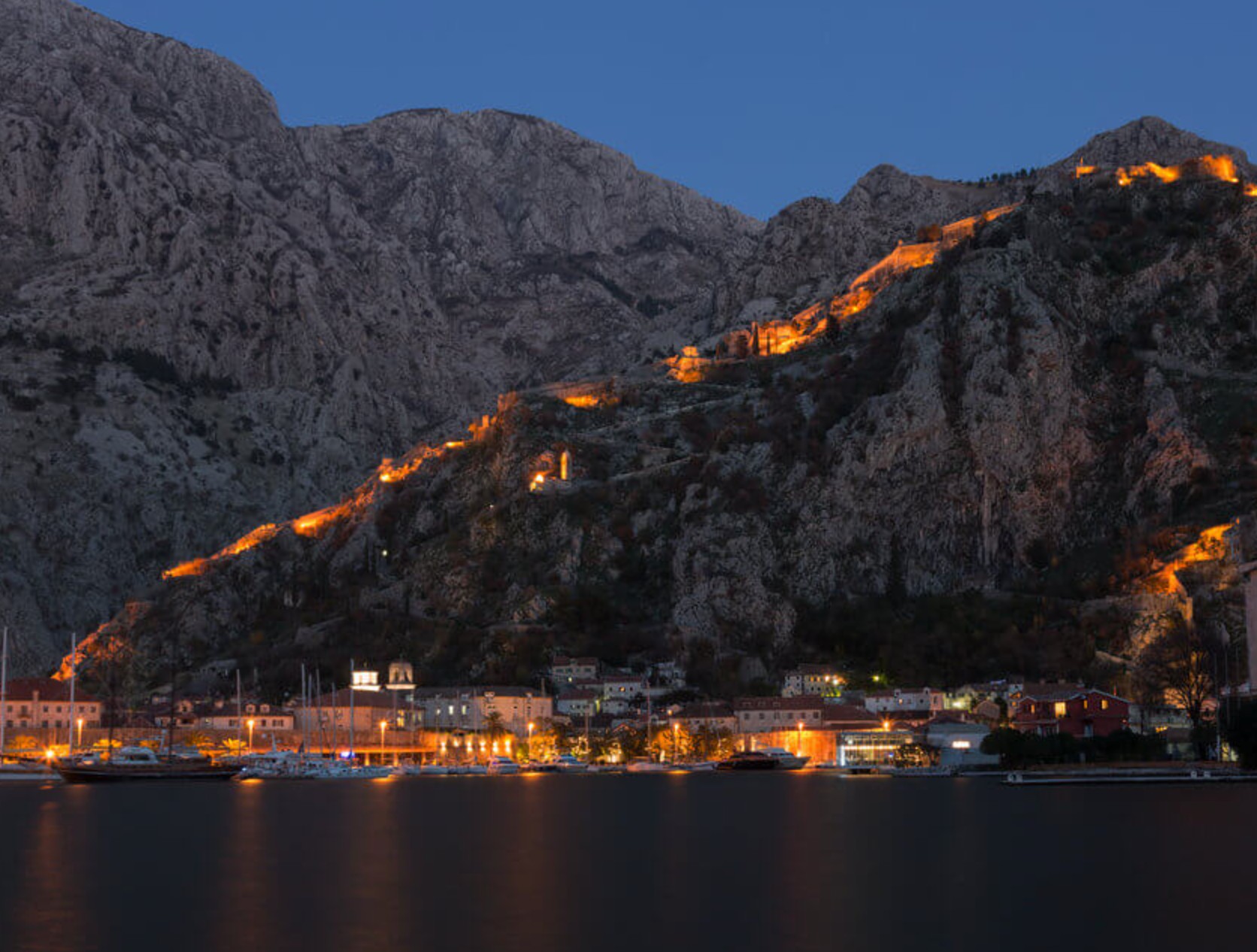
What the Kotor City Walls Actually Are
The Kotor city walls are not just a ring around the old town. They are a layered defensive system that climbs nearly 260 metres vertically up the limestone face of Mount St. John, connecting the walled old town at sea level to the Fortress of San Giovanni at the summit. The total length of the wall network is approximately 4.5 kilometres, making it one of the best-preserved medieval fortification systems in the Balkans. The walls range from two to sixteen metres thick in places, and some sections rise to 20 metres in height.
Construction began under Byzantine rule and was substantially reinforced during the centuries of Venetian administration from 1420 to 1797. The Venetians treated Kotor as a critical eastern Adriatic stronghold, and their engineering investment shows in the quality of the stonework. The walls incorporate natural rock formations, with sections of the mountain face serving as part of the barrier itself. The walls suffered significant damage in the 1979 earthquake, and much of what you walk today represents careful post-earthquake restoration, though the core structure in many sections remains original medieval stonework.
How Long Does the Climb Take
The climb takes 45 to 75 minutes one way for most people, with a round trip of 1.5 to 2 hours at a relaxed pace. If you are very fit and do not stop, you can reach the top in 30 to 40 minutes. If you stop frequently for photos, rest in the shade, or struggle with the heat, expect 1.5 hours each way. The total trail distance is roughly 1.5 kilometres one way as the path zigzags up the mountain, with an elevation gain of 260 metres. The total return distance is about 2.5 kilometres.
The steps are the defining feature of this climb. There are approximately 1,350 uneven stone steps from the old town to the fortress. These are not modern, uniform stairs. They are original medieval stonework: narrow, uneven, worn smooth in places by centuries of footsteps, and occasionally crumbling at the edges. There are no handrails on most of the ascent. The path is irregular: some sections have well-worn smooth steps, others are rougher and steeper, and a few narrow passages require ducking slightly.
Just look at this view! I made this photo one year ago.
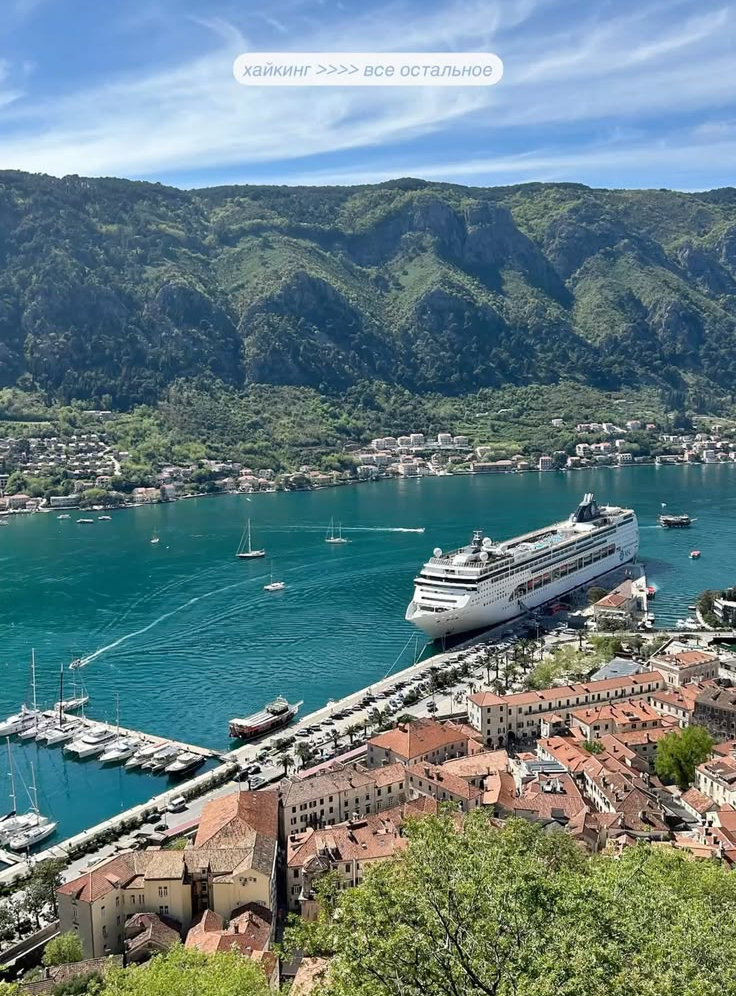
A significant resting point is the Chapel of Our Lady of Health, also called the Church of Our Lady of Remedy, located about halfway up. This small 15th-century chapel sits at roughly the 130-metre elevation mark and offers a stone terrace with the first genuinely wide views over the old town’s terracotta rooftops and out across the bay. Many visitors stop here and turn back, which is a reasonable choice if the heat is fierce or if you have mobility concerns.
How Much Does It Cost
The entry fee to climb the city walls is €15 for adults as of 2026. Students pay approximately €5, and children under 12 are free. The walls are free to enter from December through February. Tickets are sold at the main entrances near the Sea Gate and inside the old town. Bring cash in euros: card acceptance at the gate is inconsistent, and some visitors still report cash-only payment.
Note that walking along the lower sections of the walls inside the old town is free. You only pay if you want to climb the steep upper section past the Chapel of Our Lady of Health up to the fortress. If you are not interested in the climb or the view from the top, you can skip the fee entirely and still enjoy the old town walls at ground level.
Is the Climb Difficult
The climb is rated as moderate to challenging. It is steep and exposed, with no shade for most of the route, but it is doable for most people with a reasonable level of fitness. The trail is well-marked, and you can take breaks as needed. The main difficulties are the heat, the uneven steps, and the lack of handrails. The stone becomes extremely slippery when wet, and sections of the path are uneven enough to cause ankle injuries in poor shoes. Sandals and flip-flops make the upper sections genuinely dangerous.
There is no evacuation service on the walls. If you get into trouble, you are on your own. Bring water — at least one litre per person in summer — and wear proper footwear with good grip. The climb is not technical, but your legs will definitely feel it the next day.
Is It Worth It
The view from the top is the reason people do this climb. From the Fortress of San Giovanni at 260 metres, you get a full sweep of the inner Bay of Kotor, the old town’s red roofs, the marina, and the surrounding rugged limestone hills. On clear days, you can see the outline of the Croatian coast across the water. The ruins of the fortress itself are minimal but evocative, with military barracks, ammunition stores, and church ruins scattered across the summit.
The view from the top is spectacular, but the climb is hard work. The payoff is genuine, but you need to be honest about your fitness level and tolerance for heat. If you are fit, prepared, and go at the right time of day, it is absolutely worth it. If you are unfit, travelling with young children, or visiting in the middle of a July afternoon, it is probably not worth the suffering. Many people turn back at the chapel halfway up and are still happy with the experience, and that is a perfectly valid choice.
The main downside is the combination of heat and crowds. In July and August, the steps are packed with tourists, the sun is brutal, and the experience can feel more like a crowded stairmaster than a historic hike. The view is still there, but the enjoyment is significantly reduced. If you can only visit in summer, go at opening time or late afternoon. If you can visit in May, June, or September, the experience is far more pleasant.
Best Time to Go
The best time to climb the Kotor city walls is early morning, before 9 AM, or late afternoon, after 5 PM. These times avoid the worst of the midday heat and the cruise ship crowds. The walls are open daily from 7 AM to 8 PM in May through September, with shorter hours from October to April. From December through February, the walls are open 24 hours daily and entry is free.
The early morning offers cooler temperatures and fewer people, plus a beautiful sunrise over the bay. The late afternoon offers soft, warm light and the possibility of sunset from the top. The light at sunset is particularly good for photography, but be aware that you will need to descend in fading light or darkness, and the steps are uneven and unlit. Bring a headlamp if you plan to stay for sunset.
The shoulder seasons of May, June, and September offer milder weather and a more relaxed experience compared to the busy, hot summer months. April and October are also good, but the weather can be unpredictable and the water is cooler if you plan to swim afterward.
A few practical notes: the steps are slippery when wet, so avoid the climb during or immediately after rain. The path is exposed to full sun for most of the route, with almost no shade except at the chapel halfway up. Bring at least one litre of water per person in summer, and more if you are climbing in the middle of the day. There are no water fountains or shops on the walls.
Practical Tips
Wear proper footwear. This is the single most important piece of advice. The steps are uneven, worn, and slippery. Sandals, flip-flops, and dress shoes are dangerous. Hiking shoes or trainers with good grip are essential. Bring water — at least one litre per person in summer, and more if you are climbing in the middle of the day. There are no water fountains on the walls.
Bring cash for the ticket. Card acceptance at the gate is inconsistent, and some visitors still report cash-only payment. The ticket booth is located near the North Gate or River Gate area, behind the cathedral square. If you are staying in Kotor, buy your ticket early in the day to avoid queues. If you are arriving from Dubrovnik or Budva, factor in the bus journey and the border crossing time. In July and August, the border crossing from Dubrovnik can add 2 to 5 hours of queueing.
Consider the free alternative route. The Ladder of Kotor is a free trail that starts outside the old town and climbs to the fortress from the rear of the mountain. It is longer, less crowded, and free, but it is also steeper and more rugged. If you want to avoid the €15 fee and don’t mind a longer, more challenging hike, this is a viable option. However, the trail is less well-marked and requires better navigation skills.
Frequently Asked Questions
How long does it take to climb the Kotor city walls?
The climb takes 45 minutes to 1.5 hours one way, depending on your pace and how many stops you take. A round trip at a relaxed pace takes about 1.5 to 2 hours. The total trail distance is roughly 1.5 kilometres one way with an elevation gain of 260 metres.
How much does it cost to climb the Kotor city walls?
The entry fee is €15 for adults as of 2026. Students pay approximately €5, and children under 12 are free. The walls are free from December through February. Tickets are sold at the main entrances near the Sea Gate and inside the old town.
Is the Kotor city walls climb difficult?
The climb is rated as moderate to challenging. It is steep and exposed, with no shade for most of the route. The main difficulties are the heat, the uneven steps, and the lack of handrails. It is doable for most people with a reasonable level of fitness, but you need to be prepared.
Is the Kotor city walls climb worth it?
Yes, if you are fit, prepared, and go at the right time of day. The view from the top over the Bay of Kotor is genuinely spectacular. If you are unfit, travelling with young children, or visiting in the middle of a July afternoon, it is probably not worth the suffering. Many people turn back at the chapel halfway up and are still happy with the experience.
What should I wear to climb the Kotor city walls?
Wear proper footwear with good grip — hiking shoes or trainers. Sandals and flip-flops are dangerous. Bring water, sun protection, and cash for the ticket. The steps are uneven, worn, and slippery, and there are no handrails on most of the ascent.
What is the best time of day to climb the Kotor city walls?
The best time is early morning before 9 AM or late afternoon after 5 PM. These times avoid the worst of the midday heat and the cruise ship crowds. The light at sunset is particularly good for photography, but bring a headlamp if you plan to descend in the dark.
The Kotor city walls are one of the most memorable experiences in Montenegro, but they are not for everyone. The climb is hard work, the steps are uneven, and the heat can be brutal. But the view from the top is one of the best in the Adriatic, and the sense of achievement is real. Go early, bring water, wear proper shoes, and take your time. If you do that, the climb is absolutely worth it.