

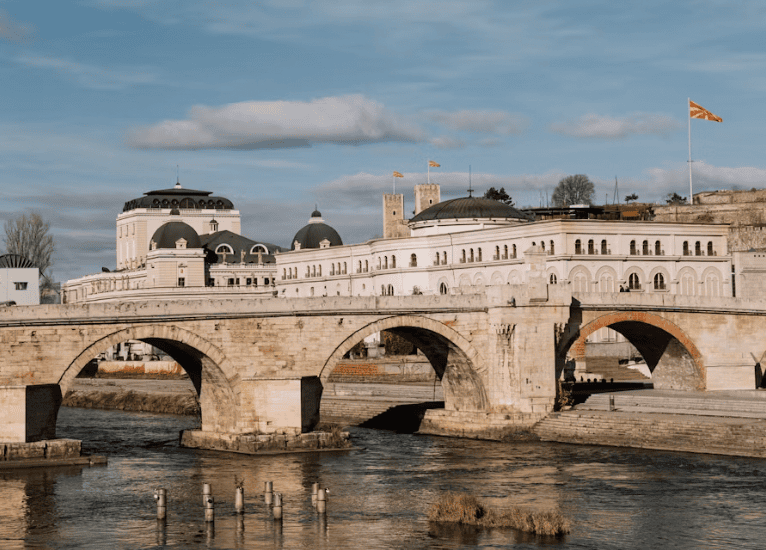
North Macedonia isn’t as heavily documented as other European destinations, so doing your homework beforehand makes sense. This guide covers the practical stuff that actually matters — visas, transport, costs, and cultural quirks — so you can spend less time figuring things out and more time enjoying your trip. What makes North Macedonia different from more tourist-heavy destinations is that it rewards independent travelers with genuine hospitality, affordable prices, and uncrowded attractions — but you’ll need to know how to navigate the transport system and cash culture to make the most of it.
North Macedonia at a Glance
- Capital: Skopje
- Currency: Macedonian Denar (MKD)
- Language: Macedonian (official), Albanian widely spoken
- English spoken? Good in tourist areas, limited in rural areas
- Visa required? Visa-free for US, UK, EU, AU citizens (up to 90 days)
- Best time to visit: May-June and September-October
- Typical trip length: 5–7 days for highlights
- Time zone: UTC+2
- Power socket: Type F (230V, 50Hz)
- Tipping culture: 10% in restaurants if service not included
- Emergency number: 112 (general), 192 (police), 194 (ambulance)
Things to Sort Before You Land in North Macedonia
Most visitors from the US, UK, EU, Canada, and Australia can enter North Macedonia visa-free for up to 90 days within a 180-day period. You must register with local police within 24 hours of arrival — this happens automatically when you check in at hotels or guesthouses, but if you’re staying in private accommodation, your host should handle it for you.
Travel insurance is essential. North Macedonia is not in the EU, and there’s no reciprocal healthcare agreement with most countries. Medical facilities are limited, especially outside Skopje, and hospitals typically require an up-front deposit before treating you. If you’re planning any hiking or adventure activities, make sure your policy covers them — and ideally medical evacuation as well.
The local currency is the Macedonian Denar (MKD). Cards are accepted in larger hotels, restaurants, and shops in Skopje and Ohrid, but you’ll need cash for smaller establishments, taxis, markets, and rural areas. ATMs are widely available in cities and tourist areas, but try to use ATMs inside banks, shopping malls, or hotels to reduce the risk of skimming.
For connectivity, local SIMs are easy to buy — major operators include A1, T-Mobile, and Telekom. Coverage is generally good in cities and along main routes, but can be patchy in mountain areas. Consider downloading offline maps and a translation app before you go, especially if you plan to explore outside the main tourist hubs.
Getting Around North Macedonia: What First-Timers Need to Know
Renting a car is one of the best ways to explore North Macedonia. Distances are short — driving from Skopje to Ohrid takes around 2.5 to 3 hours, and the scenery is spectacular. Roads are generally good, and new highways are being built, but there’s a catch: driving in Skopje is intense. Expect aggressive driving, frequent honking, and potholes. Outside cities, roads are better, but mountain routes can be winding and rural roads vary in quality.
Buses are the main form of public transport and connect most major cities and towns. They’re affordable and widely used, but schedules can be less reliable than you might be used to. Trains exist but are limited and slow — not a practical way to explore the country.
Taxis are available in cities and are affordable, but apps like Uber and Bolt don’t work in North Macedonia. Instead, use local apps like Wizi Taxi or Nase Taxi — these work like ride-hailing apps and let you order and pay through the app. If you hail a taxi on the street, always agree on the price before getting in or ensure the meter is running, as overcharging is common.
One honest note: public transport and road signage can be inconsistent, and some scenic spots are only accessible by car. If you’re relying on buses, you’ll mostly be limited to routes between major towns.
Money in North Macedonia: Budget, Costs, and Payment Tips
North Macedonia is one of the most affordable destinations in Europe. For budget travelers, expect to spend around €25–€40 per day, while mid-range travelers might spend €50–€80. Accommodation is reasonably priced, meals are cheap, and public transport costs are low.
What’s surprisingly cheap: restaurant meals, local wine, public transport, and museum entry fees. What costs more than expected: taxis from the airport, imported goods, and some tourist-oriented restaurants right on the main squares.
ATMs are widely available in cities, but fees vary by bank. Use ATMs in well-lit locations with security guards present to avoid skimming. Tipping isn’t mandatory but appreciated — 10% in restaurants if service isn’t included, and rounding up for taxis.
One money mistake first-timers commonly make: assuming cards are accepted everywhere. In smaller towns, village restaurants, and at markets, cash is the only option. Carry a mix of small and medium denominations — 500 denar notes are useful, while 1,000 denar notes can be hard to break in smaller establishments.
Culture and Etiquette: What to Know Before You Go
North Macedonia is a warm, hospitable country, and locals are generally welcoming to visitors. Greetings are usually a handshake — firm and direct. When visiting Orthodox churches, dress modestly: cover your shoulders and knees. Women may be expected to wear a headscarf, though it’s not always enforced. Photography inside churches is often prohibited or restricted.
One cultural misunderstanding tourists commonly make: rushing through meals. In North Macedonia, dining is a leisurely affair. A coffee can last an hour, and lunches are long, multi-course events. Don’t expect fast service — it’s not rudeness, it’s the pace of life.
What locals appreciate that tourists rarely do: learning a few words of Macedonian. A simple “zdravo” (hello) or “blagodaram” (thank you) goes a long way. Also, accepting an invitation for coffee or rakija (fruit brandy) from a local is a gesture of hospitality — it’s polite to accept, even briefly.
Food in North Macedonia: What to Try and What to Skip
North Macedonian cuisine is a blend of Balkan, Mediterranean, and Ottoman influences. Must-try dishes include:
- Tavče gravče — baked beans in a clay pot with onions and spices, the national dish
- Kebapi — small grilled minced meat sausages, served with onions and flatbread
- Ajvar — roasted red pepper and eggplant spread
- Burek — flaky pastry filled with cheese, meat, or spinach, great for breakfast or a quick snack
- Ohrid trout — a local fish specialty, worth trying when visiting Lake Ohrid
For drinks, try rakija (fruit brandy) as an aperitif and local wines, especially reds made from the Vranec grape. Tikveš is the most well-known winery.
Where to eat cheaply without eating badly: look for family-run restaurants in side streets away from main squares — they charge less and the food is often better. One food trap: restaurants right on the main square in Ohrid or Skopje can charge three times more for the same dish you’ll find one street back.
Mistakes First-Time Visitors to North Macedonia Make
- Not carrying enough cash. Cards are accepted in cities, but rural areas and small establishments are cash-only. You’ll need denar for taxis, bakeries, village markets, and small restaurants.
- Hailing taxis off the street without agreeing on a price. Overcharging is common. Use Wizi Taxi or Nase Taxi apps, or agree on the fare before getting in.
- Underestimating driving in Skopje. The driving culture is intense — aggressive, frequent honking, and potholes. Outside the city it’s better, but be prepared.
- Assuming everyone speaks English. English is common in tourist areas, but in villages and rural areas, communication can be limited. Learn a few phrases.
- Only staying in Skopje. The real magic of North Macedonia is Lake Ohrid, Matka Canyon, and the mountains. Don’t miss them.
- Visiting in July or August and not booking accommodation in advance. Ohrid gets busy with local tourists in summer, and the best places fill up weeks ahead.
- Not checking visa rules if entering from Albania or Greece. If you’re doing a Balkan road trip, visa requirements may differ for each country. Check before you travel.
- Forgetting that North Macedonia isn’t in the EU. This means no free healthcare and different roaming charges for EU phone plans. Check your mobile plan before you go.
How Long Do You Need in North Macedonia?
Minimum days: 3–4 days — enough for a day in Skopje and a couple of days in Ohrid.
Ideal trip length: 7 days — allows time for Skopje, a day trip to Matka Canyon, 2–3 days in Ohrid, and one national park.
What you can realistically do in 4 days: Day 1: Skopje city center and Old Bazaar. Day 2: Matka Canyon kayaking. Day 3: Travel to Ohrid, explore the Old Town. Day 4: St. John at Kaneo, Samuil’s Fortress, boat trip on the lake.
With 7 days: Add a day trip to Sveti Naum Monastery and the Springs, visit Pelister National Park, and spend a night in Bitola exploring Širok Sokak and Heraclea Lyncestis.
For a full day-by-day itinerary, see our [North Macedonia itinerary guide → internal link placeholder].
Frequently Asked Questions — First-Time Visitors to North Macedonia
Is North Macedonia easy to travel independently?
Yes, very. The country is compact, distances are short, and English is common in tourist areas. However, for maximum flexibility, renting a car is recommended, especially if you want to explore national parks and remote villages.
How much money do I need for a week in North Macedonia?
Budget travelers can manage on around €175–€280 (25-40 per day), while mid-range travelers might spend €350–€560 (50-80 per day) for meals in restaurants, nicer accommodation, and car rental.
Do I need to know the local language in North Macedonia?
Not in tourist areas — English is widely spoken in Skopje, Ohrid, and among younger generations. In villages and rural areas, knowledge of Macedonian or Serbian is helpful, but locals are patient and welcoming.
Do I need a visa for North Macedonia?
Citizens of the US, UK, EU, Canada, Australia, and many other countries can enter visa-free for up to 90 days. Always check current requirements with your country’s foreign office before traveling.
Is it safe to travel to North Macedonia?
Yes. North Macedonia is considered safe for tourists. Petty crime like pickpocketing occurs in crowded areas, but violent crime is rare. Protests can occur in cities — avoid them if they happen.
North Macedonia rewards independent travelers who do a bit of research — especially those willing to venture beyond Skopje and embrace the relaxed pace. Most first-timers come away surprised by the genuine hospitality, the affordability, and how easy it is to get around. If you’re still planning, check visa rules for your passport, book accommodation in advance if visiting in summer, and download a few offline maps before you go.