

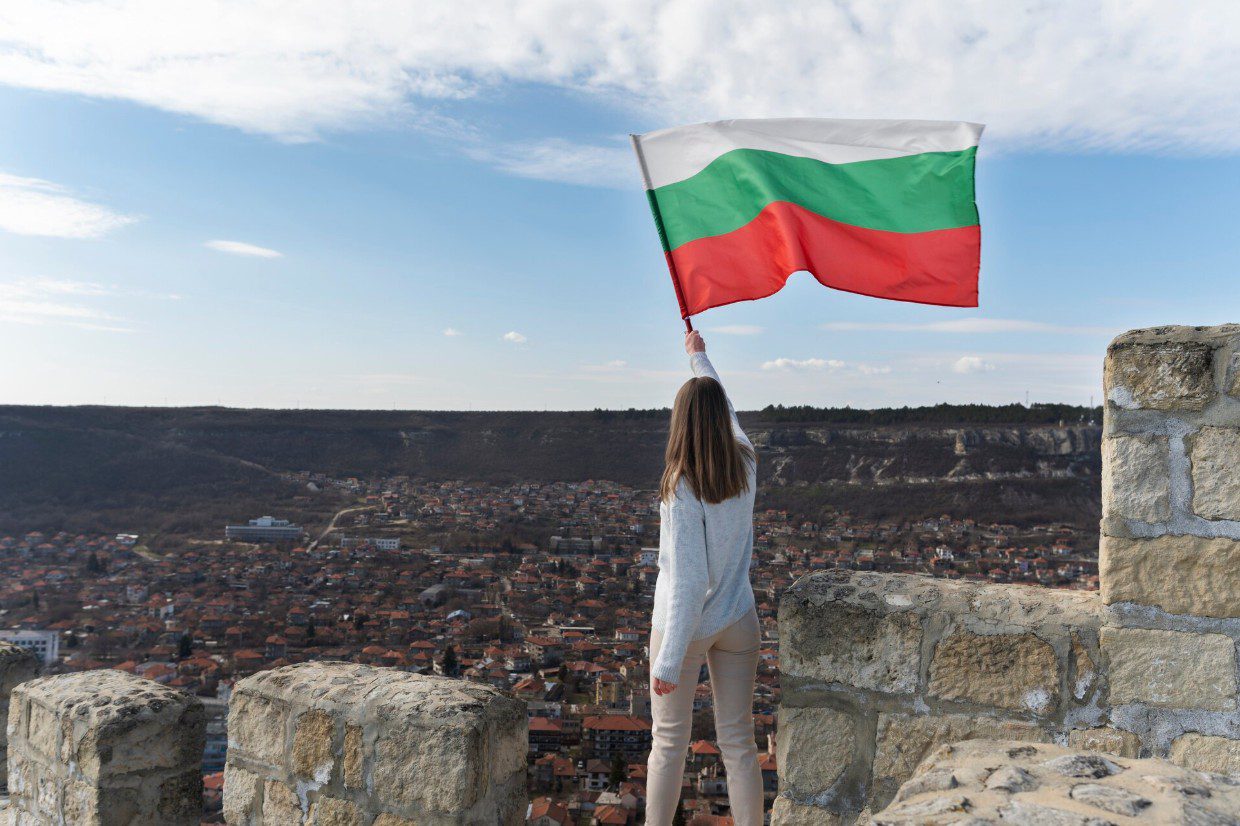
Golden-domed Orthodox cathedrals rise above Roman ruins, the Rila Mountains cradle glacial lakes that shimmer like scattered sapphires, and the Black Sea coast unfurls with ancient towns clinging to rocky peninsulas. Bulgaria packs a staggering diversity into a space smaller than Portugal, where the Balkan Mountains, the Danube River, and the Thracian plains converge in a landscape that feels like a living history book.
You can drive from the capital to the Black Sea in about five hours, but the winding mountain passes and the sheer density of UNESCO sites mean you will want to take your time. Nature lovers, history buffs, and anyone seeking Europe’s most affordable and underrated destination will find exactly what they are looking for here.
The Most Beautiful Places in Bulgaria
Sofia
The gold and green domes of the Alexander Nevsky Cathedral dominate the skyline, and from the foot of Vitosha Mountain, the entire capital spreads out below you in a sprawling mosaic of Soviet-era blocks, Ottoman mosques, and Roman ruins.
Sofia is one of Europe’s oldest capitals, with a history stretching back over 7,000 years. The city sits beneath the shadow of Vitosha Mountain, and its streets are a palimpsest of civilizations — Roman foundations, Byzantine churches, Ottoman mosques, and Soviet monuments. The Alexander Nevsky Cathedral, one of the largest Eastern Orthodox cathedrals in the world, is the city’s most iconic landmark, with its green domes and golden details visible from across the city. The pedestrianized Vitosha Boulevard is Sofia’s main shopping street, lined with cafes, restaurants, and street musicians.
Visit the Alexander Nevsky Cathedral — entry is free, and the interior is adorned with stunning mosaics and marble. Stroll down Vitosha Boulevard for the city’s best people-watching. Explore the ancient Serdica ruins beneath the city center, and take the cable car up Vitosha Mountain for panoramic views over the capital. The city is compact and walkable, with a thriving cafe culture and excellent restaurants.
Honest note: Sofia is a city of contrasts — beautiful cathedrals sit alongside drab Soviet blocks, and the traffic can be chaotic. The summer heat can be intense, and the city’s gritty edges are still visible. Come in spring or autumn for the best experience.
(Best for: urban explorers and culture seekers)
Plovdiv
A 2,000-year-old Roman theatre still hosts performances today, and from the hills of the Old Town, you can see the entire city sprawl below — a place that has been continuously inhabited for over 8,000 years.
Plovdiv is one of the oldest continuously inhabited cities in Europe, predating Rome and Athens. The city’s Old Town is a maze of cobblestone streets lined with beautifully preserved Revival-era houses in soft pastels. The Ancient Theatre of Philippopolis, built in the 1st century AD, is one of the world’s best-preserved Roman theatres and can seat over 5,000 spectators. The Kapana district, Plovdiv’s historic creative quarter, is a warren of narrow streets filled with art galleries, artisan workshops, trendy cafes, and lively nightlife.
Walk through the Old Town and visit the Roman Theatre — it’s still used for concerts and festivals today. Explore the Kapana district for the city’s best shopping and dining. Climb one of Plovdiv’s hills — Nebet Tepe, Dzhambaz Tepe, or Taksim Tepe — for panoramic views over the city. The Regional Ethnographic Museum offers a glimpse into traditional Bulgarian life.
Honest note: Plovdiv is popular for a reason, and the Old Town can be crowded with tourists in summer. The hills are steep and require good walking shoes. The city is wonderful in spring and autumn when the weather is mild and the crowds are thinner.
(Best for: history lovers and culture seekers)
Rila Monastery
Black-and-white arched colonnades frame a colorful courtyard, and beyond the monastery walls, the Rila Mountains rise in a dramatic green wall that feels like the edge of the world.
Rila Monastery, founded in the 10th century by the hermit Saint John of Rila, is Bulgaria’s most famous cultural treasure and a UNESCO World Heritage site. The monastery complex is a masterpiece of Bulgarian Revival architecture, with its iconic black-and-white striped arches, colorful frescoes, and gold-covered iconostasis. The monastery was rebuilt in the 19th century after a fire, and its main church, the Nativity of the Virgin, is adorned with some of the finest frescoes in the Balkans. The monastery is nestled in the heart of the Rila Mountains, about two hours from Sofia.
Explore the monastery’s courtyard and the main church — the frescoes and the iconostasis are unmissable. Visit the monastery museum, which houses religious artifacts and manuscripts. Walk the nature trails around the monastery for views of the surrounding mountains. The grounds are open daily from around 6:30 AM to 7:00 PM.
Honest note: Rila Monastery is Bulgaria’s most popular tourist attraction, and in summer, the courtyard is packed with tour buses. Visit early in the morning — the gates open at 6:30 AM — for the best light and the fewest crowds. The monastery is a working religious site, so dress modestly.
(Best for: history lovers and photographers)
Seven Rila Lakes
Seven glacial lakes, each with its own distinct character and name, sit in a high-altitude cirque like a string of pearls, and the hike between them offers some of the most spectacular mountain views in the Balkans.
The Seven Rila Lakes are a group of glacial lakes nestled in the Rila Mountains, at an elevation of around 2,100 to 2,500 meters. Each lake is named after its most characteristic feature — the Kidney, the Eye, the Twin, and so on. The lakes are accessible via a cable car from the Panichishte Resort, which takes you up the mountain in about 20 minutes. The hike around the lakes is about 4 to 5 hours and covers roughly 8 miles of moderate terrain. The views of the surrounding peaks and the crystal-clear lakes are unforgettable.
Take the cable car from Panichishte — the ride offers spectacular views of the Rila Mountains. Hike the loop trail around the lakes — the trail is well-marked and suitable for moderately fit hikers. Bring a picnic and plenty of water, as there are no facilities at the lakes. The best time to visit is July to September when the snow has melted and the trails are clear.
Honest note: The cable car can have long queues in summer, and the hike is strenuous in places — wear good hiking boots and bring layers, as the weather can change rapidly at altitude. The lakes are a day trip from Sofia, about 90 minutes each way.
(Best for: hikers and nature lovers)
Veliko Tarnovo
The Tsarevets Fortress crowns a hill above a bend in the Yantra River, and at sunset, the sound and light show transforms the medieval walls into a canvas of color and history.
Veliko Tarnovo, the medieval capital of the Second Bulgarian Empire, is one of Bulgaria’s most dramatic cities. The city is built on steep hills above the Yantra River, and its narrow, winding streets are lined with Revival-era houses. The Tsarevets Fortress, the city’s centerpiece, was the primary fortress of the Second Bulgarian Empire between 1185 and 1393, housing the royal and patriarchal palaces. The fortress sits on a hill 206 meters above sea level. The city also features the Samovodska Charshia, a restored crafts street, and the Church of the Forty Martyrs.
Explore the Tsarevets Fortress — the walk through the fortress walls and the views over the Yantra River are spectacular. Visit the Royal Palace Complex, which includes the Throne Room and the Palace Church. Stay for the evening sound and light show — the fortress walls are illuminated with colored lights and music, telling the story of the city’s history. Wander the cobblestone streets of the old town and visit the crafts street for local souvenirs.
Honest note: Veliko Tarnovo is hilly — be prepared for steep climbs and lots of stairs. The fortress is the main attraction, but the city itself is charming and worth exploring. The sound and light show is seasonal and may not run every night, so check the schedule in advance.
(Best for: history lovers and photographers)
Nessebar
A narrow strip of land connects a rocky peninsula to the mainland, and on that peninsula, over 40 medieval churches crowd together among cobblestone streets and Black Sea views — a UNESCO treasure that feels like an open-air museum.
Nessebar, often called the “Pearl of the Black Sea,” is a UNESCO World Heritage site located on a rocky peninsula on the Bulgarian Black Sea coast. The town has a history spanning over 3,000 years, with roots in Thracian, Greek, Byzantine, and Bulgarian civilizations. The Old Town is a maze of narrow cobblestone streets, lined with traditional wooden houses and over 40 churches, many dating to the 5th to 14th centuries. The Church of Christ Pantokrator and the Church of Saint Stephen are among the best preserved. The town is also home to the Ancient Nessebar Archaeological Museum.
Wander the cobblestone streets of the Old Town — the atmosphere is romantic and historic. Visit the Church of Christ Pantokrator for its well-preserved medieval architecture. Walk along the waterfront for views of the Black Sea and the nearby islands. The Archaeological Museum offers context for the town’s long history. The town is small, and you can see the highlights in half a day.
Honest note: Nessebar is one of Bulgaria’s most popular tourist destinations, and in summer, the Old Town is packed with day-trippers from the nearby Sunny Beach resort. The churches are numerous but small, and many are closed to the public. The town is best visited in spring or autumn for thinner crowds.
(Best for: history lovers and photographers)
Bansko and Pirin National Park
Snow-capped peaks rise above a traditional Bulgarian town, and in summer, the same slopes that draw skiers in winter become a hiker’s paradise with alpine lakes, wildflowers, and UNESCO-listed wilderness.
Bansko is Bulgaria’s largest ski resort, but it’s also a year-round destination. The town has a well-preserved old quarter with traditional Bulgarian houses, cobblestone streets, and a 19th-century church. Just outside town lies Pirin National Park, a UNESCO World Heritage site, known for its dramatic peaks, glacial lakes, and diverse wildlife. The park covers over 40,000 hectares and is home to the Banderishki Lakes, a group of glacial lakes at high altitude. The Vihren Hut is the starting point for many of the park’s classic hikes.
In summer, hike the trails in Pirin National Park — the route from Vihren Hut to the Banderishki Lakes takes about 3.5 hours each way and offers spectacular views. Explore Bansko’s old quarter for its traditional architecture and local crafts. In winter, the town is a ski destination with slopes for all levels. The park is accessible from Bansko, which is about 15 minutes from the parking area.
Honest note: Bansko is a ski town, and in winter, it’s crowded and expensive. In summer, the town is quieter, and the hiking is excellent, but the weather in the mountains can be unpredictable. The hike to the Banderishki Lakes is moderately strenuous — bring proper gear and layers.
(Best for: hikers and winter sports enthusiasts)
Belogradchik Rocks and Fortress
Massive sandstone and limestone formations, sculpted by nature over 200 million years, rise like giant stone sentinels above the town, and a Roman fortress is built right into the rocks themselves.
The Belogradchik Rocks are a natural phenomenon covering an area of about 30 kilometers in length and 6-7 kilometers in width. The rocks were formed over 200 million years ago by natural forces, creating bizarre shapes that have inspired local legends for centuries. The Belogradchik Fortress, also known as Kaleto, was built by the Romans in the 1st to 3rd centuries AD and later used by Bulgarians and Ottomans. The fortress has three yards and covers an area of over 10,000 square meters. The rocks and the fortress together create one of Bulgaria’s most dramatic landscapes.
Walk the trails through the Belogradchik Rocks — the formations are best seen from the fortress walls. Explore the Belogradchik Fortress — the views from the fortress over the rocks and the surrounding countryside are spectacular. The fortress has three separate yards, each with its own defensive features. The site is a popular day trip from Sofia, about a three-hour drive each way.
Honest note: The Belogradchik Rocks are impressive but require a dedicated trip — the drive from Sofia is long. The fortress is well-preserved, but the site is not well-signposted in places. Wear good walking shoes, as the terrain is rocky and uneven. The best time to visit is late afternoon for the golden light on the rocks.
(Best for: photographers and nature lovers)
Shipka Memorial Church
A golden onion dome gleams above the Balkan Mountains, and inside, the walls are covered in intricate frescoes that tell the story of the Russo-Turkish War and the liberation of Bulgaria.
The Shipka Memorial Church, officially the Memorial Temple of the Birth of Christ, was built between 1885 and 1902 in the 17th-century Russian style. The church is dedicated to the Russian, Ukrainian, and Bulgarian soldiers who died in the Russo-Turkish War of 1877-78. The church is located near the town of Shipka in the Stara Planina mountain range, and its golden onion dome is visible from miles away. The bell tower next to the church is 53 meters high and houses a 12-ton bell. The church is a popular destination for both pilgrims and tourists.
Visit the church and explore its interior — the frescoes are stunning and depict scenes from the war. Climb the bell tower for panoramic views over the Shipka Pass and the surrounding mountains. The church is located in a picturesque setting, and the views from the pass are spectacular. The site is a popular stop on the route between Veliko Tarnovo and the Rose Valley.
Honest note: The church is beautiful but small — you can see the interior in about 30 minutes. The climb to the bell tower is steep but worth it for the views. The church is a popular stop for tour groups, so visit early or late to avoid the crowds.
(Best for: history lovers and architecture enthusiasts)
Buzludzha Monument
A crumbling concrete UFO sits abandoned on a mountain peak, a futuristic relic of a communist past that has become one of the most photographed abandoned buildings in the world.
The Buzludzha Monument, officially the House-Monument of the Bulgarian Communist Party, was built on Buzludzha Peak in central Bulgaria and inaugurated in 1981. The monument was built to commemorate the events of 1891, when socialists led by Dimitar Blagoev assembled secretly in the area. The structure is a concrete saucer with a massive mosaic on its facade, depicting communist symbols and heroes. The building has been abandoned since 1990, when the communist regime fell, and it has been left to crumble ever since. The site has become a magnet for urban explorers and photographers.
Visit the monument — the exterior is the main attraction, and the views from the peak over the surrounding mountains are spectacular. The interior is partially collapsed and dangerous, but you can peek through the broken windows to see the remains of the mosaics. The site is accessible by car, but the road is rough and unpaved in places. The monument is a popular stop on tours of the region.
Honest note: Buzludzha is abandoned and dangerous — the interior is not safe to enter, and the building is slowly collapsing. The site is not a tourist attraction in the traditional sense, and there are no facilities. The road to the monument is rough, and a 4×4 is recommended. The best time to visit is early morning for the best light and fewest people.
(Best for: photographers and urban explorers)
The Rhodope Mountains
Dense forests, crystal-clear streams, and traditional stone villages are tucked into the folds of the Rhodope Mountains, a region that feels like it has been frozen in time.
The Rhodope Mountains are one of Bulgaria’s most beautiful and unspoiled regions, stretching across the southern part of the country. The mountains are dotted with traditional villages like Shiroka Laka, Gela, and Trigrad, where stone houses and cobblestone streets create an atmosphere that feels like stepping back in time. The region is known for its pristine forests, hiking trails, and unique karst formations, including the Devil’s Throat Cave and the Trigrad Gorge. The highest peak, Golyam Perelik, rises to 2,191 meters.
Visit the village of Shiroka Laka for its traditional architecture and laid-back atmosphere. Hike the trails through the mountains — the routes range from easy walks to challenging ascents. Explore the Devil’s Throat Cave, a spectacular cave with a 42-meter waterfall that rushes down its “throat”. The villages are a great place to try traditional Bulgarian cuisine and experience local hospitality.
Honest note: The Rhodope Mountains are remote and require a car to explore. The roads are winding and can be in poor condition, especially in the more remote areas. The villages are small and basic — don’t expect luxury. The best time to visit is summer for hiking, but spring and autumn offer beautiful colors and fewer crowds.
(Best for: hikers and offbeat explorers)
Devil’s Throat Cave
A massive cave entrance shaped like a devil’s head yawns above the Trigrad Gorge, and inside, a 42-meter waterfall roars into the darkness — a place that has inspired legends of the underworld for centuries.
Devil’s Throat Cave, or Dyavolsko Garlo, is located in the western Rhodope Mountains near the village of Gyovren. The cave is named for the shape of its entrance, which resembles a devil’s head. Inside the cave, the water from the Trigrad River falls from a height of 42 meters, creating one of the highest underground waterfalls in Europe. The cave is a popular tourist attraction and has been associated with legends of the underworld and the gateway to Hades. The cave is accessible via a well-lit path, and the waterfall is visible from a viewing platform.
Walk the path into the cave — the sound of the waterfall is overwhelming. The viewing platform offers a spectacular view of the 42-meter cascade. The cave is part of a complex that includes a museum and a small restaurant. The site is a popular day trip from the nearby town of Devin, about 17 kilometers away.
Honest note: Devil’s Throat Cave is a short visit — you can see the main chamber in about 30 minutes. The cave is well-lit but can be slippery — wear good shoes. The waterfall is impressive but seasonal; the flow is strongest in spring. The cave can be crowded in summer, so visit early or late in the day.
(Best for: nature lovers and adventurers)
The Rose Valley
Fields of fragrant roses stretch across the valley floor between the Balkan and Sredna Gora mountains, and every summer, the Rose Festival brings thousands of visitors to celebrate Bulgaria’s most famous export.
The Rose Valley is a region in central Bulgaria, centered on the towns of Kazanlak and Karlovo, where the Bulgarian rose has been cultivated for centuries. The region produces over 70% of the world’s rose oil, a key ingredient in perfumes. The Rose Festival, held annually in late May to mid-June, is the region’s biggest event, featuring a rose-picking ritual, a street parade, and traditional music and dance. The Thracian Tomb of Kazanlak, a UNESCO World Heritage site, is also located in the valley, a 4th-century BC tomb with well-preserved frescoes.
Visit the rose fields during the bloom season — the sight and smell are unforgettable. Attend the Rose Festival if you’re visiting in early June — the parade and the rose-picking ritual are the highlights. Visit the Thracian Tomb of Kazanlak — the frescoes are Bulgaria’s best-preserved artistic masterpieces from the Hellenistic period. The Ethnographic Complex Damascena offers a deeper dive into the region’s rose oil production.
Honest note: The rose fields are only in bloom for a few weeks in late May and early June — outside this period, the valley is just a green agricultural area. The Thracian Tomb is small and requires a ticket; entry is limited to protect the frescoes. The Rose Festival is crowded and touristy, but it’s also a lot of fun.
(Best for: photographers and culture lovers)
Sozopol
Cobblestone streets wind between wooden houses painted in soft pastels, and the Black Sea laps against the rocky shores of a peninsula that has been inhabited for over 2,500 years.
Sozopol is one of the oldest towns on the Bulgarian Black Sea coast, with roots dating back to the 4th century BC. The Old Town, located on a small peninsula, has been declared an archaeological reserve. The town is known for its almost 200 traditional Revival-era houses, with stone first stories and wooden upper stories. The cobblestone streets are lined with boutique shops, cafes, and art galleries. The town also has several small churches and a fortress wall. Sozopol is a popular summer destination, but it retains a romantic, laid-back atmosphere.
Wander the cobblestone streets of the Old Town — the atmosphere is charming and romantic. Visit the Archaeological Museum for context on the town’s long history. Walk along the waterfront for views of the Black Sea and the nearby islands of St. Ivan and St. Kirik. The town has a vibrant arts scene, with many galleries and studios. The beaches are pebbly but clean, and the water is clear.
Honest note: Sozopol is a popular summer destination, and in July and August, the Old Town is packed with tourists. The beaches are small and can be crowded. The town is at its best in May-June and September-October, when the weather is warm and the crowds are thinner. The Old Town is hilly and requires good walking shoes.
(Best for: beach lovers and romantics)
Varna
A wide seaside promenade stretches along the Black Sea, and beyond the beaches, the city’s Sea Garden — one of the oldest public parks in Bulgaria — offers a green escape from the summer heat.
Varna is Bulgaria’s third-largest city and the largest city on the Black Sea coast. The city is a vibrant port town with a long seaside promenade, wide sandy beaches, and a lively cultural scene. The Sea Garden is the city’s most famous landmark — a sprawling public park that stretches along the coast, with tree-lined avenues, sculptures, and a promenade. The Varna Archaeological Museum houses the famous Varna Gold Treasure, the oldest gold treasure in the world, dating to the 5th millennium BC. The city also has a cathedral, a Roman baths complex, and a naval museum.
Stroll through the Sea Garden — the park is beautiful and offers great views of the Black Sea. Visit the Varna Archaeological Museum to see the Gold Treasure. Relax on the beach — the Golden Sands resort, just north of the city, has a 4-kilometer stretch of fine sand. The Dormition of the Mother of God Cathedral is also worth a visit. The city is a great base for exploring the Bulgarian Black Sea coast.
Honest note: Varna is a functional city and a beach resort — it’s busy, noisy, and very developed. The beaches in town are crowded in summer. The city is best as a base for exploring the coast, not as a destination in itself. The summer heat is intense; spring and autumn are much more pleasant.
(Best for: beach travelers and culture seekers)
Tips for Visiting Bulgaria
Getting around: A rental car is strongly recommended for exploring the mountains and the more remote regions. The main cities are connected by bus and train, but a car gives you the freedom to stop at viewpoints and explore the smaller towns. The roads in the mountains can be winding and in poor condition, so drive carefully. The train from Sofia to Plovdiv is scenic and comfortable.
How many days: Ten to fourteen days will cover the highlights comfortably — three for Sofia and its surrounds (Rila Monastery, Seven Rila Lakes), two for Plovdiv, two for Veliko Tarnovo and the central region, and the rest for the coast and the mountains. Seven days is a minimum for a condensed itinerary focused on Sofia, Plovdiv, and the Rila Mountains.
Best time to visit: May-June and September-October are ideal — the weather is warm but not hot, the crowds are thinner, and the landscapes are green or golden. Summer (July-August) is good for the coast and the mountains, but the coast is crowded and expensive, and the inland cities are hot. Winter is for skiing in Bansko and the other resorts.
Where to base: Sofia for the central and western regions, Plovdiv for the south, Veliko Tarnovo for the north, and Varna or Burgas for the Black Sea coast. Don’t try to do the coast and the mountains from one base — the distances are deceptive, and the roads are slow.
Insider tip: The Rila Monastery and the Seven Rila Lakes are both in the Rila Mountains and can be combined in one long day trip from Sofia, but it’s a very full day — better to do them separately. The Bulgarian rose oil is a unique souvenir — buy it from a reputable source in the Rose Valley. The local cuisine, especially the banitsa (cheese pastry) and the grilled meats, is excellent and very affordable.
Frequently Asked Questions
What is the most beautiful place in Bulgaria? The Rila Monastery and the Seven Rila Lakes are neck-and-neck for most visitors — the monastery is a cultural treasure, and the lakes are a natural wonder. But Plovdiv’s Old Town and the Belogradchik Rocks are close contenders.
What are the must-see places in Bulgaria for first-time visitors? First-timers should prioritize Sofia, Rila Monastery, Plovdiv, and Veliko Tarnovo. These four give you the full range of Bulgaria’s urban, historical, and natural beauty. If you have more time, add the Black Sea coast and the Rhodope Mountains.
How many days do you need to see the best of Bulgaria? A minimum of seven days — two for Sofia and the Rila Mountains, two for Plovdiv, and three for Veliko Tarnovo and the Black Sea coast. With ten days, you can add the Rhodope Mountains and the Rose Valley without rushing.
What is the prettiest town in Bulgaria? Nessebar is often called the prettiest — its cobblestone streets, medieval churches, and Black Sea setting make it a photographer’s dream. But Sozopol’s Old Town and Plovdiv’s Revival-era houses are close contenders.
Is Bulgaria safe for solo travelers? Yes, Bulgaria is very safe for solo travelers. Crime against tourists is low, and locals are generally hospitable. The main risks are road conditions and hiking safety — plan accordingly, and avoid driving mountain roads at night. Public transport is reliable and affordable.
Bulgaria rewards travelers who embrace its unpolished edges — the Soviet-era architecture alongside the Ottoman mosques, the chaotic roads, the unpredictable weather, and the sometimes overwhelming summer heat. The cities are fascinating, the mountains are wild, and the coast is beautiful. If you’re the type who’d rather explore a medieval fortress than lounge on a beach, you’ll get the most out of this small but diverse country.
 admin
admin