

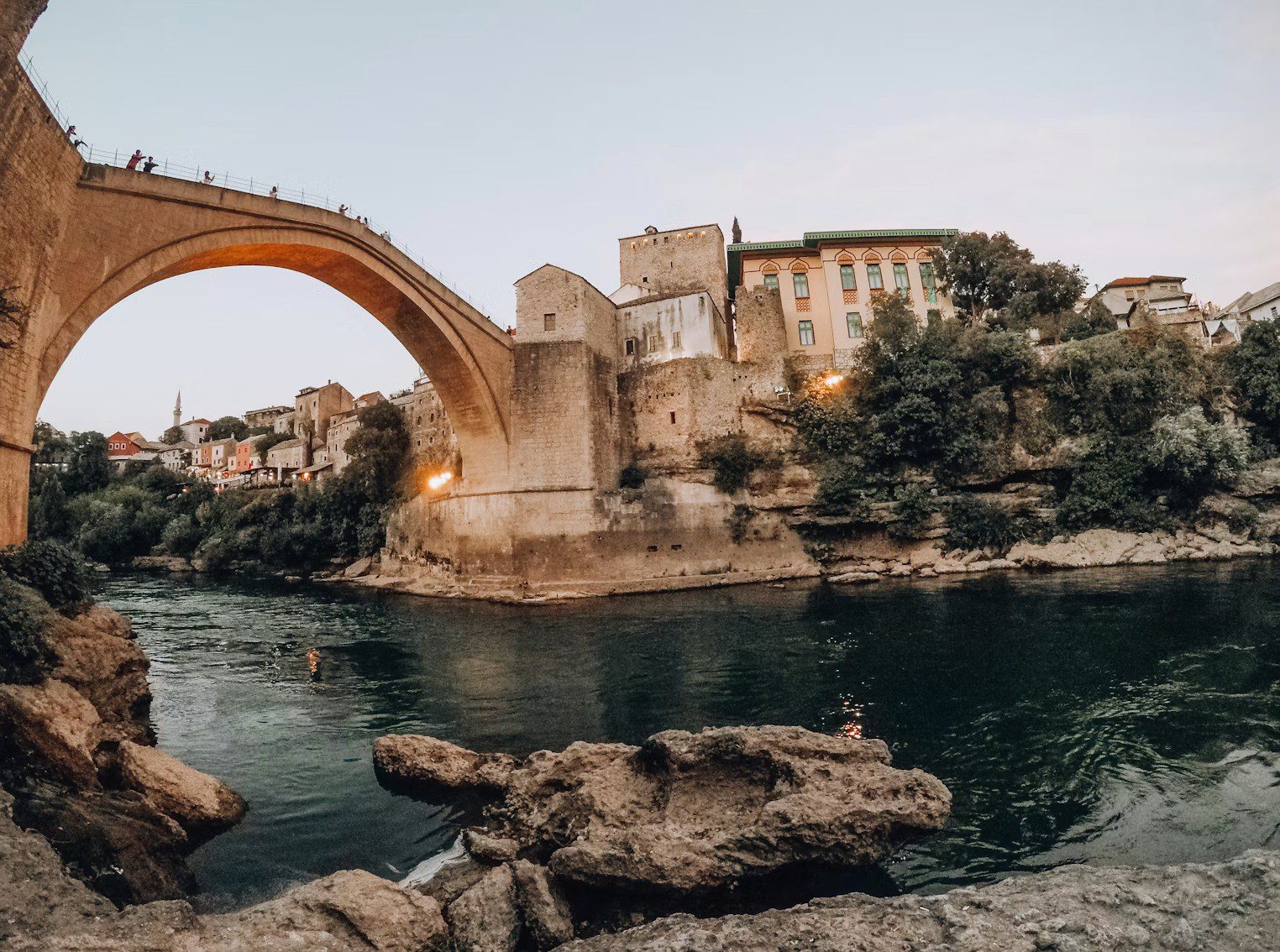
The best time to visit Bosnia and Herzegovina depends on what you are after. For hiking in the Dinaric Alps and exploring Mostar without the heat, May or September are your months. For white-water rafting and festival energy, July and August deliver. If you want snow-covered Olympic mountains for skiing, January and February are prime. Here is the full breakdown.
Bosnia and Herzegovina’s seasonality is unique because of its dramatic topography. You have a Mediterranean influence in the south around Mostar and Neum, a continental climate in the north, and alpine conditions in the Dinaric Alps. The temperature difference between the Neretva Valley and the high mountain peaks can exceed 20°C on the same day.
Bosnia and Herzegovina by Month — Quick Overview
- January: Cold (Sarajevo -6°C to 1°C), low crowds, low prices. Best for skiing on Jahorina and exploring Sarajevo’s winter atmosphere.
- February: Cold (Sarajevo -4°C to 4°C), low crowds. Best for winter sports and clearer skies for mountain views.
- March: Transitional (Sarajevo -1°C to 8°C), low crowds. Best for the Sarajevo Winter Festival and snowshoeing; snow still on higher slopes.
- April: Mild (Sarajevo 3°C to 13°C), moderate crowds. Best for powerful waterfalls and blooming fruit trees in the Neretva Valley.
- May: Warm (Sarajevo 7°C to 18°C), increasing crowds. Best for hiking in Sutjeska National Park and exploring without summer heat.
- June: Warm (Sarajevo 10°C to 21°C), moderate crowds. Best for white-water rafting on the Una or Neretva rivers and long daylight hours.
- July: Peak heat (Sarajevo 11°C to 24°C, Mostar 35°C+), peak crowds, high prices. Best for the Old Bridge Dives in Mostar and river activities.
- August: Peak heat (Mostar 35°C+), peak crowds, highest prices. Best for the Sarajevo Film Festival and swimming in the Neretva; hottest month overall.
- September: Comfortable (Sarajevo 8°C to 20°C), lower crowds. Best for hiking, vineyard visits in Herzegovina, and the grape harvest.
- October: Mild (Sarajevo 4°C to 15°C), low crowds. Best for autumn colours, photography, and the MESS International Theater Festival.
- November: Cool (Sarajevo 0°C to 8°C), low crowds, low prices. Best for museum visits and experiencing local cuisine in Sarajevo; rainiest month.
- December: Cold (Sarajevo -4°C to 2°C), low crowds. Best for Sarajevo Holiday Market and early ski season on Bjelašnica.
Peak Season (July–August): Crowds, Heat, and High Prices
Peak season in Bosnia and Herzegovina arrives with July and August. The weather varies dramatically by region. Sarajevo stays relatively comfortable at 24°C to 27°C during the day. Mostar, however, is famously one of the hottest cities in Europe, with temperatures frequently soaring past 35°C and occasionally hitting 40°C. The Neretva Valley bakes under the sun, making midday sightseeing a real test of endurance.
Crowds are at their maximum. Mostar’s iconic Stari Most bridge is packed with tourists, and the narrow cobblestone streets of Sarajevo’s Baščaršija district fill up quickly. August brings the Sarajevo Film Festival, which draws international visitors and creates a vibrant, lively atmosphere throughout the capital.
Prices spike significantly during this period. Accommodation in Sarajevo and Mostar often doubles compared to shoulder season rates. The upside is that everything is open and operating at full capacity. River rafting tours on the Una and Neretva run daily, and the Old Bridge Dives in Mostar take place in July. For festival-goers and travelers who don’t mind the heat, this season delivers maximum energy.
Shoulder Season (May–June and September–October): The Sweet Spot
May and June
May and June are arguably the best months for a first-time visitor. The weather is warm but not yet uncomfortable. Sarajevo sees daytime temperatures ranging from 18°C to 21°C, while Mostar is warmer but still manageable. This is when the country is at its greenest. The waterfalls, including Kravice and Štrbački Buk, are at their most powerful from snowmelt.
Crowds are moderate. You can explore Baščaršija and Stari Most without the peak-season crush. Accommodation prices remain reasonable, and you can book tours at short notice. The major advantage is accessibility. Mountain roads in Sutjeska National Park are open, and the hiking conditions are excellent with mild temperatures. This period suits couples, hikers, and anyone who wants to explore without the summer heat.
September and October
September is a golden month. The intense summer heat has broken, leaving comfortable 20°C to 24°C days. The ancient beech forests of the Dinaric Alps shift into autumn colours, creating spectacular scenery for hiking and photography. For many travelers, this is the single best window to visit Bosnia and Herzegovina.
October is equally special for different reasons. The grape harvest takes place in the Herzegovina wine region, where you can taste indigenous Blatina and Žilavka grapes. The MESS International Theater Festival in Sarajevo brings cutting-edge performances to the capital. The autumn colours deepen into reds and oranges, and the temperatures remain mild at 15°C to 18°C. The one limitation is that mountain temperatures begin to drop quickly, and some higher-altitude trails become less accessible by late October.
Off Season (November–March): Quiet, Cheap, and Underrated
Winter from November to March is a completely different experience. The tourist infrastructure slows down significantly. Many guesthouses in rural areas close for the season, and the waterfalls lose their summer crowds. This is the best time to visit Bosnia and Herzegovina for budget travelers. Accommodation prices drop by 30-50%, and you can often book on arrival.
Who should consider visiting in the off-season? Skiers and snowboarders will find excellent conditions on Jahorina, Bjelašnica, and Igman, the mountains that hosted the 1984 Winter Olympics. February is particularly good, with more sunshine and clear views from the peaks. For city lovers, Sarajevo offers a cozy winter atmosphere with the Holiday Market in December and January serving mulled wine and local crafts.
One honest limitation is the weather. November is the wettest month, with frequent rain and overcast skies. Snow can close mountain passes, making travel between regions difficult. However, the upside is cultural immersion. The Sarajevo Winter Festival runs through March, offering a final burst of arts before the spring. Winter is also the best time to enjoy traditional Bosnian coffee culture in Baščaršija without the summer crowds.
Best Time to Visit Bosnia and Herzegovina Based on What You Want
For Hiking and Nature
Best months: May, June, September. These months offer comfortable temperatures for trekking in Sutjeska and the Dinaric Alps. Spring brings wildflowers and powerful waterfalls, while autumn delivers spectacular colours with mild conditions.
For Sightseeing and History
Best months: April, May, September, October. The UNESCO cities of Mostar and the old town of Sarajevo are best explored without summer heat. These shoulder months keep the weather pleasant and the crowds manageable.
For Festivals and Events
Best months: July, August. The Sarajevo Film Festival in August and the Old Bridge Dives in July are the country’s premier cultural events. August also has the most sunshine and warmest weather for outdoor activities.
For Budget Travelers
Best months: November, December, March. Tourist numbers are at their lowest, and accommodation prices drop significantly. Sarajevo still offers plenty of cultural experiences and a lively atmosphere.
For Avoiding Crowds
Best months: May, October. You get shoulder season weather with low-season crowd levels. May has the advantage of spring greenery, while October offers autumn colours and wine harvests.
For Skiing and Winter Sports
Best months: January, February. Jahorina and Bjelašnica have reliable snow cover. February typically offers the clearest skies and best visibility for mountain views.
A Few Things to Know Before You Book
Your booking strategy should align with the season. For peak travel in July and August, book accommodation at least 3-4 months in advance, especially in Sarajevo and Mostar. For the shoulder seasons of May, June, September, and October, booking 4-6 weeks ahead is usually sufficient. During the off-season, you can often book on arrival.
Most Western passport holders can enter Bosnia and Herzegovina visa-free for up to 90 days, so there are no major visa timing constraints. However, it is important to check the dates for local holidays, as they can cause short-term spikes in activity and accommodation demand.
Road conditions in the mountains can be challenging in winter. The passes to higher-altitude regions can close due to snow. Always check the current weather and road status before driving if you are planning a winter visit. In summer, be prepared for the intense heat in Mostar and the Neretva Valley, and plan your sightseeing for early morning or late evening.
Frequently Asked Questions
What is the best month to visit Bosnia and Herzegovina overall? September is widely considered the best overall month for its comfortable temperatures, moderate crowds, and autumn colours. May is a close second for spring greenery and hiking conditions.
Is Bosnia and Herzegovina good to visit in October? Yes, October is a fantastic month for autumn colours, photography, the MESS International Theater Festival, and the grape harvest. The weather remains mild at 15-18°C, though mountain hiking may be limited by late month.
What is the rainy season in Bosnia and Herzegovina? November is the rainiest month, with frequent and sometimes heavy showers. Spring months also see significant rainfall, especially May and June.
Is Bosnia and Herzegovina worth visiting in winter? Yes, if you enjoy skiing on the Olympic mountains of Jahorina and Bjelašnica, budget city breaks in Sarajevo, or experiencing the cozy winter atmosphere of the Holiday Market without the crowds.
What is the hottest month in Bosnia and Herzegovina? August is typically the hottest month, with Mostar often exceeding 35°C and occasionally reaching 40°C.
Once you have picked your dates, check our Bosnia and Herzegovina travel tips to start planning the details.