

Kyrgyzstan isn’t as heavily documented as other destinations, so doing your homework beforehand makes sense. This guide covers the practical stuff that actually matters — visas, transport, costs, and cultural quirks — so you can spend less time figuring things out and more time enjoying your trip. What makes Kyrgyzstan different from more tourist-heavy destinations is its raw, untamed character. Over 90% of the country sits above 1,500 meters, and the nomadic lifestyle isn’t a tourist performance — it’s everyday life. You’ll find traditional yurt camps, horseback riders herding sheep, and a pace of life that feels untouched by modern tourism.
Kyrgyzstan at a Glance
- Capital: Bishkek
- Currency: Kyrgyzstani Som (KGS)
- Language: Kyrgyz (official), Russian widely spoken
- English spoken? Limited, especially outside the capital
- Visa required? Visa-free for citizens of over 60 countries, including US, UK, EU, and Australia
- Best time to visit: June to September — hiking season is short
- Typical trip length: 5–7 days for highlights, longer if trekking
- Time zone: UTC+6
- Power socket: Type C and F (220V, 50Hz)
- Tipping culture: Not expected, but rounding up is appreciated; service charge is often included
- Emergency number: 102 (police), 103 (medical), 112 (general)
Things to Sort Before You Land in Kyrgyzstan
Visa requirements are straightforward for many travelers. Citizens of the US, UK, EU, Canada, Australia, and over 60 other countries can enter visa-free for up to 30 to 60 days. If your country isn’t on the visa-free list, you can apply for an e-Visa online through the official Kyrgyzstan e-visa portal. Your passport should be valid for at least six months from your arrival date.
Travel insurance is strongly recommended. Healthcare facilities are limited outside Bishkek and Osh, and evacuation from remote mountain areas can be expensive if you need it. If you’re planning trekking or horse riding, make sure your policy covers adventure activities and altitude-related issues.
The local currency is the Kyrgyzstani Som (KGS). Cash is essential — card payments are accepted in some hotels and restaurants in Bishkek and Osh, but in rural areas, cash is king. ATMs are available in major cities, but you’ll struggle to find them in remote mountain villages. Money changers often offer better rates than ATMs, so it’s worth comparing.
For connectivity, local SIM cards are cheap and easy to get at the airport or in town. Operators include Beeline, Megacom, and O!, with a tourist SIM costing around $5–8 for a 30-day package. Coverage can be patchy in the mountains, so download offline maps before heading out.
Getting Around Kyrgyzstan: What First-Timers Need to Know
Marshrutkas — shared minibuses — are the cheapest and most common way to travel between cities and towns. They’re affordable but can be cramped, and they don’t run on fixed schedules. On longer routes, you pay the driver before departure; on shorter city routes, you pay when you get off.
Yandex Go is the ride-hailing app used across Kyrgyzstan, offering reliable taxi services in Bishkek, Osh, Karakol, and other major cities. It’s widely used by locals and travelers alike. You can also use the app for food delivery and scooter rentals. Taxis within Bishkek are affordable, costing around $2–4 per ride.
Renting a car gives you the most flexibility, especially if you want to reach remote national parks. However, roads can be rough, signage is limited, and driving can be intense — expect aggressive drivers, honking, and potholes. If you’re heading to the mountains, consider an SUV, and always carry a spare tyre.
Hitchhiking is common in Kyrgyzstan, but it’s not free — drivers typically expect you to pay a similar fare to what you’d pay for a marshrutka.
One honest note: public transport in rural areas can be unpredictable, and not all routes appear on apps. Patience and flexibility are essential when traveling outside the main cities.
Money in Kyrgyzstan: Budget, Costs, and Payment Tips
Kyrgyzstan is a cheap travel destination. Backpackers can expect to spend around $30–40 per day, including a hostel dorm, meals, and local transport. A week’s trip for a solo hostel traveler costs roughly $248. For a more comfortable trip with guesthouses and better meals, budget around €40–60 per day.
What’s surprisingly cheap: local meals ($3–6), street food, and marshrutka rides ($3–8 for longer intercity routes). What costs more than expected: imported goods, accommodation in Bishkek, and guided day tours ($20–40 per person).
ATMs are available in Bishkek and Osh but may charge withdrawal fees. Use ATMs inside banks or shopping malls to avoid skimming. Check for a 10-15% service charge on restaurant bills before leaving a tip — it’s required by Kyrgyz law and often included.
One money mistake first-timers commonly make: assuming cards are accepted everywhere. In remote villages, mountain yurt camps, and local markets, cash is the only option. Carry a mix of denominations — small bills are useful for marshrutkas and markets.
Culture and Etiquette: What to Know Before You Go
Hospitality is sacred in Kyrgyzstan — guests are treated with deep respect. If you’re invited into a yurt or home, accept the offer politely, and try whatever is served. It’s considered rude to refuse food or drink.
Greetings are usually a handshake, and elders are shown respect. Remove your shoes before entering a home or yurt, and avoid pointing your feet toward others — it’s considered disrespectful.
While Bishkek is modern and liberal, rural areas are more conservative. Pack modest clothing for rural excursions — cover your shoulders and knees. When visiting mosques, remove your shoes and dress respectfully. Women may be expected to cover their hair in some religious sites, so it’s wise to carry a scarf.
One cultural misunderstanding tourists commonly make: showing too much skin in villages. Western dress codes don’t apply in rural areas, and dressing modestly is a sign of respect.
What locals appreciate that tourists rarely do: learning a few words of Russian or Kyrgyz. Russian is more useful in cities, while Kyrgyz dominates in villages. A simple “salam” (hello) or “rahmat” (thank you) goes a long way.
Food in Kyrgyzstan: What to Try and What to Skip
Kyrgyz cuisine is simple, hearty, and influenced by nomadic traditions. Must-try dishes include:
- Lagman — hand-pulled noodles in a savory broth with meat and vegetables
- Plov — rice cooked with carrots, lamb, and spices, a Central Asian staple
- Manti — steamed dumplings filled with minced meat and onions
- Beshbarmak — the national dish: boiled meat served over noodles with broth, traditionally eaten by hand (the name means “five fingers”)
- Samsa — baked pastries filled with meat and onions, sold from clay ovens at markets
- Kymyz — fermented mare’s milk, the traditional nomadic drink (acquired taste, but worth trying once)
For vegetarians, it’s not the easiest destination — the diet is heavy on mutton, beef, and horse meat. Simple salads and vegetarian pizza are available in cities.
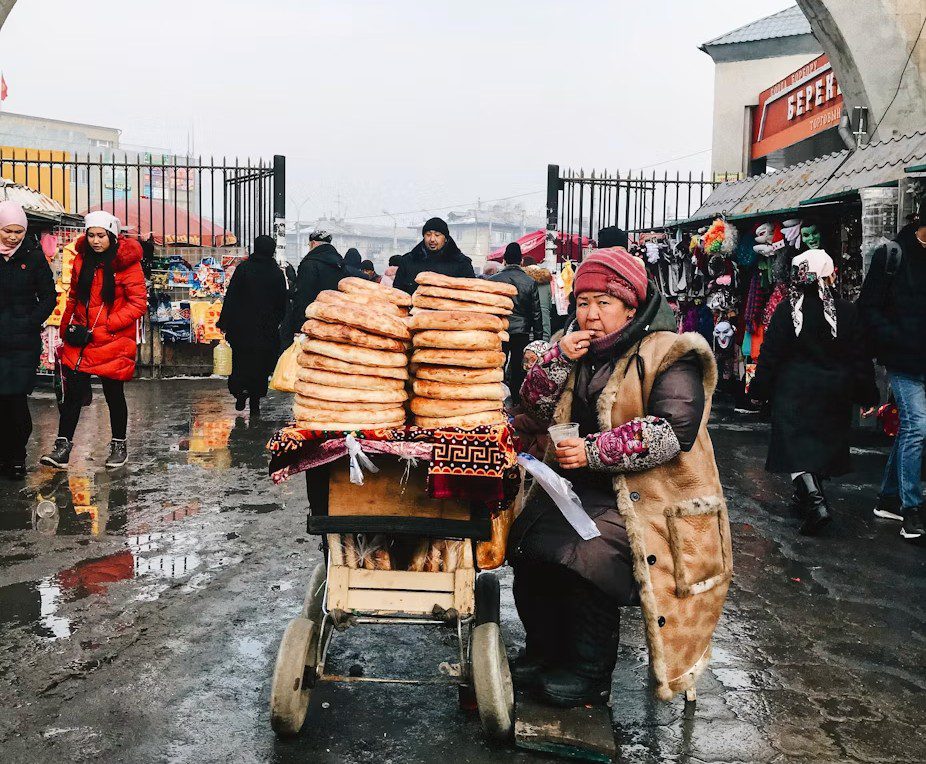
Where to eat cheaply without eating badly: look for small cafés and teahouses away from tourist spots. Street stalls and bazaars offer fresh samsa and bread at a fraction of restaurant prices. Avoid restaurants right on the main square — they often charge more for the same dishes you’ll find one street back.
Mistakes First-Time Visitors to Kyrgyzstan Make
- Not bringing enough cash. Cards are accepted in Bishkek, but rural areas and yurt camps are cash-only. You’ll need som for transport, markets, and village guesthouses.
- Underestimating the altitude and weather. The country is over 90% mountains — altitude sickness is a real risk, and weather can change rapidly. Pack layers and warm clothing even in summer.
- Thinking everyone speaks English. English is limited, especially outside Bishkek and tourist sites. Learn basic Russian phrases or use a translation app — it makes a big difference.
- Assuming you can rely on Yandex or Uber everywhere. Yandex Go works in Bishkek, Osh, Karakol, and other major cities, but in remote areas, you’ll need to use marshrutkas or hire private drivers.
- Not booking accommodation in advance in high season. July and August are peak months — yurt camps and guesthouses fill up quickly. Book at least a few weeks ahead.
- Forgetting about the service charge. Restaurants often include a 10-15% service charge on the bill — check before leaving an extra tip.
- Treating Kyrgyzstan as a destination to rush through. Distances are long, roads can be slow, and the best experiences take time. Minimum 7 days is recommended to see the highlights.
- Missing out on yurt camps. Staying in a yurt with a nomadic family is the most authentic experience — don’t skip it.
How Long Do You Need in Kyrgyzstan?
Minimum days: 4–5 days — enough for a day in Bishkek, a day trip to Ala Archa National Park, and 2 days at Issyk-Kul Lake.
Ideal trip length: 10–14 days — allows time for Bishkek, Karakol, Song-Kul Lake, a yurt stay, and the southern region around Osh.
What you can realistically do in 5 days: Day 1: Explore Bishkek and Ala-Too Square. Day 2: Hike in Ala Archa National Park. Day 3: Travel to Issyk-Kul Lake, visit Burana Tower en route. Day 4: Explore the southern shore of Issyk-Kul and Skazka Canyon. Day 5: Return to Bishkek or continue to Karakol.
With 10 days: Add Karakol, Jeti-Ögüz, a yurt stay at Song-Kul Lake, and a flight to Osh to explore the southern bazaars and the ancient city’s history.
For a full day-by-day itinerary, see our [Kyrgyzstan itinerary guide → internal link placeholder].
Frequently Asked Questions — First-Time Visitors to Kyrgyzstan
Is Kyrgyzstan easy to travel independently?
Yes, with some patience. Bishkek is easy to navigate with Yandex Go and marshrutkas. However, rural areas require flexibility — public transport doesn’t run on fixed schedules, and not all guesthouses appear on booking platforms. Many travelers join group tours for remote areas.
How much money do I need for a week in Kyrgyzstan?
Budget travelers can manage on around $250–$280 per week ($35–40 per day), including a hostel dorm, meals, and local transport. For mid-range travel with guesthouses and nicer meals, budget around €280–420 per week (€40–60 per day).
Do I need to know the local language in Kyrgyzstan?
Not in Bishkek — younger generations speak some English. In rural areas, Russian is more useful than English. Learning basic Russian phrases like “zdravstvuyte” (hello) and “spasibo” (thank you) will go a long way.
Do I need a visa for Kyrgyzstan?
Citizens of the US, UK, EU, Canada, Australia, and over 60 other countries can enter visa-free for up to 30–60 days. For others, an e-visa is available online.
Is it safe to travel to Kyrgyzstan?
Yes. Kyrgyzstan is considered safe for travelers, with low levels of crime and a strong hospitality culture. Solo travelers report feeling comfortable, though it’s wise to exercise caution at night in unfamiliar areas.
Kyrgyzstan rewards independent travelers who do a bit of research — especially those willing to embrace the unpredictable pace of life, learn a few phrases, and get off the beaten path. Most first-timers come away surprised by the genuine hospitality, the incredible landscapes, and how easy it is to connect with locals. If you’re still planning, check visa rules for your passport, book yurt stays in advance for summer, and pack layers — the mountains have their own weather regardless of the season.
 admin
admin