

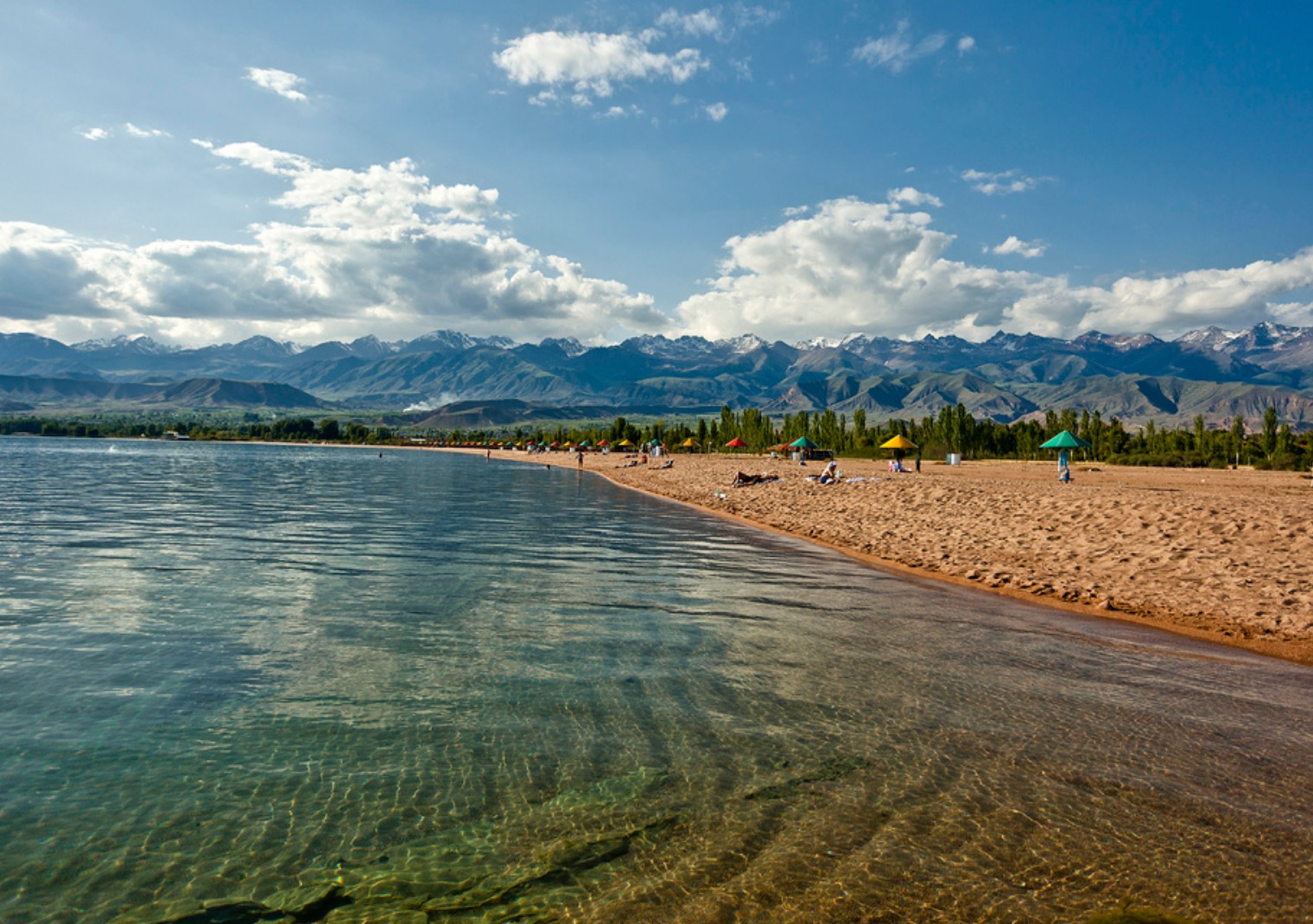
Yes, Kyrgyzstan is still a genuinely cheap country to visit in 2026, particularly if you travel independently between Bishkek, Issyk-Kul and Karakol, stay in hostels or locally run guesthouses and eat in ordinary cafés rather than relying on organized tours for every part of the trip. Local food, city buses, intercity marshrutkas and mobile data remain inexpensive enough that a traveler can spend surprisingly little on an ordinary day without deliberately trying to minimize every purchase.
The important exception is mountain travel. Kyrgyzstan’s most memorable destinations are often precisely the places that public transport does not reach: Song-Kul, Kel-Suu, remote valleys, high-altitude trailheads and seasonal yurt camps frequently require a 4×4 transfer, private driver, horse trek or organized tour. A day in Bishkek can therefore cost €30, while a guided mountain day or private off-road transfer can easily cost several times as much.
For most independent travelers, approximately €30–45 per person per day is a realistic budget range, while €55–85 provides a comfortable mid-range trip with private accommodation and regular restaurant meals. Travelers renting a 4×4, joining horse treks or visiting remote mountain regions should plan closer to €90–150 or more on active travel days. If you are still deciding how much of the country you can realistically cover, our guide to how many days you need in Kyrgyzstan compares practical 5, 7, 10 and 14-day itineraries.
How Much Does It Cost to Visit Kyrgyzstan in 2026?
The biggest mistake when estimating a Kyrgyzstan travel budget is treating every day as though it has the same cost. Urban days are extremely inexpensive, while remote mountain days can require transportation and activities that cost more than your accommodation, food and local transport combined.
- Budget traveler: approximately €30–45 per person per day.
- Mid-range traveler: approximately €55–85 per person per day.
- Comfortable traveler: approximately €100–160+ per person per day.
- Independent road-trip traveler: approximately €80–140+ per person per day when the car is shared.
- Mountain and horse-trekking days: commonly €100–180+ when tours, guides or private 4×4 transport are involved.
These estimates exclude international flights because airfare depends much more on your departure point than on travel costs within Kyrgyzstan itself. They also represent average trip spending rather than a requirement to spend exactly the same amount each day. A practical itinerary might include several €30 city days followed by one €120 excursion into the mountains.
How Much Does One Week in Kyrgyzstan Cost?
For seven days excluding international airfare, the following ranges provide a useful starting point:
- Budget trip: approximately €210–315 per person.
- Mid-range trip: approximately €385–595 per person.
- Comfortable trip: approximately €700–1,120+ per person.
A budget week could include Bishkek, Karakol and part of Issyk-Kul using hostels, local restaurants and marshrutkas. A mid-range itinerary allows private guesthouses, more taxis, museum visits and a selected excursion or transfer, while the comfortable range provides much more flexibility for a rental vehicle, yurt stays and mountain activities.
If Song-Kul, Ala-Kul, Kel-Suu or several horse treks are central to the trip, seven days can cost more than the basic national budget suggests because guided and remote logistics become a much larger part of the total.
What Currency Does Kyrgyzstan Use?
Kyrgyzstan uses the Kyrgyzstani som, abbreviated KGS. In late August 2026, the official National Bank exchange rate is approximately 102 KGS to €1, which makes quick calculations extremely simple.
- 100 KGS is approximately €1.
- 500 KGS is approximately €4.90.
- 1,000 KGS is approximately €9.80.
- 2,000 KGS is approximately €19.60.
- 5,000 KGS is approximately €49.
- 10,000 KGS is approximately €98.
Using 100 som as roughly one euro is accurate enough for everyday purchases and avoids constantly opening a currency-conversion app.
Is Kyrgyzstan Still Cheap in 2026?
Yes. Everyday local costs remain very low by European standards. A basic restaurant meal currently averages around 500 KGS nationally and around 500–600 KGS in Bishkek, while a three-course mid-range dinner for two is roughly 2,100–2,200 KGS. That translates to approximately €5 for a simple meal and about €21–22 for dinner for two.
A cappuccino averages around 190–210 KGS, or roughly €2, while a domestic draft beer is commonly around 120 KGS. These prices mean a traveler can eat in restaurants every day without making food the largest part of the travel budget.
The country’s low everyday costs become less representative once you begin buying tourism-specific products. Newer rental cars, private mountain drivers, organized treks and guided multi-day tours are priced for an international tourism market rather than ordinary local spending.
How Much Does Accommodation Cost in Kyrgyzstan?
Accommodation is inexpensive at the backpacker and guesthouse level, while conventional hotels in Bishkek are more expensive than many first-time visitors expect. Mountain accommodation works differently again because yurt camps often include meals and should not be compared directly with a city hotel room.
Useful planning ranges are:
- Hostel dorm bed: approximately €6–15 per person.
- Simple guesthouse or homestay: approximately €15–30 per room in many regional destinations.
- Budget private room: approximately €20–40 per room.
- Comfortable three-star hotel: approximately €35–55 per room in regional cities.
- Three-star hotel in Bishkek: approximately €50–55 per room on average.
- Four-star hotel in Bishkek: approximately €75–80 per room on average.
- Family yurt camp at Song-Kul: commonly around $15–25 per person including dinner and breakfast.
- Higher-comfort commercial yurt camp: commonly around $35–80 per person.
The lowest-cost accommodation is often found through hostels and locally run guesthouses rather than conventional hotels. The country has a strong homestay and community-based tourism network, particularly around Kochkor, Naryn, Karakol and mountain regions.
How Much Does Accommodation Cost in Bishkek?
Bishkek is inexpensive for backpackers but conventional hotel prices are closer to those of other Central Asian capitals. Current Booking.com data puts the average three-star hotel around $61–62 per night and a four-star property around $91, equivalent to roughly €52–53 and €78 at the current exchange rate.
That does not mean you need to spend €50 every night. Hostels, guesthouses and apartment-style properties frequently sit well below hotel averages, particularly outside the highest-rated central properties.
A practical budget is approximately €8–15 for a hostel dorm, €20–35 for a simple private room and €45–70 for a conventional comfortable hotel. Staying a little outside the center rarely creates a large transport penalty because Bishkek city buses cost only a few euro cents.
How Much Does Accommodation Cost in Karakol?
Karakol is one of the strongest value destinations in the country. Current hostel listings include dorm beds from roughly €5–10, while Booking.com places three-star hotels at approximately €36–37 per night and four-star accommodation at around €64.
The city also has numerous guesthouses catering specifically to hikers and outdoor travelers, often including breakfast and assistance with transport to trailheads.
Approximately €15–30 can therefore provide a good private guesthouse experience, while €35–55 is a useful range for conventional mid-range accommodation.
How Much Does Accommodation Cost Around Issyk-Kul?
Issyk-Kul has a broad accommodation market ranging from simple village guesthouses to larger lake resorts, and the north shore around Cholpon-Ata is generally more commercial and more expensive during July and August than quieter villages along the south shore.
Simple rooms and family guesthouses can still be found around €15–30, while resort-style accommodation can cost substantially more. Peak summer weekends create the strongest demand because Issyk-Kul is also an important domestic holiday destination.
Travelers whose priority is hiking, local culture and lower prices rather than beach-resort infrastructure can often find better value around the south shore and in smaller villages.
How Much Does a Yurt Stay Cost in Kyrgyzstan?
Yurt stays are one of the unusual cases where accommodation can look more expensive than a hostel while still representing excellent value because meals are commonly included.
At Song-Kul, family-run CBT-style camps currently charge approximately $15–25 per person per night, typically including a place to sleep, dinner and breakfast. More commercial camps with improved bedding, electricity and better bathroom facilities commonly cost around $35–80.
This means a simple Song-Kul yurt night can cost approximately €13–22 per person while simultaneously replacing two restaurant meals. The accommodation itself is therefore cheap; reaching the lake is usually the larger expense.
How Much Does Song-Kul Cost?
Song-Kul is a good example of why travel costs in Kyrgyzstan are determined by logistics rather than accommodation alone. The yurt stay itself can cost only $15–25 per person, but the lake sits above 3,000 meters and public transportation does not operate like an ordinary intercity bus route.
Current local travel information puts a private 4×4 transfer from Kochkor around 5,200 KGS per vehicle, which becomes much more affordable when divided among several travelers. Horse-trek packages that bundle guide services, meals, transport and yurt stays cost considerably more.
Official community-tourism packages for 2026 illustrate the difference. A three-day Song-Kul horse journey currently costs around $375 per person in June or September and $425 in July and August for groups of four or more.
The lesson is that Song-Kul can be either a €20 accommodation experience or a several-hundred-dollar organized adventure depending entirely on how you reach it.
How Much Does Food Cost in Kyrgyzstan?
Food remains one of the easiest categories to keep cheap. Current nationwide restaurant benchmarks are:
- Inexpensive restaurant meal: approximately 500 KGS.
- Three-course mid-range dinner for two: approximately 2,100 KGS.
- Fast-food style meal: approximately 500 KGS.
- Domestic draft beer: approximately 120 KGS.
- Cappuccino: approximately 190–200 KGS.
- Small bottled water in a restaurant: approximately 30 KGS.
A careful traveler can spend approximately €10–15 per person per day on food by mixing bakeries, local canteens and supermarkets. Around €15–25 provides regular restaurant meals without much concern about every price, while €30 or more allows more international restaurants, cafés and drinks.
How Much Does Food Cost in Bishkek?
Bishkek currently averages roughly 500–600 KGS for an inexpensive restaurant meal, while a mid-range dinner for two is around 2,200 KGS. Coffee sits at approximately 200 KGS.
This makes the capital cheap even when compared with many other cities in Central Asia. The difference between local and international restaurants is significant, however: trendy cafés, imported food, sushi and Western-style restaurants can cost several times more than lagman, plov, manty or a meal in an ordinary stolovaya.
A realistic Bishkek food budget is approximately €12–18 per person per day for budget travel and €20–30 for someone eating comfortably in restaurants throughout the day.
Cheap Kyrgyz Food to Try
Kyrgyzstan is particularly suitable for budget food travel because many of the meals worth trying are inexpensive local staples rather than premium tourism products.
- Lagman, hand-pulled noodles with meat and vegetables.
- Manty, steamed dumplings usually filled with meat and onion.
- Plov, especially in local canteens and markets.
- Samsa from bakeries and street-food stalls.
- Ashlan-fu in Karakol.
- Shorpo and other meat-based soups.
- Beshbarmak for a more traditional full meal.
- Boorsok served with tea or meals.
Markets and casual canteens are particularly useful for travelers who want to experience local food while spending less than they would in tourist-oriented restaurants.
How Cheap Is Public Transport in Bishkek?
Bishkek city transport is extremely cheap. From July 2026, the official fare is 17 KGS for standard buses and electric buses when paid cashlessly, while smaller minibuses cost 20 KGS. Cash payment on vehicles equipped with validators can also cost 20 KGS.
At the current exchange rate, 17 KGS is only around €0.17. Even taking four or five journeys in a day therefore adds less than €1 to the budget.
Ride-hailing is also inexpensive by international standards, although using taxis constantly will still cost many times more than the bus network.
How Much Does Bishkek Airport to the City Cost?
Express route No. 153 connects Bishkek with Manas International Airport. The current standard fare to the airport is 122 KGS when paid cashlessly, or approximately €1.20, making it one of the least expensive airport transfers in the region.
The route also has selected overnight departures introduced in late 2025, including services around midnight, 03:00 and 05:00, although schedules should still be checked close to arrival because transport operations can change.
A taxi is considerably more expensive but remains useful for several people sharing the ride, travelers arriving with large bags or accommodation far from the express route.
How Much Does Intercity Transport Cost?
Intercity marshrutkas and buses are exceptionally inexpensive relative to the distances involved. The trade-off is comfort and predictability rather than price: vehicles may leave according to schedule, when seats fill or under a mixture of both systems depending on the route.
Official transport schedules and current route listings provide useful examples:
- Bishkek to Karakol: roughly 400–450 KGS on many public minibus services.
- Bishkek to Balykchy: approximately 300 KGS on selected services.
- Bishkek to Bosteri: approximately 350 KGS on selected services.
- Bishkek to Kochkor: commonly around 250 KGS.
- Kochkor to Naryn: commonly around 200 KGS.
A journey of several hours can therefore cost only €3–5. For backpackers following the main tourism corridor, transportation is rarely the category that breaks the budget.
How Much Does Bishkek to Karakol Cost?
Karakol lies roughly six hours from Bishkek by ordinary road transport, depending on route, traffic and stops. Official and current transport listings place many fares around 400–450 KGS, although shared taxis and online booking services cost more.
At approximately €4–4.50, the public minibus is extremely good value. A shared taxi can reduce travel time but usually costs roughly two or three times as much.
How Much Does Bishkek to Osh Cost?
Bishkek and Osh are separated by a long mountain route, so this is one journey where paying more can save a very large amount of time.
Road transport commonly costs around 800–1,000 KGS for the cheapest options but can take around twelve hours or more. Domestic flights take roughly an hour.
From May 2026, officially coordinated domestic airfares on the Bishkek–Osh route start at 3,800 KGS with maximum last-minute fares generally capped around 5,900 KGS, while Asman Airlines has announced a lower maximum of 5,500 KGS.
That means even a flight can cost roughly €37–58, which may be worth paying on a short trip when compared with losing an entire day to road transportation.
Can You Travel Around Kyrgyzstan Without a Rental Car?
Yes, as long as your route follows the destinations that public transport serves well. Bishkek, Cholpon-Ata, Karakol, Kochkor, Naryn and Osh can all be reached without renting a car, and shared taxis fill many of the gaps between formal bus routes.
The problem begins at the final stage of remote journeys. Public transport can take you to Kochkor, but not necessarily to the exact Song-Kul yurt camp you booked. It can take you to Karakol, but not automatically to Altyn Arashan or a remote trekking trailhead.
For general transport, money and practical planning advice, see our Kyrgyzstan travel tips before building a route around marshrutkas alone.
How Much Does It Cost to Rent a Car in Kyrgyzstan?
Car rental is substantially more expensive than local public transport and has an unusually broad price range because travelers often need vehicles capable of handling mountain roads.
Current local rental listings show:
- Basic sedan such as a Toyota Corolla: approximately 3,200–4,000 KGS per day.
- Older or standard crossover: approximately 3,600–5,000 KGS per day.
- Newer RAV4-style crossover: approximately 4,800–6,000 KGS per day with some companies.
- Newer specialist rental crossovers: commonly $70–100 per day.
- Serious 4×4 vehicles: approximately $90–150+ per day.
- Premium mountain 4×4 vehicles in peak summer: sometimes $150–200 per day.
This means a basic road car may cost roughly €30–40 per day, while a vehicle suitable for demanding mountain routes can easily cost €70–130 or more.
If a road trip is central to your itinerary, read our full guide to renting a car in Kyrgyzstan before booking, because road restrictions, deposits, insurance and whether a route genuinely requires a 4×4 can have a much larger effect on the final cost than the advertised daily rate.
How Much Does Fuel Cost in Kyrgyzstan?
Fuel prices rose noticeably during summer 2026. On August 17, average retail prices in Bishkek were approximately 87.9 KGS per liter for AI-92 petrol, 109.9 KGS for AI-95 and 99.9 KGS for diesel.
That translates to roughly €0.86 for AI-92, €1.08 for AI-95 and €0.98 for diesel at the current exchange rate. Fuel remains cheaper than in much of Europe, although it is no longer so inexpensive that a long mountain road trip should ignore fuel expenditure entirely.
Large 4×4 vehicles also consume considerably more fuel than a compact road car, making vehicle choice particularly important on a 1,000-kilometer itinerary.
Is a Kyrgyzstan Road Trip Cheap?
A road trip can offer excellent value for a group but is relatively expensive for a solo traveler. Four travelers sharing a 5,000 KGS crossover pay only around 1,250 KGS each before fuel, whereas one person carries the entire rental cost.
Rental vehicles make the most financial sense when they replace several private transfers and provide access to destinations that would otherwise require organized tours. Keeping a car simply to move around Bishkek or follow the standard Bishkek–Karakol corridor provides much less value.
Do You Need a 4×4 in Kyrgyzstan?
Not for every trip. A normal road vehicle is sufficient for many main paved corridors around Bishkek and Issyk-Kul, while high-clearance 4×4 capability becomes much more valuable on rough roads to remote valleys and high-altitude destinations.
Before paying the premium for a serious off-road vehicle, check the actual routes you intend to drive rather than assuming the entire country requires one.
How Much Does Mountain Travel Cost in Kyrgyzstan?
Mountain travel is the category that separates a very cheap Kyrgyzstan holiday from a surprisingly expensive one. Hiking itself can be free, but getting to a trailhead, hiring horses, arranging border permits for restricted areas or moving between remote valleys often requires local tourism services.
A simple yurt stay may cost €15–25, while a multi-day horse trek can cost more than €100 per day. Current 2026 organized tours to Song-Kul commonly sit around $120–150 per person for basic two-day horse packages and substantially more for longer full-service programs.
This is why a realistic Kyrgyzstan budget should contain separate money for mountain logistics rather than multiplying a Bishkek daily budget by the total number of days.
How Much Does Ala-Archa National Park Cost?
Ala-Archa is one of the cheapest ways to experience dramatic Tien Shan scenery close to Bishkek. In June 2026, the adult entrance fee was increased to 250 KGS, while children aged seven to fourteen pay 180 KGS and younger children enter free.
The admission itself is therefore only about €2.50. Transportation from Bishkek is likely to cost more than entering the park, particularly if you use a taxi or private driver rather than sharing the journey.
Once inside, hiking is the main activity, so an Ala-Archa day can remain extremely inexpensive compared with an organized mountain tour elsewhere in the country.
How Much Do Attractions Cost in Kyrgyzstan?
Urban museums and historic attractions generally cost very little. A major sightseeing day in Bishkek can therefore remain inexpensive even if you enter several museums.
The National Historical Museum has historically charged around 200 KGS for a standard adult ticket in the current published museum guide, while Burana Tower admission is also only a few hundred som according to recent visitor pricing.
The larger expense is frequently reaching the site rather than entering it. Burana lies outside Bishkek, so a taxi, driver or tour can cost far more than the admission fee itself.
How Much Does Mobile Data Cost in Kyrgyzstan?
Mobile data is exceptionally cheap. O! currently offers a weekly package with 30GB of high-speed data for 195 KGS, equivalent to less than €2. Other high-data and unlimited offers are also available at prices that remain very low by international standards.
A local SIM is therefore often the cheapest connectivity option for a longer trip, although international eSIMs provide the advantage of being installed before arrival. If you prefer that convenience, our guide to the best eSIMs for Kyrgyzstan compares the current travel eSIM options.
Whichever option you choose, do not assume that paying for more data creates coverage in the mountains. Remote valleys, Song-Kul and trekking routes can have weak or nonexistent mobile signal, so download offline maps before leaving major towns.
Do You Need Cash in Kyrgyzstan?
Yes. Cards are increasingly common in Bishkek, supermarkets, modern cafés and larger hotels, but cash remains essential once you leave the capital and major tourism businesses.
Marshrutkas, markets, yurt camps, small guesthouses, roadside restaurants and local transfers frequently rely on cash. Mountain destinations can have no ATM at all, so withdrawing money after arriving at a remote lake is not a reliable strategy.
Carry a mixture of denominations rather than only large banknotes. A driver asking for 300 KGS may not have change for a 5,000 KGS note.
How Much Does Bishkek Cost Per Day?
Bishkek is one of the easiest places in the country to maintain a low daily budget. A backpacker staying in a hostel, using buses and eating local food can realistically spend approximately €25–40 per day.
A traveler choosing a private room or comfortable hotel and eating primarily in sit-down restaurants should plan approximately €50–80 per person per day, depending heavily on whether accommodation is shared.
Local transport barely affects the total. Accommodation and restaurant style create most of the difference between budget and mid-range spending.
How Much Does Karakol Cost Per Day?
Karakol is similarly inexpensive and can offer even better accommodation value. Approximately €25–40 per day can work for a backpacker, while €45–70 provides a comfortable guesthouse-based stay with restaurant meals.
The total increases once Karakol becomes a base for trekking. Transfers toward Altyn Arashan, Jeti-Ögüz or remote trailheads can cost significantly more than everyday life within the city itself.
How Much Does Issyk-Kul Cost Per Day?
An independent Issyk-Kul trip can remain around €30–50 per person per day using guesthouses and public transportation. The north shore becomes more expensive during July and August, particularly around resort-style accommodation.
Travelers adding boat trips, water activities and private taxis should allow a larger budget, while the south shore generally lends itself more naturally to inexpensive guesthouses and slower travel.
How Much Does Song-Kul Cost Per Day?
Once you are physically at the lake, Song-Kul can be remarkably inexpensive. A basic yurt stay with breakfast and dinner may cost only around €15–25 per person.
The average daily cost becomes much higher when transportation is included. A private 4×4 transfer, horse riding or organized multi-day package can push a Song-Kul section above €70–120 per person per day even when accommodation remains basic.
Budget Kyrgyzstan: What €30–45 per Day Looks Like
A daily budget of approximately €30–45 is realistic for an independent traveler following the country’s main transport routes.
- Stay in hostels or inexpensive guesthouses.
- Eat in local cafés, canteens and markets.
- Use city buses in Bishkek.
- Take marshrutkas between major towns.
- Use shared taxis selectively.
- Choose self-guided hikes where practical.
- Stay in basic community-run yurts.
- Use a local SIM or inexpensive eSIM.
- Reserve organized tours only for destinations where logistics genuinely require them.
This budget works best for Bishkek, Issyk-Kul and Karakol and becomes much harder to maintain during several consecutive days of private mountain transportation.
Mid-Range Kyrgyzstan: What €55–85 per Day Looks Like
Approximately €55–85 per person per day provides a comfortable trip when expensive mountain activities are spread across the itinerary rather than booked every day.
- Private guesthouses and comfortable three-star hotels.
- Restaurant meals throughout the day.
- Regular cafés and ride-hailing in Bishkek.
- Shared taxis for faster intercity travel.
- Better yurt camps.
- Occasional guided excursions.
- A rental car for part of the itinerary when shared.
This is the range where Kyrgyzstan provides particularly strong value because private accommodation and restaurant dining remain inexpensive while you have enough flexibility to pay for the logistics that make remote destinations accessible.
Comfortable Kyrgyzstan: What €100–160+ Per Day Looks Like
Above €100 per person per day, travelers can include newer rental vehicles, private drivers, higher-quality hotels and regular guided experiences without constantly compensating elsewhere in the budget.
In the cities, that amount provides a very high level of comfort. In remote mountain regions, however, €100–160 can represent ordinary adventure travel once a 4×4, guide, horses or special permits are included.
Is Kyrgyzstan Cheap for Solo Travelers?
Yes when traveling through the main cities and established public-transport corridors. Hostel accommodation, cheap food and marshrutkas make it possible to travel independently for approximately €30–45 per day.
Solo travel becomes less economical in remote areas because private 4×4 transfers and cars cannot be divided between several people. Joining a shared excursion or finding other travelers heading toward the same mountain destination can dramatically reduce the cost.
For practical information specific to traveling alone, see our Kyrgyzstan solo travel safety guide.
Is Kyrgyzstan Cheap for Couples?
Yes, particularly once private accommodation and road travel enter the itinerary. A €40 guesthouse room costs €20 each, while a 5,000 KGS rental vehicle becomes roughly 2,500 KGS per person before fuel.
Couples can therefore travel at a much higher comfort level without doubling the solo budget. Approximately €100–150 total per day can provide a comfortable trip through many parts of the country, excluding expensive private adventure packages.
Is Kyrgyzstan Cheap for a Road Trip?
It can be, especially when three or four travelers share the car. Fuel remains reasonably priced, accommodation outside Bishkek is inexpensive and distances between major tourism regions are manageable.
The expensive part is choosing a vehicle capable of the roads you actually plan to drive. A basic sedan can cost around €30–40 per day, while a high-clearance 4×4 may cost €80–150 or more.
Using an expensive off-road vehicle for an itinerary that stays almost entirely on the Bishkek–Issyk-Kul highway wastes a substantial amount of money.
When Is Kyrgyzstan Cheapest to Visit?
The lowest prices generally appear outside the peak mountain season, but the cheapest month is not necessarily the best month for a first trip because many high-altitude destinations become inaccessible in winter.
May and October offer strong value for Bishkek, lower-altitude hiking and cultural travel, while accommodation demand is below the July–August peak. June and September are particularly attractive for travelers who want a broader mountain itinerary without the strongest summer demand.
July and August provide the most reliable access to high passes and yurt camps but also bring the highest demand for specialist rental cars, guides and outdoor accommodation. For a full seasonal breakdown, see our best time to visit Kyrgyzstan guide.
Is Kyrgyzstan Expensive in July and August?
Everyday local spending does not suddenly become expensive in summer. Bishkek buses still cost only a few cents, local food remains inexpensive and public marshrutka fares stay low.
The summer premium appears in tourism-specific services: mountain-capable rental cars, popular guesthouses, yurt camps, horse treks and guides face their strongest demand during July and August.
Travelers following public transport can therefore still have a cheap August holiday, while someone booking a private 4×4 and several guided mountain excursions will experience a much higher budget during the same period.
Hidden Costs to Budget for in Kyrgyzstan
- Private 4×4 transfers to mountain destinations.
- Rental-car deposits and additional insurance.
- Higher summer prices for specialized off-road vehicles.
- Horse rental and local guides.
- Border permits for restricted regions such as Kel-Suu.
- Transport from regional towns to trekking trailheads.
- Airport taxis if the express bus does not suit your schedule.
- ATM and foreign-card withdrawal fees.
- Restaurant service charges where included in the bill.
- Equipment rental for trekking or winter sports.
- Extra meals where a yurt camp includes only breakfast and dinner.
These expenses explain why a nominally cheap country can still produce a substantial final bill when the trip is heavily focused on remote adventure travel.
How to Save Money in Kyrgyzstan
- Use Bishkek buses instead of taxis for ordinary city journeys.
- Take airport express route 153 instead of automatically booking a private airport transfer.
- Use marshrutkas for Bishkek to Karakol, Kochkor and other straightforward routes.
- Share taxis and 4×4 transfers with other travelers.
- Rent a vehicle only for the part of the itinerary that actually requires one.
- Choose local guesthouses and CBT yurt camps instead of international-style hotels.
- Eat in canteens, markets and local restaurants rather than only international cafés.
- Buy a local SIM if you need a large amount of data.
- Book high-demand July and August mountain logistics earlier.
- Travel in June or September if your route permits it.
- Use self-guided hiking routes where access and safety make that appropriate.
- Choose domestic flights strategically when they save an entire day of road travel.
Is Kyrgyzstan Cheaper Than Western Europe?
Yes, by a very large margin for everyday costs. A €5 restaurant meal, €0.17 city bus and €10–30 guesthouse would be difficult to replicate in most Western European tourism destinations.
The difference becomes smaller for internationally priced adventure products. A private mountain 4×4, specialist guide or multi-day horse trek can cost amounts comparable with adventure travel elsewhere in the world.
Kyrgyzstan’s strongest budget advantage therefore belongs to independent travelers who combine inexpensive local services with carefully selected paid mountain experiences.
Is Kyrgyzstan Cheaper Than Azerbaijan?
For everyday accommodation and local transport, Kyrgyzstan can be cheaper, particularly outside Bishkek. Restaurant costs are also very low in both countries.
Azerbaijan has extremely cheap Baku metro transport and relatively inexpensive regional travel, while Kyrgyzstan’s remote mountain geography creates more situations where a driver or 4×4 is necessary.
The cheaper country therefore depends on the itinerary: an independent Bishkek–Karakol trip can cost very little, whereas several days at Song-Kul and Kel-Suu can make Kyrgyzstan more expensive than a conventional Baku and Sheki itinerary.
Frequently Asked Questions
Is Kyrgyzstan cheap to visit in 2026?
Yes. Kyrgyzstan remains a genuinely inexpensive destination for food, hostels, guesthouses and public transport. Remote mountain transport, 4×4 rental and guided adventures are the main expenses that can raise the overall budget.
How much money do I need per day in Kyrgyzstan?
Approximately €30–45 per person per day works for budget travel, €55–85 provides a comfortable mid-range trip and €100–160 or more is useful for car rental and regular mountain activities.
How much does one week in Kyrgyzstan cost?
Excluding international flights, approximately €210–315 per person can cover a budget week, €385–595 provides a comfortable mid-range trip and €700–1,120 or more allows significantly more private transportation and adventure activities.
What currency does Kyrgyzstan use?
Kyrgyzstan uses the Kyrgyzstani som, abbreviated KGS. In late August 2026, €1 is worth approximately 102 KGS.
How much is a meal in Kyrgyzstan?
An inexpensive local restaurant meal currently averages approximately 500 KGS nationally, roughly €5. Bishkek prices commonly sit around 500–600 KGS.
How much is dinner for two in Kyrgyzstan?
A three-course mid-range dinner for two currently averages approximately 2,100–2,200 KGS, roughly €21–22.
Is Bishkek cheap?
Yes. Backpackers can realistically spend around €25–40 per day, while €50–80 provides private accommodation and comfortable restaurant dining.
How much is public transport in Bishkek?
From July 2026, a standard cashless bus or electric-bus journey costs 17 KGS, while small buses and some cash payments cost 20 KGS.
How much is the bus from Bishkek Airport to the city?
Express route 153 currently costs 122 KGS when paid cashlessly for the airport journey, approximately €1.20.
How much does a hostel cost in Kyrgyzstan?
Dorm beds commonly cost approximately €6–15, depending on destination and season.
How much does a hotel cost in Bishkek?
Current Booking.com averages place a three-star hotel around $62 per night and a four-star property around $91, although guesthouses and private rooms can cost significantly less.
How much does a hotel cost in Karakol?
Current average three-star hotel pricing is roughly €36–37 per night, while four-star accommodation averages around €64.
How much does a Song-Kul yurt stay cost?
Family-run yurt camps commonly cost around $15–25 per person per night including dinner and breakfast. Commercial camps with additional comfort can cost around $35–80.
How much does it cost to rent a car in Kyrgyzstan?
A basic sedan can cost approximately 3,200–4,000 KGS per day, while crossovers commonly start around 3,600–6,000 KGS. Serious mountain 4×4 vehicles can cost $90–150 or considerably more in peak summer.
How much is petrol in Kyrgyzstan?
On August 17, 2026, average Bishkek prices were 87.9 KGS per liter for AI-92, 109.9 KGS for AI-95 and 99.9 KGS for diesel.
Do you need a rental car in Kyrgyzstan?
No for Bishkek, Issyk-Kul, Karakol and several major towns. A vehicle becomes much more useful for Song-Kul, Kel-Suu and remote mountain valleys.
How much is Bishkek to Karakol?
Public bus and marshrutka fares commonly sit around 400–450 KGS, although schedules and specific operator prices vary.
How much is a flight from Bishkek to Osh?
From May 2026, officially coordinated fares begin around 3,800 KGS, while regular maximum last-minute prices are capped around 5,900 KGS for participating domestic airlines.
How much is Ala-Archa National Park?
The adult entrance fee was increased to 250 KGS in June 2026. Transportation from Bishkek will normally cost more than the admission itself.
How much does mobile data cost in Kyrgyzstan?
It is extremely cheap. O! currently offers 30GB of high-speed data for 195 KGS on one of its weekly plans, equivalent to less than €2.
Do I need cash in Kyrgyzstan?
Yes. Cards are common in Bishkek and larger businesses, but cash is essential for marshrutkas, yurt camps, markets, small guesthouses and remote mountain travel.
Is Kyrgyzstan cheap for solo travelers?
Yes on public-transport routes. Solo travel becomes more expensive in remote areas because private drivers and rental cars cannot be shared.
Is Kyrgyzstan cheap for couples?
Yes. Sharing guesthouse rooms, taxis and rental vehicles makes mountain travel considerably more affordable.
What is the cheapest time to visit Kyrgyzstan?
May, June, September and October generally provide strong value depending on altitude and itinerary. July and August have the highest demand for yurt camps, 4×4 rentals and mountain services.
Bottom Line: Is Kyrgyzstan Cheap in 2026?
Kyrgyzstan remains one of the genuinely inexpensive adventure destinations in 2026. A local restaurant meal costs around €5, Bishkek buses cost only about €0.17, long-distance marshrutkas can cover hundreds of kilometers for a few euros and hostel or guesthouse accommodation remains available at prices that are increasingly rare in more established tourism destinations.
The country’s mountains create the main exception. The places that make Kyrgyzstan distinctive are frequently far beyond the normal bus network, so Song-Kul, Kel-Suu, remote trekking routes and high-altitude valleys can require private drivers, 4×4 vehicles, horses or guides. Those logistics can cost more in one day than a backpacker spends during three or four days in Bishkek.
For most travelers, approximately €55–85 per person per day provides the best overall balance because it leaves enough room for private accommodation, good food and selected mountain experiences while still benefiting from Kyrgyzstan’s very low everyday prices. Backpackers following the main public-transport routes can remain around €30–45, while travelers building the trip around remote adventures should expect €100–160 or more on the most logistically demanding days.
Kyrgyzstan is therefore cheap where local infrastructure exists and more expensive where geography takes over. Use buses and shared taxis for the main corridors, spend money selectively on the mountain experiences that genuinely require specialist transport and avoid judging the entire country’s affordability by either a €5 Bishkek meal or a $400 horse trek alone. Combining both sides of the country produces the most realistic 2026 travel budget.
 Natali